Blog

  • The Ugly Truth About Starting a Food Business in 2025

    The Ugly Truth About Starting a Food Business in 2025

    The Impossible Becomes Reality

    “Paweł, Paweł, come quickly, you have to see this!” – my Aga called out to me with a tone that mixed disbelief and fear.

    “What happened? I’m kind of busy,” I replied, thinking it was just another internet drama, something like: “a politician said something compromising or outrageous” – just another day in the world.

    She showed me her phone with a news article.

    “Paweł, the whole world is being locked down. There’s some epidemic that came to us from Wuhan, China.”

    We’d already had other epidemics before: bird flu, mad cow disease, swine flu, and others. My first thought was that it was just another media-driven topic. Surely, there was no way they could lock the entire world at home, right?

    The information had been circulating earlier, but at a much lower intensity. We don’t watch TV. At the time, we were on a family trip to Gdańsk, relaxing and working by the sea. Most global news had flown under our radar until it began to affect us directly. Suddenly, news of the epidemic was everywhere: our Facebook feeds, Instagram, email inboxes. The world froze.

    The government announced the introduction of a state of epidemic threat:

    “We are implementing safety measures in connection with the coronavirus, including restrictions on movement. However, the obligation to stay at home will not apply to commuting to work or taking care of essential daily needs such as buying food, medicine, or caring for loved ones. We want Poles to avoid putting themselves and others at risk of coronavirus infection.”

    We stared at each other in silence, reading more articles and comments in disbelief. When it finally sank in that this was real and already decided, I didn’t feel a fear of suddenly getting sick. I had read that those most at risk were people with weakened immune systems, mainly the elderly and those with obesity.

    Thoughts began to sprout in my mind:

    “How will work look now?”

    “How will kids go to school?”

    “Will there be any problems with food availability?”

    Few days before the lockdown. On our trip in Gdańsk.

    The Only Constant Is Change

    Closed restaurants, shops letting in one person at a time, and massive queues outside. The situation escalated day by day.

    Business and startups are my interests, so I was curious to see how the market would respond to these events. The quick commerce category exploded—food delivery in 10 minutes became the new trend.

    In Europe, Gorillas led the way, becoming the fastest company in history to achieve unicorn status, valued at $1 billion just 9 months after its founding.

    Restaurants that didn’t go bankrupt and were fighting to survive turned to marketplaces to enable deliveries to their customers. However, the cure turned out to be worse than the disease. Marketplace commissions, reaching up to 30%, effectively wiped out any margin for restaurants. It became clear that customers using these apps stayed loyal to the marketplaces, not the restaurants. Attempts to encourage direct orders bypassing intermediaries largely failed.

    Millions of hospitality workers lost their jobs. A significant portion switched industries, for example, becoming couriers, as demand for them surged due to the rapid growth of e-commerce. Once restrictions were lifted, the food service industry faced a severe challenge: a lack of skilled staff, many of whom had found work in other sectors.

    Because supply (chefs seeking jobs) was smaller than demand (restaurants looking for chefs after reopening), wages rose dramatically, in some cases doubling within 2–3 years.

    Geopolitical events, like the war between Russia and Ukraine, drove up fuel and energy prices, significantly affecting food truck businesses and food startups. This, in turn, caused logistics costs—and consequently food prices—to skyrocket. Restaurant prices, both for dine-in and delivery, rose to a level that made eating out unaffordable for much of the population, influencing many to seek affordable meal prep options or start a catering business that offers value. While weekends still saw people visiting restaurants, weekday traffic and orders dropped, as wages failed to keep up with inflation.

    The world was changing before our eyes. Alongside growing challenges, new needs emerged. Everyone realized how precious health is. Who among us doesn’t know at least one person saying they need to take better care of themselves, whether through exercise or healthier eating? Around 70% of people say they’d like to eat healthier, which is a significant opportunity for starting a health-focused food business in 2025. At the same time, the number of people with dietary restrictions increased significantly. The most common are avoiding meat or all animal products, but there’s also a growing demand for foods tailored to religious needs, like halal, or fitness goals, like high-protein meals.

    Designing a menu tailored to individual needs is an art—like building a LEGO set with a million pieces, many of which are damaged or don’t fit. This is particularly important when considering how to start a meal prep service that meets diverse dietary needs. There are more food products available now than ever, but finding, selecting, calculating, and cooking the right ones is no small feat. It’s like searching for a needle in a haystack—there are endless options, but very few match our needs and lifestyle. Without enough time and knowledge, creating a proper daily menu feels almost impossible.

    We dream of a beautiful treehouse, but amidst the chaos of life, it often ends up as a mess, leaving us feeling far from satisfied.

    Switching to remote work disrupted the monotony of our daily routine—the grind of spending an hour commuting to work, 8 hours at a desk, another hour traveling to the store, an hour shopping, an hour cooking, an hour cleaning, and then off to bed, only to repeat it all again.

    It turned out that for many, remote work was far more convenient, and commuting to the office wasn’t as necessary as we once believed. Similar changes occurred in our approach to shopping and eating—we suddenly realized: “Someone else can do this for me, and I gain time for the things I enjoy.”

    The Aftermath: Four Key Trends Reshaping How We Eat and Impacting Food Business Ideas in 2025

    1. Health

    Yoga studios, CrossFit boxes, and gyms are sprouting up like mushrooms after the rain. Marathons have become a staple of urban life, and sales of supplements are breaking records. Moreover, 70% of people actively seek healthier food options. Eating is no longer just about taste—it’s now a way of taking care of both body and mind.

    1. Convenience

    We live in the age of subscriptions—from Netflix and Spotify to gyms and phones. It’s all about the “set it and forget it” mentality. Why? Because it’s convenient. We want to minimize effort, and convenience now dominates our culinary choices as well, pushing the growth of food startups focusing on ready-made meals and meal prep services. We don’t want to plan meals or cook when we can have ready-made solutions delivered right to our door.

    1. Transparency

    It’s not just about how food is produced—whether it’s ethical, sustainable, or where it comes from. While we claim these issues matter, companies like Shein, notorious for breaking every standard, continue to thrive. In food, transparency has become more personal: What exactly is in this product? Does it contain sugar? How much protein does it have? Is it vegan? Consumers demand clear, specific information to make informed decisions, which is crucial for anyone starting a food business that aims for transparency.

    1. Time-Saving

    Fast. As fast as possible. We live at the speed of immediacy. Smartphones are with us 24/7, and platforms like TikTok, Instagram, and Facebook have taught us that everything needs to be “here and now.” If I can’t order something with two clicks, I just scroll on. Why drive to the store, sit in traffic, or battle crowds when a courier can do it for me? This need to save time fuels the growth of delivery apps and platforms, presenting an opportunity for starting a food business focused on quick, convenient delivery.

    More than half of us changed our eating habits after the COVID pandemic, but only one in three people is satisfied with the offerings in restaurants and stores. Most of us feel misled about the composition and contents of products, clearly indicating a need for transparency and clear product labeling: source .

    We are often bombarded with choices of dishes, how do we decide on the single best one?

    Is It Possible to Tame the 4 Horsemen of the Apocalypse?

    At this point, it was clear to me that the modern food business is not tailored to the needs of our times. I analyzed all the business models available in the market. Each of them fulfilled at most two out of the four expectations.

    Food delivery isn’t as fast as it might seem. Apps are designed to showcase restaurants, not dishes. Who’s interested in restaurants? Show me the menu and don’t make me sift through a Yellow Pages of businesses! From the moment you place an order, delivery can take up to two hours, and the food arrives barely warm. You know what? I order food because I’m hungry now , not in two hours!

    Is it better at a restaurant? My wife can’t eat dairy. Ordering is a real nightmare. Good luck finding out which dishes don’t contain dairy. Waiting times and prices make it more of a weekend pleasure than a daily solution.

    Other models have emerged too, such as meal kits popularized by companies like HelloFresh, Blue Apron, and others. These are fantastic for people who have time and enjoy cooking. You can order one for the weekend and spend time cooking with family and friends. However, for people aged 20-40 focused on their careers, this solution is entirely unsuitable. They’re simply not home and don’t have time to cook during the week.

    Then there’s the meal prep category, which is essentially the same as buying ready-made meals in the supermarket, except they’re delivered to your home. Meals arrive once a week. Are they still fresh and healthy after a week? Let’s answer that question ourselves, especially since some companies deliver frozen meals. How is this convenient? Are you going to bring a carton of frozen dinners to work? And what about breakfasts or something for the evening? There’s nothing. One way or another, you still have to go to the store. So why not just buy ready-made meals there in the first place?

    Estimates for such a meal for two adults and a child are as high as $100.

    Then it hit me. What we need is not mass production but mass personalization ! Mass production allows for creating meals at a price affordable to the average person, while personalization ensures that the diverse needs of each of us are met.

    While you’re fighting to survive, they’re taking 30% of every sale, and you don’t even have access to your customers’ email addresses or phone numbers to contact them directly.

    Let’s pause here for a moment. What needs? Food is just food, right? I was hungry, now I’m full—mission accomplished. This couldn’t be further from the truth. Each of us has specific needs and expectations when it comes to eating.

    Some people look to food to improve their physique, whether to lose weight or gain muscle. Others, for religious or ideological reasons, exclude certain products, like meat, pork, or require that meat be produced in a particular way—halal, for example. Then there are those with allergies, like nuts, or conditions like celiac disease, which make them unable to eat gluten. More and more people are noticing lactose intolerance. We avoid bloating products like onions, garlic, or brussels sprouts.

    Running a diet catering service taught me that a significant portion of clients detest olives—it’s the most common exclusion in primate.diet , though I have no idea why. If any olive-haters could explain this in the comments, I’d be grateful.

    On top of all that, we all want to eat deliciously without overspending. Add to this the need for variety; sometimes we want something portable, like a smoothie, while on cold days we crave a warm soup. Factor in calorie counting, the wide-ranging needs of our families, leftovers in the fridge, and the eternal question: “What should we have for dinner?”

    What we end up with is a multidimensional Rubik’s Cube we try to solve every day. And rarely with fully satisfying results.

    Diet Catering – the Holy Grail of Gastronomy

    The perfect solution would be hiring a personal chef to cook exactly what we want for the entire day, in the exact portions we need, without the dreadful ingredients we want to avoid ( begone! cried olive haters in unison). However, having a dedicated person shopping and cooking for just one client is far from economical—most people simply can’t afford it.

    But what if a single chef could cook for 10, 100, or even 1,000 pre-planned customers? Since the chef knows in advance what to prepare, they can plan production efficiently and do everything once instead of dozens of times throughout the day, as is typical in a restaurant.

    It takes the same amount of time for a chef to put one chicken breast in the oven as it does to cook an entire tray of 100 breasts. The same applies to soup: making a pot for one person or a massive pot for hundreds takes nearly the same effort. What’s more, cooking in such large quantities allows for the use of kitchen machines that simplify and speed up the process. Peeling three potatoes with a machine? Not worth it. Peeling 300 kg of potatoes? Absolutely!

    Prepared food for my primate.diet clients

    With daily meal kit deliveries, traffic jams can be avoided, and it’s much cheaper than UberEats couriers delivering single dishes. First, planned deliveries for diet catering are made outside peak hours. Second, refrigerated trucks can deliver all the packages at once.

    Imagine a service where fresh meal sets are delivered daily or every other day, consisting of 3 to 5 meals per day. These sets are balanced in terms of macronutrients, calories, and allergens, so you receive your perfectly tailored Rubik’s Cube of meals. Thanks to economies of scale and far more efficient production, companies can often offer such sets, including delivery, for the price of a single dish at a high-end restaurant.

    Here’s how it works in a nutshell: The client orders online—via a website or mobile app. Every day, they receive a personalized meal set that helps them effortlessly achieve their goals. The subscription model ensures they don’t have to think about anything. The business owner gains a base of loyal customers ordering five meals every day. Without geographical restrictions, the business can reach a significantly larger audience, and simpler, more cost-effective production allows for higher profit margins.

    Sounds impossible? Welcome to diet catering.

    The client’s perspective:

    Comparing food business models from a customer perspective.

    Legend for the Client Table

    Do I need to shop?

    Indicates whether grocery shopping is necessary to supplement the delivered food.

    Values: Yes, No.

    Cost

    How expensive the given model is from the client’s perspective.

    Values: Cheap (affordable), Medium (mid-price range), Expensive (high cost).

    Waiting time

    How quickly the food is ready to eat.

    Values: 5–10 min (Ready), 30–60 min, 60–120 min.

    Health customization

    How much the food supports health goals.

    Values: Low (Taste most important), Medium (Balanced), High (Healthy).

    Can I order online?

    Availability of online ordering.

    Values: No, Via marketplace, Direct.

    Is the food fresh?

    Freshness of the delivered food.

    Values: Fresh, Chilled, Frozen.

    Do I need to cook?

    Indicates whether meal preparation is required.

    Values: Yes, No.

    Ingredient transparency

    How much information about ingredients and nutritional values is provided.

    Values: Ingredients only, Ingredients and allergens, Full transparency.

    Supports dietary goals

    Indicates whether the service supports specific dietary needs.

    Values: No, Partially, Yes.

    Effort with cleaning/dishes

    Effort required after eating (e.g., washing dishes).

    Values: None, Minimal, Yes.

    Effort in meal planning

    Effort needed to decide what to eat.

    Values: None, Minimal, Moderate, High.

    The business owner’s perspective:

    Comparing food business models from a business owner’s perspective.

    Legend for the Business Owner Table

    Interior project cost

    Reflects the investment required to create a suitable interior or space for meal preparation.

    Values:

    • Low : Minimal or no investment (e.g., delivery services).
    • Medium : Requires basic preparation (e.g., food trucks).
    • High : Significant investment in atmosphere and customer experience (e.g., dine-in restaurants).

    Property cost

    Represents costs related to securing a space for business operations.

    Values:

    • Low : Operates from inexpensive locations, such as warehouses.
    • Medium : Requires mobile permits or mid-range locations.
    • High : Requires premium locations (e.g., city centers with high foot traffic).

    Service range

    Defines the geographical area the business can effectively serve.

    Values:

    • Local : Limited to the immediate surroundings.
    • Neighborhood-level : Covers a specific area of the city.
    • Regional/National : Scalable to larger areas, potentially across cities or regions.

    Profitability (profit margin)

    Reflects the percentage of revenue that translates into profit after covering costs.

    Values:

    • 5–15% : Low to moderate margins (e.g., restaurants).
    • 10–20% : Moderate margins (e.g., food trucks, delivery).
    • 15–30% : High margins (e.g., meal kits, diet catering).

    Equipment cost

    Includes expenses for purchasing or renting necessary tools for preparing and delivering meals.

    Values:

    • Low : Minimal equipment requirements (e.g., meal prep).
    • Medium : Requires functional but portable equipment (e.g., food trucks).
    • High : Fully equipped kitchens for large-scale production (e.g., large-scale diet catering).

    Payment timing

    Indicates when customers make payments for the service or product.

    Values:

    • After service : Payment is made after using the service (e.g., restaurants, fast food).
    • Upfront : Payment is made in advance (e.g., subscriptions, online orders).

    Feedback collection mechanism

    Evaluates the effectiveness of collecting customer feedback.

    Values:

    • Low : General reviews without detailed information about dishes.
    • Medium : Feedback collected via delivery platforms.
    • High : Direct and frequent feedback from customers about specific meals or experiences.

    Orders per customer annually

    The average number of orders placed by a single customer in a year.

    Values:

    • Varies depending on the business model (e.g., 5–10 orders annually for fast food, 25–40 orders annually for diet catering).

    Average order value

    Represents the typical amount spent by a customer on a single order.

    Values:

    • Depends on the business model (e.g., $5–$15 for fast food, $20–$60 per set for diet catering).

    Customer lifetime value (LTV)

    Calculates the total revenue generated by a customer over their relationship with the company.Values:

    • LTV = Annual orders × Average order value (e.g., $25–$150 for fast food, $500–$2,400 for diet catering).

    Direct customer contact

    Describes the level of interaction with customers.

    Values:

    • Low : Limited or no direct contact (e.g., dine-in restaurants).
    • Medium : Partial interaction through platforms (e.g., delivery platforms).
    • High : Direct contact with the customer (e.g., diet catering).

    Winners Rising from the Ashes of the Fallen

    The market has exposed and verified the weaknesses of less effective business models. The failures were nothing short of spectacular:

    • Freshly : Acquired for $1 billion by Nestlé, only to shut down due to unprofitability. No matter how big the scale—this model simply doesn’t work. Source
    • Gorillas : Initially grew at a breakneck pace, but was acquired by Turkey-based Getir, and both eventually disappeared from the market. Getir now operates only in Turkey. Source
    • Chef’d : Once valued at $150 million, now completely gone. Source
    • Munchery : Operated in cities like San Francisco, Seattle, and New York but suddenly declared bankruptcy due to insurmountable debt. Source
    • Plated : Acquired by grocery chain Albertsons, then shut down. Stakeholders decided they could sell ready meals directly in stores instead. Source
    • Blue Apron : Year after year, reports losses. They are now exploring options for selling the company or merging to survive. Source

    In the diet catering sector, however, the situation is completely different.

    Example of number of packages for customers at primate.diet

    The number of companies achieving impressive revenues in this market is growing. NTFY , Maczfit , and Kuchnia Wikinga are just a few businesses surpassing $50,000,000 in annual sales (estimated data).

    Their marketing rivals that of giants: hiring celebrities, sponsoring marathons, or in the case of Kuchnia Wikinga , even sponsoring the national football team.

    Despite starting much later and without such financial backing, I managed to create a diet catering brand that reached $200,000 in monthly revenue by its fourth month of operation.

    If you also want to start your own food business, make sure to watch the free online training.

    Why Were We Deceived? For Money.

    We’ve been made to believe that healthy eating is complicated. There’s an endless stream of new trends: low-fat, low-carb, keto, paleo, intermittent fasting. It seems that to run a healthy food business, you must serve only goji berries in coconut milk sprinkled with acai. The common belief is that healthy food is expensive and overly fancy.

    What’s the truth? It’s much simpler—but simplicity doesn’t generate profits for corporations constantly looking for new ways to sell their processed products.

    “Healthy eating” boils down to just three elements:

    1. Quality – Unprocessed food. An apple picked from a tree, not dropped into a can of syrup. A carrot pulled from the ground, not created in a lab. Simple and short ingredient lists. What should ham contain? Meat. If it contains anything else, it’s not meat—it’s a meat-like product.
    2. Proportions – Everything tastes better in the right proportions. It’s not about one meal; it’s about the proportions of everything you eat throughout the day. This applies to vitamins, minerals, and macronutrients. A little bit of everything. Even an app can calculate that for you.
    3. Quantity – The dose makes the poison. Even water can be toxic if you drink too much—6–10 liters within a few hours can be lethal. It’s the same as with water in a bathtub. If you fill it faster than it drains, the tub overflows. If you fill it slower than it drains, the water level decreases. Nutrition works the same way. Eat too much, and you gain weight. Eat too little, and you lose weight. That’s it. No magic. It doesn’t matter whether the calories come from fats, carbs, or alcohol—if there’s a surplus, your body stores it. If there’s a deficit, your body burns stored resources.

    Has anyone ever said, “I became a millionaire thanks to food marketplaces”? Yes—their founders and investors who sold shares when they went public. It certainly wasn’t the entrepreneurs or restaurant owners whose backs these marketplaces were built on.

    Many small restaurants have great potential. But what if they are competing with the whole restaurant world?

    Marketplaces assure small businesses that they’ll gain visibility, but the truth is quite different. The system is designed in a way that makes it impossible for you to stand out. They shove you into generic categories, force you into price wars with competitors, and take your customers in the process. While you’re struggling to survive, they’re taking 30% of every sale, and you don’t even get access to your customers’ email addresses or phone numbers to contact them directly.

    As programmers say, “it’s not a bug; it’s a feature.” These systems are intentionally designed to work against you. You become dependent on them, which translates to greater profits for them.

    You Can’t Blame Someone Who’s Spent Their Whole Life Looking Through a Covered Window

    Society has a romantic vision: dreams of owning a food business, usually a restaurant, where the owner meets friends, sips wine on the terrace, and watches a beautiful sunset. A place to show off to friends and enjoy good times. But this dream quickly turns into a financial nightmare.

    If at this point you feel like you’ve done something wrong—don’t. The sheer amount of information we’re bombarded with every day, promoting this vision, makes it easy for even the most astute observer to be misled.

    I met a couple of cattle farmers who grew tired of agricultural production and decided to pursue their dream of owning a food business. They had no idea how to manage it. “Luckily,” they took over a business along with its staff, including a manager, head chef, and cooks. It seemed like their “promised land,” and they thought they’d soon be able to transition fully from profitable yet exhausting farming to gastronomy.

    They reached out to me because, shortly after the takeover, the business became unprofitable. When I started talking with them, troubling details came to light: a 40% food cost, relying solely on one supplier, a business effectively run by the employees, and a contract structured so that the manager didn’t have any performance-based compensation.

    The staff assured them it was temporary, that it wasn’t the season, that it was because they were using the highest-quality products, among other things. The myths surrounding this industry are plentiful—I’ve detailed them extensively in “The 23 Biggest Myths About About Catering Management ” Ultimately, the manager and the team convinced the owners to change nothing, saying the situation would soon turn around. And so, they were left with a romantic dream and a financial nightmare.

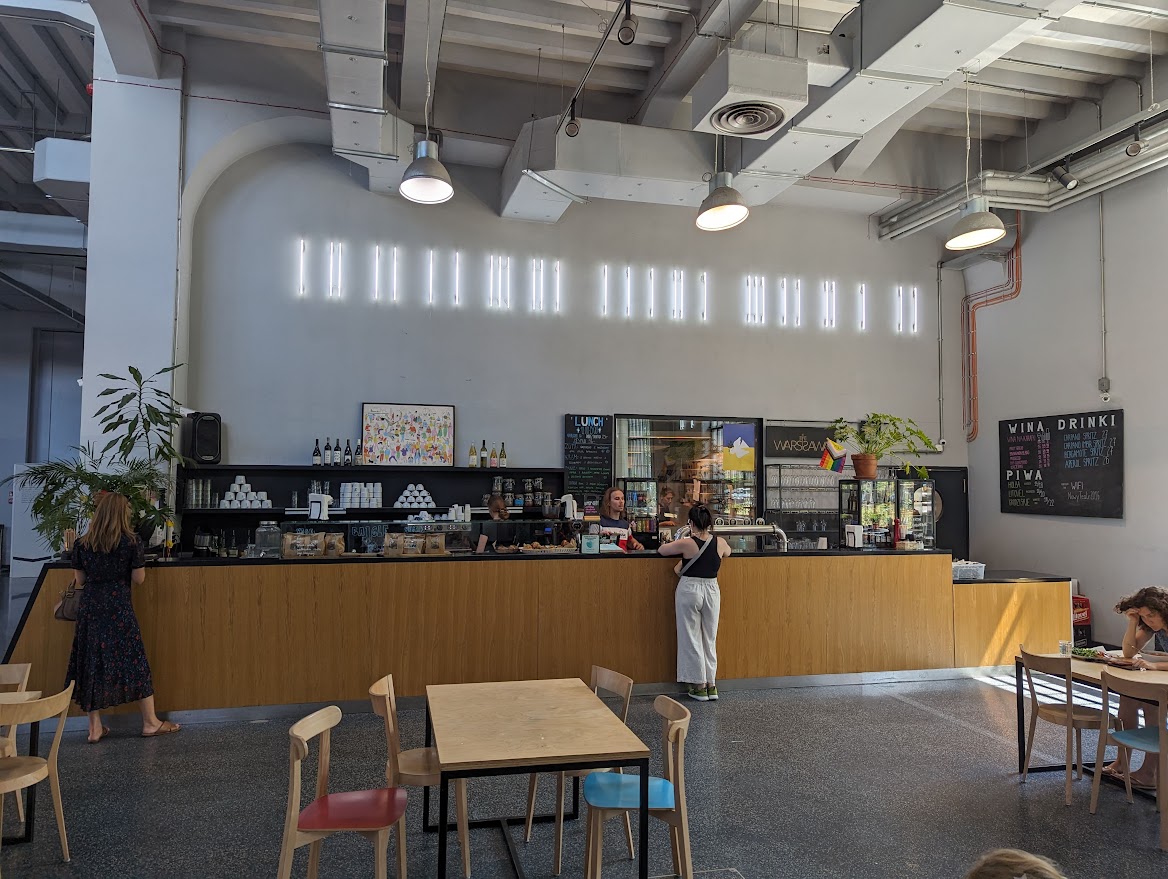
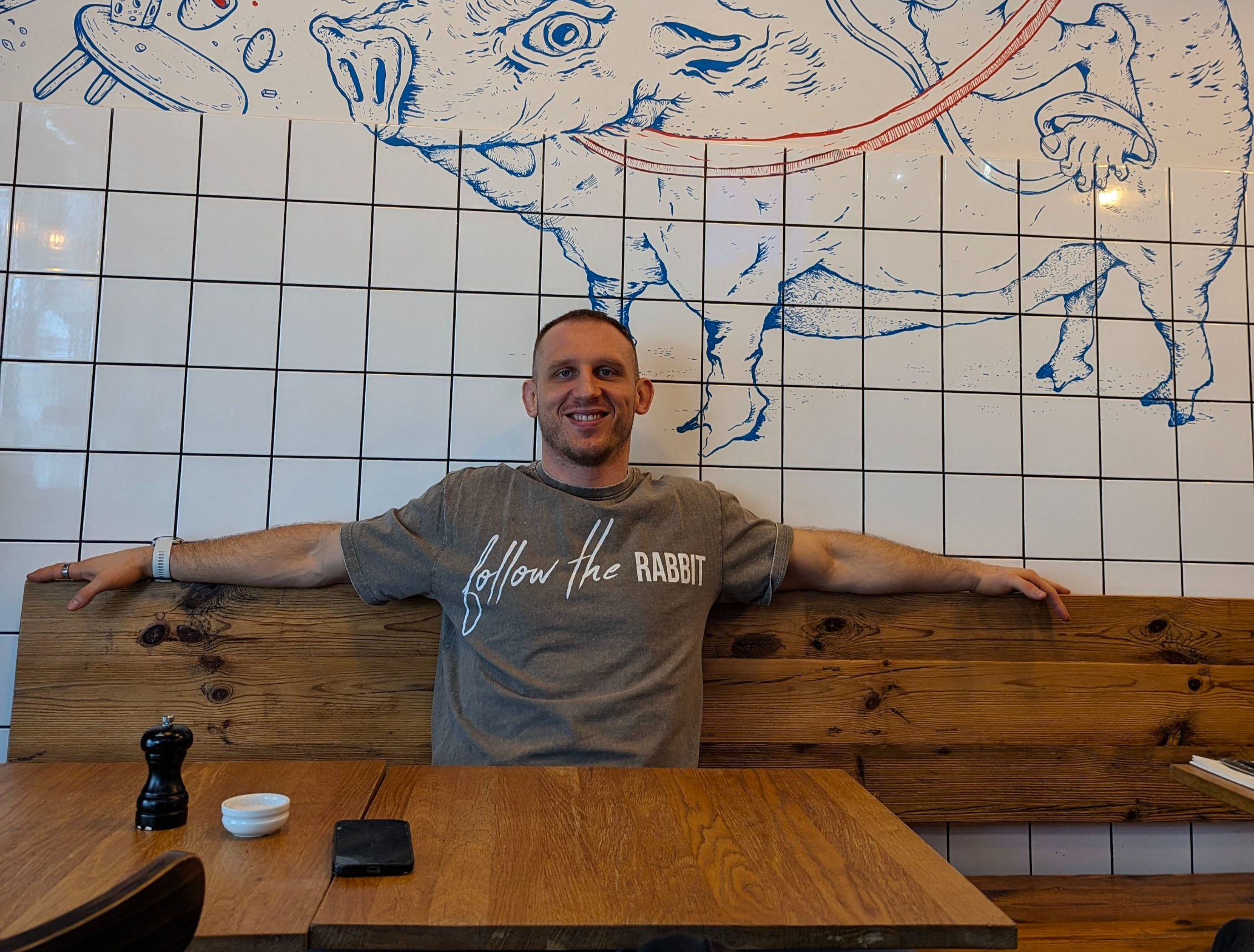
    A visit to one of my favourite cafes in Warsaw.

    Some people buy yachts, others buy cars, and some buy restaurants. They all share one thing in common—most of them end up pouring money into these ventures.

    If you’re serious about building a profitable food business, a restaurant—whether it’s fast food, delivery-only, or dine-in—is not the best idea. Statistically, it’s one of the least likely ventures to succeed. 60% fail within two years, 80% within five years , and due to the lack of scalability, it has the smallest chance of ever becoming even a million-dollar business. source

    Truths Are Universal

    They are timeless and the same across all cultures. Whether we live in the Middle East or the far North, we all want more time for ourselves and our families. We want not only to live longer but also to be healthier, full of energy, and to inhabit strong, capable bodies. We want to avoid doing things we dislike, such as sitting in traffic when a courier could handle it, cleaning when it’s unnecessary, or cooking when we could simply eat something ready-made. Ultimately, we want to feel secure—because it’s our lives at stake. We want to know what we’re putting in our mouths and how it was made.

    Traditionally, restaurants have had three main cost categories: food (typically 28–32% of total costs), wages (another 28–32%), and occupancy or property-related costs (22–29%). Based on unit economics, a restaurant should operate within a range of 78–93%, leaving a profit margin of 7–22% (franchise restaurants also pay additional franchise fees to their corporations). Source

    Often when I look at the food market I am overcome with reverie.

    The system is built in such a way that the property owner earns, the franchisor earns, the marketplace earns, but the restaurant owner—who comes up with the idea, puts in the work, invests capital, and takes the most risk—if they profit at all, it’s minimal. And when something goes wrong (like restaurant closures during COVID), they lose their lease, franchise agreement, or partnerships and are replaced by another cog in the machine.

    You don’t build a house on rented land, and the same goes for not basing your business’s future on other entities. Did you know that McDonald’s doesn’t actually make its money selling hamburgers? They profit from real estate. They own the land their restaurants are built on and rent it out to franchisees. They figured this out long ago and have consistently executed this strategy over the years. Source

    It’s up to us whether we keep lining the pockets of corporations profiting from the culinary passion of entrepreneurs. We need to build our own, independent channels for connecting with customers and meeting their needs in the simplest and most convenient ways. Selling through your own website, mobile app, phone, or email—these are tools no one can take from you.

    Platforms like Instagram, Facebook, WhatsApp, and YouTube could decide tomorrow that your account no longer complies with their policies and shut it down. This doesn’t mean you shouldn’t use them—paid advertising on these platforms can rapidly scale your business. However, if you’re able to contact your customers directly, without intermediaries, your revenue will be secure.

    I’ve written more about this in this article.

    A Personal Chef at Your Fingertips—Or Rather, Your Smartphone

    Delicious, customized, and affordable food for everyday life. Who wouldn’t want a personal chef? Everyone would, but few can afford one. Diet catering is essentially a personal chef, made accessible to the average person thanks to economies of scale—cooking for dozens, hundreds, or even thousands of people every day.

    This model works brilliantly for entrepreneurs because it works brilliantly for customers. Let’s look at how meeting customer needs leaves more money in the entrepreneur’s pocket while allowing for rapid business scaling.

    Mass personalization is simple and cost-effective—if you know how to implement it. In diet catering, anywhere from a few to several hundred different meals are prepared daily. This extensive menu ensures that each customer can choose an optimal meal plan that meets their expectations not only in terms of taste but also by excluding ingredients they don’t want or can’t eat, fitting their budget, and balancing calories and macronutrients. Remember the Rubik’s Cube? This is what solving it looks like in practice.

    The different colours represent the customers and their food choices.

    Are you thinking, “But how can you reconcile all that? There are more possible combinations than stars in the sky!” I completely understand. When we started, we faced the same challenge, which is why we decided to solve it. Let me be blunt—without the right tools, optimizing such a selection manually is almost impossible.

    At Flambia, it took us 5 years to create and refine an algorithm that considers all these factors, aligns customer needs with production realities, and delivers a seamless solution. By combining production experience, programming, and combinatorics, we made it possible—and ultimately solved this challenge with dedicated software.

    Beyond matching their preferences, customers expect affordable prices—ideally only slightly higher than the cost of cooking at home—and free delivery, because, as we know, no one likes paying for it. If you’ve worked in the food service industry, you might think, “That’s absolutely impossible, I know how much it costs to produce a dish in a restaurant.”

    Exactly—let’s take a closer look at the differences and why a meal in diet catering can be cheaper than cooking at home.

    Diet catering clients order 4–5 meals a day. This makes the number of meals produced enormous, even at a relatively small scale. In my catering service, with 2,000 clients, the kitchen effectively produces nearly 10,000 meals daily.

    Labor

    A restaurant chef preparing soup can only make enough for a few, at most a dozen, customers. A chef in diet catering uses a massive kettle capable of cooking 500 liters of soup at once. A restaurant chef must prepare fresh meals for customers ordering at various times, whether dining in or for delivery, performing the same tasks multiple times a day. A catering chef prepares a dish only once.

    In a restaurant kitchen, prep work—washing, chopping, peeling, slicing—is done manually. At the scale of diet catering, automation becomes cost-effective, so cutting, slicing, peeling, washing, shredding, and grinding are all handled by kitchen machines. This allows the chef to focus on what truly matters—ensuring great flavor and skillfully combining ingredients.

    Utilities

    Thanks to this production model, the labor, electricity or gas consumption, and food waste per meal are incomparably lower. Moreover, processes are standardized, ensuring better and more consistent flavors.

    All of this allows the final product to be offered to customers at more attractive prices than they could achieve by cooking at home. Additionally, the entrepreneur’s margin is significantly higher, reaching 50% or even 60% per dish while maintaining excellent taste and high quality.

    Deliveries

    Another element that makes diet catering cost-efficient is its delivery model. In restaurants, couriers operate on a “point-to-point” model. This means they deliver one order, return to base, and pick up another. In diet catering, couriers use a “milk run” system—they take all packages at once and deliver them sequentially to different points.

    They operate outside peak hours—either early in the morning before people leave for work or late in the afternoon or evening when people are home. This means they avoid traffic and can move around the city much faster. With greater load capacity, they can handle up to 150 orders at a time , compared to a restaurant courier’s 5— 30 times more!

    Moreover, delivery points are predetermined, allowing for optimized routes. Considering that each customer orders 4–5 meals a day, compared to 1–3 from a restaurant, the cost of delivery per meal is negligible compared to the traditional delivery model used by apps like UberEats. While UberEats’ delivery radius is limited to a few kilometers, diet catering can cover an entire medium-sized city right from the start. As the business scales, intercity deliveries become feasible, thanks to specialized refrigerated fleets.

    In my catering business, meals are delivered daily across Poland, covering hundreds of kilometers—all prepared in a single central kitchen.

    Food packages for clients of my two diet catering companies: Cebulka and Primate.

    Property

    One of the biggest cost drivers for restaurants is the property itself. This isn’t the case for diet catering. When I started, we operated out of a friend’s apartment. Of course, this isn’t scalable, and we could only handle up to 30 packages a day. We quickly had to find something professional.

    Here lies a fundamental difference between the two models—restaurants must be close to the city center. If it’s a sit-in restaurant, the location needs to attract foot traffic. If it’s delivery-focused, couriers need to avoid long distances. These locations are expensive.

    Diet catering, however, only requires a spacious kitchen. That’s it. Industrial halls adapted for cooking are perfect for this model. Locations on the outskirts are far cheaper to rent and adapt than those in central areas. As a result, property costs are much less significant in diet catering than in restaurants.

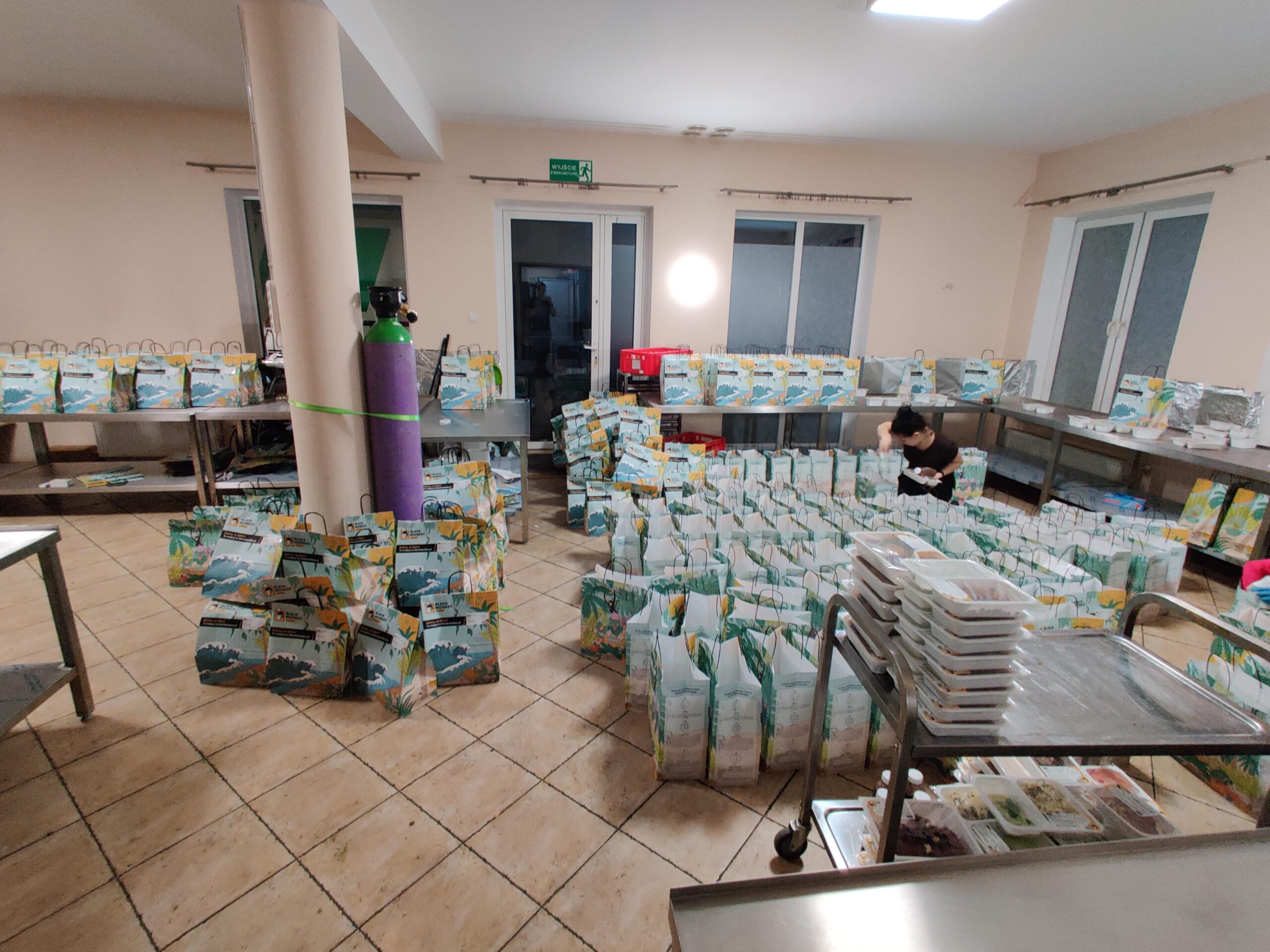
    This is what the food parcel preparation area looked like in the beginning.

    Food Cost

    Raw material costs are also incomparably lower, while quality is higher, because you bypass middlemen. At this scale, you don’t buy food from a store; you source it from specialized wholesale suppliers who deliver directly to your kitchen.

    You’ll work with the same suppliers that serve supermarkets, which means significantly lower prices and a level of influence over product quality that most restaurants can only dream of. From the perspective of a supplier’s sales team, you’re worth as much as 10 restaurants . They’ll do everything they can to keep you as a client.

    Taste

    The most important factor for customers is taste. How many days in a row could you eat at the same restaurant before the dishes start to bore you—or worse, disgust you? Diet catering has a unique advantage: menus offer several to even hundreds of dishes daily. The larger the scale, the greater the variety.

    This means customers can choose meals tailored to their preferences without ever getting bored. Such variety is impossible to achieve at home—no one has the time to cook five different meals every day.

    It’s like comparing public transport to driving your own car. Remember when you didn’t have a driver’s license and taking the subway or bus didn’t seem like a problem? But now that you have a car, you’re willing to pay 10 times more for the comfort of traveling on your own terms, listening to your favorite music, at convenient times, and without the hassle of walking from a bus stop to your destination.

    The same applies here—once someone experiences the convenience of diet catering, they’re unlikely to return to their old habits.

    Examples of dishes in Cebulka diet catering

    Feedback

    One of the eternal challenges for chefs is figuring out where and how to gather structured feedback on what customers like and what needs improvement. Have you ever seen a situation where customers, when asked about their experience, politely said everything was fine, but never returned to that restaurant again?

    In diet catering, customers can rate individual dishes, leave comments, and provide suggestions via the website or mobile app without feeling like they’re hurting the feelings of a kind server. This provides the kitchen with continuous feedback—not anecdotal insights from one or two customers but structured input from hundreds. This allows for consistent recipe refinement and improvement.

    This is how customers rate dishes in our system. We receive the ratings immediately.

    Upfront Payment

    One of the biggest pain points in the food service industry is managing cash flow. Taking supplies on credit, worrying whether there will be enough customers this week to pay off debts to suppliers—these are constant stressors. On top of that, there are countless other expenses requiring cash flow: small or large repairs, replacing worn-out dishware, cleaning supplies, and many other hidden costs that add up to create a mountain of obligations.

    While some of these costs exist in diet catering as well, there’s one significant difference—you have the guarantee that the service is prepaid. How rare is it to have a guarantee for anything these days? Yet here, you provide a service that has already been paid for! You purchase ingredients not hoping someone will come to try your dishes, but knowing that a customer has already paid for your product and labor.

    The funds received from customers can be reinvested into the business, functioning as an interest-free loan.

    Advertising and Marketing

    What does advertising look like for a typical restaurant? It’s hard to call it efficient. Flyers, sidewalk signs, and Instagram posts are necessary but challenging to measure in terms of return on investment (ROI). For food delivery services using marketplace apps, you’re stuck paying for visibility boosts in the app. You have little control over these efforts, and their effectiveness is limited. Scaling your operations even threefold is tough, let alone growing 10x or 100x.

    In diet catering, customers place orders conveniently via a website or mobile app. This makes it incredibly easy to track the user journey and understand which actions are effective and which aren’t. You have access to a full range of advertising tools, such as email marketing, affiliate marketing, or paid ads on YouTube, Facebook, or Instagram.

    Thanks to paid ads, I was able to acquire 2,000 customers by the fourth month of operation. I knew exactly how much I could spend on acquiring a customer and reinvested the funds from prepaid customers to acquire even more.

    If you’re interested in effective advertising strategies, read this article . In that article , I explain how to calculate their profitability.

    Good for the Body, Good for the Soul

    We’ve talked a lot about technical, measurable aspects, but how do you calculate happiness, avoiding burnout, being well-rested, or feeling like you’re helping someone? These intangible elements are crucial to all of us. When starting a business, we want it to be profitable, but we also hope to leave behind a legacy—something that speaks well of us to our families, friends, other people, and future generations.

    Do you know the leading cause of death worldwide? Cancer? No, try again. COVID? Not even in the top ten. The answer is cardiovascular diseases, which account for 32% of global deaths. Roughly half of these illnesses are directly caused by poor dietary habits. That means 16% of all global deaths —about 8.5 million people annually —could be prevented with a healthy, balanced diet. That’s 23,287 people dying every day because they chose burgers, chips, and sugary drinks over your delicious, nutritious meals. Source , source , source .

    I only indulge in such meals occasionally, but when that moment comes – I go all the way. 🙂

    When I realized this, it became clear that this isn’t just about selling food or whether someone orders a small or large portion of fries. This is about delivering tasty, balanced meals that could mean thousands of children won’t grow up as orphans, and countless families won’t lose their siblings prematurely. Through food, you can help entire communities live longer and healthier lives!

    Gone are the days of inhumane working conditions in the food industry—12, 14, or even 16-hour shifts. In diet catering, the production process runs like clockwork. Everything is predictable and planned in advance. This allows the team to work at a steady pace, complete their tasks, and go home, instead of scrambling during peak hours in an understaffed restaurant.

    Another advantage is the positive impact on the environment. Couriers follow optimized delivery routes, minimizing unnecessary travel. Food preparation consumes far less energy, and waste is significantly reduced both in production and on the customer’s end, thanks to portioned meals tailored to daily needs.

    Ride the Wave or Be Left Adrift

    As you can see, diet catering is an appealing model for both customers and entrepreneurs. It’s cheaper, more convenient, faster, and better tailored to taste and health preferences. Unlike restaurant meals, often laden with excess fat to enhance flavor, diet catering offers a healthy and flavorful alternative—prepared by chefs who may not be nutritionists but know how to craft delicious and balanced meals. The vision of a personal chef available to everyone is not only realistic but is quickly gaining popularity as societal habits shift.

    Looking at various markets, it’s clear there won’t be as many players in diet catering as there are restaurants. The first-mover advantage plays a significant role here. Whoever establishes this business first in a given region will quickly gain market share, achieve economies of scale, expand their offerings, and create enormous entry barriers for competitors.

    If you don’t catch this wave now, you’ll be left adrift in the ocean with no choice but to float aimlessly.

    Want to start a diet catering? Here’s what you should do next:

    1. Book Your Strategic Conversation

    Reserve a focused strategy session where we’ll discuss:

    • The potential of diet catering in your area.
    • The steps you need to take to create a predictable, profitable food business.
    • How to build a model that works for YOU.

    2. Fill Out the Form Carefully

    To get the most out of this session, we need to understand your current situation. Be sure to fill out the form accurately and thoughtfully —this is your chance to show you’re serious about making a change. Important: Only detailed and complete applications will be accepted for the call.

    3. Prepare for a Game-Changing Conversation

    This is your opportunity to get clarity, strategy, and answers. No hard pitches. No fluff. Just a clear plan for how you can take control of your food business and achieve predictable results. Book your spot now—spaces are limited.
  • Focus Your Food-Business Marketing (My Facebook Ads Story)

    Focus Your Food-Business Marketing (My Facebook Ads Story)

    I had some technical problems and couldn’t join the meeting.

    I received impatient text messages: “Are you joining? We’re waiting for you. We need to talk.” It was the June board meeting where we were supposed to discuss sales results for the last period. Once I managed to join, there was nothing pleasant waiting for me. Everyone had stern faces, and the message was simple—sales are poor. Fixed costs are eating us alive. We need something to turn things around.

    In the team, I am responsible for marketing and sales. I’d tried everything before—collaborating with Google Ads experts, Pinterest, influencers. We even took out ads on streetcars and buses, which are trendy among caterers. My stomach would knot up, as we were constantly spending money on advertising without results. I started wondering if doing nothing would at least save what we were already spending on customer acquisition.

    While eating lunch one day, I found myself watching random YouTube videos. Autoplay was on, and since my hands were busy eating, I let the video play. It was something about physics, light concentration, and lasers. I wasn’t particularly interested, but thought, “let it play.” Then, the narrator said, “Light is harmless. But if concentrated into a single beam, it creates a laser that can cut through almost anything.” He went on about its industrial and medical uses, but it hit me—my efforts were like scattered sunlight. What I needed was to “focus” them into a single beam!

    So, I chose Facebook Ads. First, the Meta platform includes both Facebook and Instagram, two of the most popular platforms. Second, these channels allow you to create demand, not just satisfy it, as with search engines. I decided not to rely on any agency, consultant, or external expert. I would learn everything myself, so if I failed, I’d only have myself to blame.

    I joined groups of international Facebook ad specialists, was active on most forums, read tutorials, and bought highly-rated courses. I kept trying and spent money on both education and the ad budget. But the results still weren’t as expected. Eventually, I realized the problem wasn’t the ads.

    Advertising, at its core, is paying an intermediary—Meta, in this case—to display the message we want to convey. There’s more to it, of course—algorithms, content matching, targeting—but ultimately, it boils down to three components:

    1. Advertiser : Someone paying to display a message.
    2. Platform (Facebook) : Interrupts people’s activities to show that message.
    3. Customer : Does something unplanned, like buying your product.

    An ad that doesn’t work is usually advertising a poor offer. Can you sell snow to an Eskimo? Sure, but it’ll take some extra incentives. You might be thinking, “but my offer is excellent; I made it myself!” I felt the same. The key is understanding that neither you nor I are our own customers, and we can’t rely on assumptions. By “offer,” I mean everything involved: product, service, price, delivery method. It’s about perceived value versus expected price. There is no such thing as an “objective price.” This is particularly evident in the restaurant business, where raw materials are only a small fraction of the final price customers pay. We pay for the chefs’ skill, unique experiences, ambiance, and so on. Whenever someone asks me, “what’s the one thing I can do to improve my ad effectiveness?” my answer is, “make your offer more attractive.”

    So, I took my own advice. We analyzed everything we could do to lower the product’s price and increase customers’ satisfaction with the taste of the dishes. That’s how Cebulka Catering was created:

    • Traditional Menu : Composed solely of traditional dishes. First, it’s the most popular cuisine in Poland. Second, it has a lower food cost than those including imported ingredients.
    • Delivery Every Other Day : We only deliver on Mondays, Wednesdays, and Fridays. This raised concerns about freshness, but most caterers deliver similarly for weekends, and it allowed us to cut transport costs in half.
    • Menu of 14 Dishes Instead of 50 : This is faster to cook and thus cheaper. It’s also easier to remove dishes that customers don’t enjoy.
    • One Diet Plan—Classic : Eventually, a Meatless option was added. This allowed us to keep the menu short and costs low.

    We launched in August 2023 with an offer of “PLN 39 for 3 dishes, 1000 kcal, free delivery.” Despite the very low price, we still had a 20-25% gross margin.

    Results? The cost of acquiring a new customer dropped to 1/3 of what it was with our other brand! Of course, we earn nominally less on each day with Cebulka than with Primate.

    However, the cost of customer acquisition dropped by almost 70%, compensating for the margin decline. It was time to create a repeatable method from this. And so, the Flambia Facebook Ads System was born. It’s still in use today, in both our business and the businesses of people I’ve trained or managed advertising for.

    The Flambia Facebook Ads System method consists of four modules:

    1. Business Assumptions : What defines profitable advertising?
    2. Technical Configuration : How to make this system work.
    3. Data Panel Configuration : Setting up the data in Facebook Ads to display the necessary metrics.
    4. Creative Optimization : Creating effective ads.

    Business Assumptions

    In this section, we ask what makes advertising profitable. What should we aim for before even launching Ads Manager?

    • Starting Budget : The monthly budget should be at least 10 times the Customer Acquisition Cost (CAC).
    • Defining Customer Acquisition Cost : The acquisition cost should equal the Lifetime Value (LTV) of a customer.
    • Calculating Lifetime Value : LTV is always considered over a specific period, depending on how long we’re willing to wait for the investment to pay off. The longer we’re willing to wait for a return, the higher the value. A typical LTV period is one year. We calculate it by dividing the value of all transactions by their number in a given period. For example, Primate had 3101 customers over the year, who spent a total of PLN 6,384,642.36 with a gross margin of about 35%.

    Use this information and optimize ads for Cost Per Result. The goal is not “maximum conversions,” but “maximum conversions at a set customer acquisition cost.” While this doesn’t guarantee conversions within the set cost, if the offer and ads are weak, no algorithm will make the cost desirable. What will happen, however, is that less will be spent on days when the algorithm can’t find an audience that meets the goal at the set cost. It’s better for your budget to go unspent than to be wasted.

    Always optimize for purchase from the start. Facebook doesn’t need a warm-up or learning period. It has better information about us than we do ourselves. Are you optimizing for clicks or traffic? Facebook will find you clickers and visitors, but no one will buy anything.

    Technical Configuration

    This section ensures that our data pipeline is secure and information exchange is fast and complete.

    1. Make sure the following options are enabled. Cookies transmit information about users, which helps algorithms better display your ads. With iOS blocking cookies, ad blockers increasing, and data transmission issues, much of this data is lost. If Facebook doesn’t know someone bought something, it assumes they didn’t buy. If it assumes they didn’t buy, it doesn’t show ads to that type of person. For this reason, we want 100% correct data. Check that all the following options are enabled.
    2. The absolutely essential tool is the Conversion API . Here’s a brief explanation of advertising technology: imagine training a dog. It’s not very different from training an algorithm—you reward desirable behavior and withhold rewards for undesirable behavior. Imagine a situation where the dog sits as commanded, but you throw the treat where it can’t see it. The dog thinks it did something wrong and gets confused.
    3. Configure a Custom First Purchase Conversion event. Why is this important? Facebook, like any other advertising tool, is designed to get you new customers. You don’t want to pay Facebook, Google or anyone else for selling to existing customers. Read more about this in the article. Why shouldn’t you look at buying? Because the attribution window is 7 days. What does this mean? If you acquire a customer with an ad and in 2 days they deposit money, that will also be counted as coming from the ad. We are interested in customers , not transactions.

    Create audience groups. We will use these for targeting – to tell the algorithm who to pay more attention to and who to avoid. In the first instance, we want to reach people who know us, but only those who haven’t bought. We want to reach new customers:

    1. A customer base – all the people who are on your list should be fed back to the audience via the API on a continuous basis. This is the most accurate data. Data should be passed along with transactional values (value-based audience)
    2. Lookalike Audience 5% of Customer Base – 5% of people from the population most similar to those who made a purchase
    3. Purchase 180 – people who have made a purchase in the last 180 days. This data will be less accurate and won’t have as much information as the above, but there’s nothing to further exclude us if Facebook didn’t catch someone above
    4. Lead 180 – people who have left their contact details in the last 180 days. We don’t want to spend money to contact people we can reach for free.
    5. Website Visitors 180 – people who have visited your website in 180 days
    6. Instagram 360 – people who have interacted with your Instagram account in 360 days
    7. Facebook 360 – people who have interacted with your fanpage in 360 days
    8. Facebook Like/Follow – people who currently like or follow your profile

    Setting up the Data Panel

    Now that the data is collecting correctly, we now need to set up the panel to look at the data correctly. What we are interested in starts at the very top. The order of the data may vary from path to path. I show my setup below. In some shops it may look different, e.g. add to cart or start checkout then leave contact details (lead):

    1. Amount Spent – The total amount spent on a particular ad. This is the amount of money you have spent on promoting this particular campaign.
    2. First Purchase – The number of new customers you acquired from the ads.
    3. Cost per First Purchase – The cost of acquiring one new customer generated by an advertisement. It is calculated by dividing the total amount spent on advertising by the number of First Purchase events.
    4. Purchase ROAS (Return on Ad Spend) – The return on ad spend, expressed as the ratio of the revenue generated by the ad to the amount spent. If your ad generated £2,000 in revenue for a spend of £500, the ROAS is 4:1. I’ve talked about this before – two things are important to us – whether the campaign is profitable and whether it is fluid. Profitable is when the CPA is below LTV. Liquid is when the value of the first payment is higher than the cost of customer acquisition. Then we will never run out of money to advertise.
    5. Lead Conversion Rate – The percentage of people who converted to the number of people who visited the landing page. This is a metric that shows how many of the leads acquired actually make a purchase. It is calculated by dividing the number of purchases by the number of leads acquired. This is an important metric because it allows you to assess the effectiveness of your campaign not only in generating leads, but also in converting those leads into actual customers. This answers the final, most important question – is my offer attractive? The minimum is 3%.
    6. Leads – The number of people who have left their contact details (e.g. email) in exchange for something of value that you offer, such as an e-book or webinar. Never build a house on rented land. I wrote about this in the article
    7. Cost per Lead – The cost of acquiring one lead. It is calculated by dividing the total ad spend by the number of leads acquired.
    8. Lead Conversion Rate – The percentage of people who convert (e.g. purchase or leave data) to the number of people who visited the landing page. You create this metric by dividing Leads by Landing Page Views. This is the third important question on the path – is your offer consistent with your Facebook message and attractive enough for me to leave my contact details? The minimum is 20%.
    9. Landing Page Views – Number of landing page views. Indicates how many times users who clicked on the ad visited your page.
    10. Cost per Landing Page View – The cost per landing page view . It is calculated by dividing the total amount spent on advertising by the number of landing page views.
    11. Outbound Clicks – The number of ad clicks that redirected the user to an external page (not directly related to Facebook).
    12. Outbound CTR (Click-Through Rate) – The click-through rate on external links. It is calculated by dividing the number of clicks on external links by the number of ad impressions. This answers the second important question – are you encouraging people to take action and leave the site? The standard for video is 1-3%
    13. Cost per Outbound Click – The cost per click on an external link. This is calculated by dividing the total amount spent on the ad by the number of clicks on the external link.
    14. Video Average Play Time – The average time a video is played by users. As well as attracting attention, does the video make people watch it and take action?
    15. 3-Second Video Plays – The number of video plays lasting at least 3 seconds.
    16. Scroll Stop Ratio – Scroll Stop Ratio . An indicator showing how many people stopped scrolling the page and stopped on your ad. You have to create this metric yourself and it is a ratio of 3 second impressions. This is the answer to the first important question – are you attracting attention? It is calculated by dividing the number of 3-second impressions by the number of impressions (ad impressions). The minimum is 30%.
    17. Reach – The number of unique users who saw your ad.
    18. Impressions – The total number of impressions of your ad. Can be greater than the number of unique users if the same user has seen your ad more than once.
    19. CPM (Cost per Mille) – The cost per thousand impressions of your ad. It is calculated by dividing the total cost of the campaign by the number of impressions and then multiplying by 1,000. For Facebook advertising, we pay not for conversions, not for clicks, but for the number of views of our material. The unit of account is 1,000 impressions, i.e. unavoidable ad impressions. What does CPM depend on? We need to answer what is the interest of the platform. Facebook’s interest is that people spend as much time on the platform as possible. This will happen if the content is engaging for them. An advert is usually displayed every 4 posts. Let’s say each of us scrolls through 40 posts before we switch off the app. This means that Facebook has gained the opportunity to expose 10 ads. If it encourages us to scroll an additional 4 posts, it gains the opportunity to display an additional ad. To summarise: Display ad = Facebook product Longer time on the platform = Facebook sells more products (displays more ads) If you help Facebook make people stay longer on the platform because your content makes people happy – you’ll pay less per display because Facebook will have more products (ads to display) If there are a lot of businesses in the same category besides you, the number of ‘windows’ in which they can show you to that group of people is limited. Whoever pays the most will win. The more companies bidding for the attention of that particular audience, the more you will pay.
    20. Display ad = Facebook product
    21. Longer time on the platform = Facebook sells more products (displays more ads)
    22. If you help Facebook make people stay longer on the platform because your content makes people happy – you’ll pay less per display because Facebook will have more products (ads to display)
    23. If there are a lot of businesses in the same category besides you, the number of ‘windows’ in which they can show you to that group of people is limited. Whoever pays the most will win. The more companies bidding for the attention of that particular audience, the more you will pay.
    24. Quality Ranking – A rating of the quality of an ad based on various indicators such as interactions, click-through rates, etc. A higher rating means a better quality ad compared to the competition.
    25. Engagement Rate Ranking – An assessment of how engaged users are with an ad. A high rating means that the ad is more engaging than other ads.
    26. Conversion Rate Ranking – An assessment of the conversion rate of an ad. A higher rating means that the ad is more effective at converting views into actions (e.g. purchases, sign-ups).

    Creative optimisation

    Here it’s all about what we have to communicate and who has to listen. If you don’t have anything interesting to say, then even if you were speaking to your ideal client, they won’t understand that you have what they are looking for. The other way round, on the other hand, if the message is one that takes my breath away, even though I hadn’t even considered your product before, there’s a good chance I’ll buy it. Let the one who has never bought anything unnecessary in his life just because I thought it was cool raise his hand.

    Stage I: Before we have the winning creations

    1. Our goal is to identify what reaches our audience as quickly as possible. We define a winning ad as one that has a minimum of 10 conversions at a cost below our target CPA, which is less than the LTV.
    2. We use Campaign Budget Optimisation (CBO), or campaign-level budget optimisation. Why? Because Facebook has more data than we do about which ad set and which ad is likely to meet the target.
    3. We should promote one offer per campaign. If we want to advertise ‘organise a wedding with us’ and ‘drop in for lunch’, these are two completely different offers. They should not be in one campaign or on one page.
    4. We divide the campaign into creative angles. Each creative angle = a person ad set (ad set). The same product can be bought for different reasons. In catering, we have separate ad sets for people: Wanting to lose weight, Wanting to save time Looking for cheap food Fond of homemade flavours Do not eat meat
    5. Wanting to lose weight,
    6. Wanting to save time
    7. Looking for cheap food
    8. Fond of homemade flavours
    9. Do not eat meat
    10. You can give 5 texts, headlines and descriptions to each ad. I recommend doing this for each creative angle.
    11. In the initial stage, try to make the ads as different from each other as possible. If I had to bet on which ad would work and which wouldn’t – I would lose all my money. The only solution is to come up with all sorts of things and see if they work. You really have no idea what might work. In our case, the absolute best-selling ad of all time was a simple phone photo of a crumpled bag standing on a table taken just like that, hand-held. It worked, I think, because people couldn’t imagine that a catering bag could be un-creased, instead of ironed like a stock photo, and a lot of people stopped by the ad and commented.

    Stage II: Once we have a winning creation

    If the creative is a winner, i.e. it has more than 10 conversions at the target CPA, then we do three things:

    1. We try to create very similar creatives, but different. E.g. we had a photo, try to make an animation. We had a red background, try yellow. There was a woman in the photo, give a man.
    2. We check if the ad would do even better in an ad set with different targeting. What is key is to copy the Post ID of the ad. If we create a new one, all the engagement gathered under the post: reactions, comments, shares – will disappear.
    3. We increase the budget and look to see if the ad maintains the parameters with a higher spend

    I have realised that customer acquisition is not as difficult as I thought before, if I already know where to focus my attention. I spend less time on advertising than I did before, but simply put, all my actions are effective, I follow a plan – I just know what I’m doing. I associate this with jiu-jitsu, which I have been training since 2001. A person who comes to the first training session literally after a while is all jazzed up. This is not because she is inferior in fitness, she just knows how to use her energy effectively yet. I’m sure if I went to play with someone who had even a little bit of tennis experience, I’d be covered in sweat and my opponent wouldn’t even take off his sweatshirt because he’d be so cold. It’s the same with adverts – at first we click everywhere we can, then we know which metrics to focus our attention on.

    All the time it seemed extremely intricate to me. I watched all sorts of amazing case studies showing impressions, reach, clicks. I never understood, what impact does this have on the product I want to sell? If you also felt confused, know that this is simply a smokescreen. Although these figures don’t say much, they look impressive. They serve as a veil for the lack of ability to explain simply and to take responsibility for what matters – selling.

    Once I understood this and we implemented the above method, the Cebulka’s sales began to grow exponentially. We reached nearly £1 million in sales within 4 months of launch using mainly Facebook ads.

    What was surprising was that a side effect was the increased satisfaction of our customers. By constantly thinking about what we could do to improve the quality and keep costs low at the same time, we have a 4.7 rating on Google Maps at the time of writing this article – that’s how much people have come to love the Cebulka.

    If you have to remember one thing from this article, remember this story Your responsibility is to create an offer that people will want to buy. If it doesn’t sell, you have an offer problem, not an advertising problem. The offer is something you improve all the time. I created the Culinary Entrepreneur Accelerator based on this experience. It’s a programme where I share all the knowledge I’ve gained both in terms of optimising ads and optimising foodcosts. Hiring email marketing specialists and hiring chefs. All the things I have learnt in 15 years of being an entrepreneur, 5 of them running diet catering.

    I spent close to 3 million PLN on advertising budgets, tools, team, finding the most optimal configurations. I tested hundreds of tools, advertising channels. I invested in creating Flambia software, which uses all my knowledge to make running a catering business the simplest and most effective. There were times when revenues grew, but there were also times when I was close to bankruptcy. It cost a lot of time and emotion.

    There was a runner after whom the Bannister Effect was named. For all time it was believed that it was impossible for a person to run faster than 4 minutes for 1 mile. The impossibility of this was confirmed by various experts, doctors citing anatomy. Bannister was the first man to run under 4 minutes. Later that year, several other runners broke the barrier. Since that achievement there have been thousands of such runners, and the current world record is 3:45. The effect says that at first something seems impossible, but when someone does it and shows you how, it doesn’t seem so difficult. The same is true here. I’m not saying that running a catering business is easy, it’s the hardest thing I’ve done. However, I am claiming that it can be easier, much easier. Provided one has the tools and knowledge to focus one’s attention on the right things, like a laser beam. What took me years before, now takes days or even hours.

    You can enjoy your business without experiencing the same frustrations I did. Polish Your Cooking and Foodtech.ac, among others, have benefited from my knowledge. I paid tens of thousands of zlotys for the courses alone, and several million for the advertising budget. The second amount I invested in the development of the company. If this were to provide you with the joy of running your business and financial peace of mind, is it worth it? Join the Culinary Entrepreneurs Guide. There is one condition, I am only looking for motivated entrepreneurs who want to grow their business. Those who take action. The payoff is commitment and a promise that you won’t stop working on your business, because if you’re running it, like me you’re passionate about it.

    If you are motivated, joining is free. Don’t click if you don’t want to work. If you’re not happy – you can unsubscribe.

    How long have you been struggling with challenges in your business? Don’t put off making a decision. Imagine you’ve finally found the support you’ve been looking for, and when you do – email me. I’m happy if you find I’ve helped you. Sign up now.

  • How to Cut Customer Acquisition Cost in a Food Business

    How to Cut Customer Acquisition Cost in a Food Business

    The two most common reasons why restaurant owners think advertising doesn’t work for them are distraction and a lack of clear objectives. It’s hard to blame them, it’s not something they teach in school, and I’ve never met a high level advertising agency that takes responsibility for what they do. I’m not saying there aren’t any, there certainly are. I just think there are very few.

    Agencies often talk about ROAS (return on ad spend). This is not the metric you should be looking at. You don’t care about having the highest ad spend. Then you only need to show advertising to customers who already know your brand and either have bought in the past or would have bought without advertising. There are two metrics you should look at, especially with paid advertising:

    1. Profitability (ratio of lifetime value to customer acquisition cost).
    2. Liquidity

    The first ratio tells you whether the cost of acquiring customers is justified. If this ratio is negative, you should change your operations.

    The second indicator tells us whether we are not losing cash flow during customer acquisition. A good scenario is when the value of the customer’s first transaction (revenue) is greater than the cost of advertising. The ideal situation is when the profit (after deducting the cost of producing the product, service or, more generally, the gross margin) from the first transaction is greater than the cost of the advertising spent to acquire it. This is not always possible, and a company that has the financial resources, e.g. in the form of working capital loans, to invest in customer acquisition at a cost below the LTV (Lifetime Value), i.e. the PROFIT that the customer will bring during all interactions with the company, will always win because it will have access to a larger pool of customers:

    1. Acquisition of customers below LTV cost
    2. Acquire customers below LTV cost and first transaction value greater than acquisition cost
    3. Acquiring customers below LTV cost and profit on first transaction greater than acquisition cost

    When we run a foodservice business, we need to understand how much it costs us to acquire a new customer, and what value that customer brings during his or her relationship with our company. This is what we call Customer Acquisition Cost (CAC) profitability in the context of a customer’s Lifetime Value (LTV).

    What is CAC and LTV?

    CAC is the total cost of bringing a new customer into our restaurant. This can include advertising, promotions, loyalty programmes and digital marketing spend.

    LTV, on the other hand, is the total value a customer brings to us over the course of their relationship with us. It includes all the purchases a customer has made with us from their first visit until they stop using our services.

    An illustrative example from the hospitality industry

    Imagine you run a restaurant and decide to invest in a Facebook advertising campaign to attract new customers. The campaign cost 10,000 PLN and attracted 200 new customers. In this case, the cost per customer acquisition (CAC) is:

    First impression: Advertising seems unprofitable

    Let’s assume that each new customer spends an average of PLN 40 during their first visit. This means that after the first transaction every customer brings us money:

    At first glance, it looks like the cost of acquiring a customer (50 PLN) exceeds the value the customer brings in the first transaction (40 PLN):

    Retention activities and customer satisfaction

    However, let’s assume that the customer is very satisfied with the food and service, which keeps him coming back to our restaurant. We also introduce retention activities, such as a loyalty program, regular promotions, or personalized offers to encourage them to return. The average customer returns to our restaurant five more times, spending an average of PLN 40 on each visit.

    LTV calculation

    Now we can calculate the customer’s lifetime value (LTV):

    Profitability over the long term

    Looking at the entire period of the customer relationship, the LTV is PLN 240, while the CAC is PLN 50. This means that the cost of customer acquisition was fully justified:

    At first glance, advertising may seem unprofitable because the cost of customer acquisition exceeds the value of the first transaction. However, due to customer satisfaction and effective retention efforts, the customer returns to our restaurant, increasing its LTV. As a result, the cost of customer acquisition is justified and leads to a significant profit. ROAS is not a good metric because we are interested in maximising the number of customers we acquire with a positive lifetime value to acquisition cost ratio. Put simply, we don’t just want customers who order champagne and caviar. We want all the customers we can earn from, and we want as many of them as possible.

    Understanding and controlling the relationship between CAC and LTV is crucial for any foodservice business. It not only allows you to evaluate the effectiveness of your marketing campaigns, but also to optimise your marketing spend and customer acquisition strategies. Imagine driving a car and not knowing how much petrol is in the tank. If you’re a driver, you’ve probably seen the type who drives at 50km/h with his nose over the steering wheel, even though the limit is 100km/h. He’s hunched over, his nose is over the wheel, he can’t see anyone around him and he’s driving erratically. Then there’s the other type of impatient frustrator. They overtake you by millimetres, gasping loudly, only to find out after a while that the whole manoeuvre was unnecessary because they have to stop next to you at a red light anyway. If you don’t know the lifetime value of your customer, you don’t know how much you can pay to keep them. You’re flying blind, you can’t tell if it’s expensive or cheap to acquire a customer. You don’t know if your actions make sense, and instead of slowing down – shouldn’t you be speeding up?

    The Profitability Equation

    After many years of trying, books, learning on the job and my own mistakes, I have finally managed to create a pattern, a thought pattern, that allows me to understand what I should focus on at any given time. What will be the one thing that will make my business profitable.

    Profit is made up of two elements:

    1. Revenue
    2. Cost

    If your business is making a loss, the problem is definitely on one side. We can look at it differently. This way we can understand the business from the perspective of the person we are helping to solve the problem, to provide the service. If the business is losing money:

    Profit:

    1. Customer acquisition cost – ineffective advertising or low perceived value of the product or service.
    2. Customer value – what we earn per customer throughout their relationship with the company is too low.

    Customer acquisition costs are all advertising and promotional costs, including salaries and discounts. We can break down the value of a customer further:

    Customer value:

    1. Retention – how many times we sell our offer to the customer
    2. Margin per transaction – how much profit we make on a single sale of an offer

    We can break the margin down further.

    1. Price – how much we sell our quotes for
    2. Production cost – how much it costs us to produce a quote for a customer

    We can break down manufacturing costs into:

    1. Constants. The most important are:
    2. Media. This is not a mistake. In my experience, media costs are fixed regardless of the number of orders. I write more about this in the
    3. Local
    4. Leasing cars, machinery
    5. Variables. The main ones are
    6. Food costs
    7. Salaries per offer
    8. Logistics costs

    Details of the margin can be found in this article.

    If, like us, you believe in running your foodservice business intelligently and consciously, if you are at the forefront of modern solutions that deliver savings and improve service quality, then join us. Together we form a community that supports each other and strives to increase efficiency in every aspect of our work. We are Culinary Entrepreneurs – I am part of the future of catering. Take the first step and subscribe to the newsletter.

    I will help you increase the profitability of your business. Follow me on my social media for more interesting content!

  • Effective Marketing for Catering & Meal-Prep Operators

    Effective Marketing for Catering & Meal-Prep Operators

    2008 – 3 years after my biggest disappointment. I knew I wanted to go into psychology 5 years before college. I read Charaktery magazine, books by Tomasz Witkowski, Cialdini and everything related to human interaction. I did some research in Warsaw, Szczecin, Wroclaw and even London. SWPS seemed to be the best university in terms of psychology. Unfortunately, I soon realised that I didn’t find myself at the university. The lecturers taught about the human absorption of knowledge, most effectively with the 5 senses from the black and white slides they read. The ‘business psychology’ lecturers were professors who had little to do with real entrepreneurship. I was totally disappointed. This was reflected in my grades, as I was barely passing year after year. At the same time, I was working as a financial advisor, and I was much more focused on that than my studies, which bored me. I really wanted to be very good at something – the best – and I already knew that psychology was

    not going to be it.

    Once upon a time, in my third year at university, I found myself in an optional course taught by Maciej Misztak, head of marketing for a pharmaceutical company. I particularly remember the class to which he invited Tom Bartnik, then managing director of a large international advertising agency, Saatchi & Saatchi. They introduced a lot of concepts that I did not understand at all at the time: “strategy”, “creation”, “account department”, but I still remember the story of the launch of the Heyah brand (a once famous mobile virtual network). I listened with rapt attention, the subject was so different from all the theoretical ones I had been taught before. What I was learning was tangible and something I could see every day on the street. It was then that I decided to focus on advertising and marketing – at that time I did not know the difference between the two.

    Similar to what I did with psychology 8 years ago, I bought all the books on advertising and marketing: Kotler’s Marketing, Juicy Brand, Like an Orange, Whisper Marketing, Brief magazine. I even read about marketing for the public sector. I started a blog to share my knowledge and to test what I was learning – in practice. A small breakthrough for me was when I placed an ad in Google Ads on the names of famous bloggers directing to my blog. These were provided by Maciej Budzich and Natalia Hatalska from Mediafun. Eventually, my efforts began to bear fruit – I was offered a job as an intern at Ogilvy, an international agency.

    Raptly, I was fired after two months for posting the job as “Junior Account Manager” instead of “Intern” on Facebook.

    It wasn’t long before I was working in property marketing. I wanted to be the best, so I would do anything to learn from the best. In 2011, I spent PLN 8,000, all my savings plus a grant from my mother, to go to the advertising industry’s Oscars – Cannes Lions – for a week. Living for a week on a protein diet, McDonald’s cheeseburgers for €5 each and pure excitement, I recorded interviews with ad creatives, ad campaigns and tried my hand at being a video blogger (now we would say YouTuber). The Tesco campaign was groundbreaking at the time.

    When my contract with P&G was not renewed after my internship, I decided it was time to try something on my own. I toyed with the idea for a long time, calculating the costs and possible income on a piece of paper. On Valentine’s Day 2012, I opened my Brazilian Jiu-Jitsu club. Then there was a sportswear brand based on characters from the Dragon Ball Z anime, a marketplace for extreme sports equipment and, finally, diet catering. I had theoretical knowledge from books and conferences, from working full-time and from my own experience of running businesses. I also had a bankruptcy and debts of PLN 100,000 behind me, which I managed to pay off in full after several years of stress. At that time I said to myself: “Never again”. I worked a lot, but it brought no tangible benefits. I knew there must be a pattern, a correlation, as to why some companies make money and others lose money. What you will learn in the following article is just a collection of these correlations that I have developed by testing them on myself.

    Schemes are necessary because they allow us to organise our thinking and our work. We cannot do everything at once. Just as when you build a house you start with an architect, when you organise a business you need to start with a structure. Marketing is nothing more than the organisation of a business. It literally means “to reach the market”. Since the purpose of a company’s existence is to meet a market need, it includes all the activities that describe how a company should operate. A simple scheme that suits me and allows me to better organise my thinking is the 4Ps:

    1. Product

    • Menu: An assortment of food and beverages offered in a catering establishment. May include different cuisines, special dishes, desserts, alcoholic and non-alcoholic beverages.
    • Appearance and presentation: how the food is presented to the customer, the aesthetics of the plates, the way it is served.
    • Variety: the range and variety of options available, such as meat dishes, vegetarian, vegan, gluten-free.
    • Additional services: additional options such as catering, delivery, online reservations, special culinary events.

    2. Price

    • Pricing strategy: The way products and services are priced, e.g. premium, mid-range, low-end pricing strategy.
    • Price promotions: Temporary price reductions, special offers, happy hours, promotional sets.
    • Discount coupons and rebates: Coupons, loyalty cards, seasonal or occasional discounts.
    • Price elasticity: How prices can change depending on the time of day, day of the week, season or demand.

    3. Place

    • Location: The location of the restaurant, its accessibility and attractiveness to customers.
    • Channels of distribution: The different ways in which products are delivered to customers, such as eat-in, take-out, home delivery.
    • Logistics: The process of managing deliveries, storage of ingredients, delivery time to the customer.
    • Availability: Opening hours, number of seats available, ability to book tables.

    4. Promotion

    • Advertising: Advertising campaigns in traditional media (TV, radio, press) and digital media (social media, Google Ads).
    • Public Relations: Building a positive image through media relations, participation in local events, sponsorship.
    • Direct marketing: Direct communication with customers, e.g. newsletters, SMS, emails.
    • Sales promotions: Hold special events, competitions, tastings, give away samples.
    • Feedback and reviews: Managing and utilising customer reviews on review platforms, social media.

    On the internet, in books or in conversations with friends, you’ve probably come across various truths that have some truth to them, but don’t quite reflect reality:

    1. Product – cooking is an art, it is the chef’s touch that counts.
    2. Price – if you want to increase sales, you have to reduce prices.
    3. Place – location is everything.
    4. Promotion – a good product will defend itself.

    And here is how I see each of these elements and why I disagree with these myths:

    The product is an answer to a need. The need is not: “to eat something”. A need can be:

    1. Try new flavours – casual dining,
    2. Impress your partner on a date – fine dining,
    3. Spend time in a pleasant atmosphere – cafés,
    4. Satisfy hunger quickly – kebabs, fast food, staff canteen,
    5. Nourish the body – healthy food.

    Therefore, the product must be repeatable. When I think of McDonalds, I know I will get the same burger, coke and fries every time. When I think of fast food, I know exactly what kind of experience I will get. Humans hate unpredictability. Does that mean the menu should not change? Not at all, McDonald’s also has fixed and seasonal offers. The Lumberjack sandwich, which is only available for a limited time, is so popular that it has entered the language as a synonym for something iconic, unusual and expected. My advice: don’t overestimate the quality of the food. I have learnt in diet catering that what seems absolutely phenomenal to me is not so to customers. What’s more, there are plenty of companies whose food seems average or even inedible, and their sales are growing.

    Price – “expensive” means giving little value for the price we have to pay. This is important – the value we, the consumer, perceive, not the seller. I may not want to pay for organic vegetables if they taste exactly the same. On the other hand, people who don’t want to consume zoonotic products pay extra for plant-based coffee drinks or meat alternatives, and no one seems to make a problem of it. Is PLN 10,000 a lot or not? It depends what it’s for. For shoes? A lot. For a square metre of flat in Warsaw? Not a lot. For a square metre of flat in Gorzow Wielkopolski? A lot.

    Stanley thermos flasks cost 50-100% more than regular ones and are a hit on social media. Why is that? Their perceived usefulness is much higher than that of competing products.

    iPhones are the most expensive in the world and also the best-selling in the world.

    For this reason, customers will be more willing to pay more for “an evening of authentic Uruguayan sushi by Master Keryoshi accompanied by Bengali rumba dancers and a tasting of Honduran shaman’s brew” – a unique product – than for “just sushi” – an easily comparable product of which there are dozens, if not hundreds.

    Places. It’s probably not the best idea to open a fine dining restaurant in a tunnel under a railway station, but location is not counterintuitive. Matching distribution to location is. We have 4 basic distribution models:

    1. Dine-in restaurant
    2. Food to go
    3. Instant Delivery – delivery via marketplace
    4. Planned Delivery – event or diet catering

    The distribution method forces the scalability of the restaurant concept. By scalability, I mean the number of customers that can be served in relation to fixed costs, including the size of the premises.

    1. The least scalable is a non takeaway and delivery type restaurant (such as fine dining), where we are directly limited by the amount of space in the premises.
    2. In second place is instant delivery. The limitation is the capacity of the courier and how many customers they can handle in an hour.
    3. Thirdly, we have take-away, such as a bakery or patisserie, where customers come to buy baked goods. They can serve dozens of customers per hour in a relatively small space.
    4. The most scalable will be event and diet caterers. The former are able to cater events for thousands of people, while the latter cook thousands, tens of thousands and the largest even hundreds of thousands of meals a day and distribute them across the country every day.

    Promotion. It won’t do anything by itself, and it certainly won’t promote the product. The winner will always be the company that is able to pay more to acquire a customer, that is, the one that most likely has a higher margin. You can read about margin in foodservice here. The customer should hear about your brand often and a lot. There are infinitely more people who will never know about your brand, despite your sincerest efforts, than those who will be offended by the amount of content you produce. Don’t worry about the offended, they’re not your customers anyway. Take this drink as an example. Brown sugar water with cocaine in the name – does that sound like a recipe for a brilliant product? How much can you say about such a product? Coca-Cola is doing quite well, and has been talking about the product for more than 100 years. The key is that it advertises constantly at an intensity greater than anyone else and longer than any of us reading this article.

    Needs are created. None of us needs sweetened brown water (or the light version with aspartame), coffee for the price of lunch, or pale rolls with something like meat inside. Pepsi Cola, Starbucks and McDonalds are global brands worth billions of dollars. The key is intensity and repetition.

    Another myth is that you have to “be everywhere.” As long as you don’t have very large budgets, you simply can’t afford it. Any form of promotion will initially be ineffective until you learn how to use it properly. Learning TikTok, Instagram, print advertising, influencer partnerships and Google Ads at the same time is a recipe for disaster. You don’t need multiple channels. My team and I promoted Cebulka Catering to 1 million in revenue per month in 4 months from launch using only ads on TikTok, then adding Facebook. We didn’t have influencers, we didn’t throw in organic posts, we didn’t do ads on Google – exclusively one communication channel at first, where we tested all the time what we could do better.

    If, like us, you believe in running your foodservice business intelligently and consciously, if you are at the forefront of modern solutions that deliver savings and improve service quality, then join us. Together we form a community that supports each other and strives to increase efficiency in every aspect of our work. We are Culinary Entrepreneurs – I am part of the future of catering. Take the first step and subscribe to the newsletter!

    Follow me on my social media for more interesting content!

  • 14 Places a Catering Business Leaks Money (and How to Fix Them)

    14 Places a Catering Business Leaks Money (and How to Fix Them)

    “Paweł, we need to hire more people immediately. There is so much work that we will probably have to introduce a night shift. With the rapid growth of the business, we need to think about moving – this 600m2 site is becoming too small for us,” I was really worried. At the time we had 25 kitchen staff, 600 parcels a day and one catering brand.

    I was happy that the number of customers was increasing, but I had the impression that costs were rising disproportionately faster. There were more of these things – at least once a day I heard the boss say to the production assistant: “go to the store, we’ve run out for production”. How could this be, when we had exact recipes and shopping lists? In a moment it turned out that the day after we bought things for the social, 6 packs of coffee disappeared – that’s how much even the most seasoned coffee drinker wouldn’t drink.

    One thing was for sure – money was leaking through our fingers. At least it was not a thin stream. I felt like I was fighting a hydra – for every problem, two more seemed to pop up. They seemed to pile up and the more I tried to find out where we were going wrong, the more problems appeared. I tried talking to the staff. I got a number of suggestions, such as that the theft and low efficiency were due to wages being too low, because “employees just have to compensate themselves”. I tried talking to catering experts: “Look Paul, this is a specific industry. This is how it is. You can’t control everything”, “You’ve got to get good people”, “You can’t do anything about it, you’ve got to do everything yourself if you want it to be good”.

    I finally understood. The real problem was the lack of a map, a structure that would make me aware of which fires I needed to put out immediately because they threatened to collapse the entire structure, and which fires, while undesirable, would not kill me immediately and I could return to them in a moment.

    Segregation of parcels in my Primate catering.

    It became my ambition to pass the McKinsey problem-solving test. In the materials I used to prepare, there was a lot of reference to the MECE method. The name comes from the English words Mutually Exclusive, Collectively Exhaustive . For example, a population can be divided into men and women – each person can belong to only one of the two, and at the same time there are no people who do not belong to one of the two. An example where this principle is not fulfilled is nationality – people can change their nationality, they can be citizens of many countries. In such a division, the sum of the sets will be greater than the number of people.

    The purpose of this method is twofold:

    1. Make sure we don’t miss anything
    2. To spend the minimum amount of time necessary to solve the problem by not having to go back or repeat – everything is sorted.

    I began to group my problems into category trees, common themes. As I wrote down and organised the problems and my thoughts about them, things began to fall into a logical whole. I began to see connections and understand where the problem lay.

    My views on the need for change were not met with approval. For example, my disagreement with a 50% pay rise was not met with approval. I felt trapped. I wanted the business to be healthy. Conflict with employees and the risk of production stoppages – the very thought of that paralysed me.

    I wouldn’t be surprised if you’ve encountered similar situations. Looking back, I think a lot of things are done provisionally, for “holy peace of mind”, like a provident loan. It solves the problem in the short term, but then it turns out that the cost is gigantic. Then another loan, and the spiral of debt is so great that it’s hard to get out. No one has ever shown me the problems I can face, and I suspect that you will not either. Ignorance and old habits are our common enemy. That’s why I’m going to show you 14 places where I’ve missed out on money, to help you out.

    I have created many different categories. So don’t get too attached to mine. The key is to group the subject and have fairly consistent groups. Items on individual lists can come and go, but the list of topics is relatively constant.

    1. Purchasing and Suppliers
    2. Warehousing and Inventory
    3. Production and Preparation
    4. Management and Administration

    Now I will show you the 4 stages of problem diagnosis:

    1. “Triage – what are the most urgent problems? When paramedics arrive at the scene of an accident, they don’t treat casualties on the spot. They make a quick assessment of the injuries and decide who needs help first. It’s the same with running a business – I think about which category I need to focus on first because it threatens the running of the business.
    2. My daughter says, “Trousers down, cards on the table” and I think it fits this point perfectly. Once I have identified a category, I try to uncover all its problems. I knew about problem A, but I wonder what is B, C, D. What if you cure gangrene when the flu kills you?
    3. “We play in pairs. – There’s a reason they say problems come in pairs, or even in herds. Once I’ve identified them in point 2, I group similar ones that have a single cause.
    4. “You did not stand here”. – At this stage I know which area needs attention first, I have identified all the potential sources of problems that I could, grouped the issues and understood the interrelationships. This is how I arrived at the final list of problems, which I arrange in order. It’s important not to jump from issue to issue. Think of it as a street fight. Even if you are an experienced karateka, boxer or other fighter, and no average thug has a chance against you – the force of evil against one. What will you do in such a situation? You will shout: “One at a time! Then the problems will not overwhelm you and you will have the strength to deal with each of them.

    Below are examples of problems you may encounter in each of the categories listed. The list is not exhaustive and there will be issues in your business that I have not included below.

    Purchasing and Suppliers

    1. Lack of regular price monitoring

    In the foodservice industry, ingredient prices can change faster than the weather in the mountains. Lack of regular price monitoring is like driving a car without a seatbelt – sooner or later something will happen. By implementing a systematic review of supplier prices, you can react to changes in real time and avoid unnecessary costs. At Flambia Market we have learned that regular price analysis can save up to 10% per month.

    2. Ignorance of the supplier market

    Not knowing the supplier market is like going fishing without a rod. You need to know all the players in the market to get the best deals. By regularly comparing offers, you can get better terms and avoid overpaying. I remember one time we found a new vegetable supplier who offered better prices without compromising on quality. As a result, we were able to reduce costs and increase margins.

    3. Don’t compare supplier offers

    Comparing suppliers’ offers is an important part of your purchasing strategy. It is like the stock market – you need to know where and when to invest. More than once we have found that different suppliers offer the same products at different prices. By comparing quotes, we found a supplier who sold coffee 20% cheaper. This decision allowed us to save a significant amount of money without compromising on quality.

    4. Buying branded products instead of cheaper substitutes

    Buying branded products is simply paying for a logo. Instead, it makes sense to look for cheaper but equally good substitutes. In my practice, switching to non-branded products in some categories has allowed me to cut costs without compromising on quality.

    Warehousing and Inventory

    5. Poor inventory management

    Poor inventory management is like trying to keep water in a strainer – nothing will come of it. Regular inventory control and the introduction of an inventory management system have helped us avoid wasting products. At Primate, we have implemented the Flambia System, which allows us to closely monitor inventory and order only what we really need.

    6. Improper storage conditions

    Improper storage conditions really can end in a major disaster. Preventing it avoids losses and waste. In my companies, we regularly control the temperature and storage conditions, which significantly extends the life of products.

    7. Excessive or frequent orders

    Orders that are too large and too frequent increase logistics costs. The key is to find the golden mean. Here again, the Flambia System came to our aid, which allows us to plan purchases precisely, avoiding excess and frequent deliveries.

    Production and Preparation

    8. Failure to follow established grammars

    Using accurate recipes helps control costs and reduce waste. In our kitchens, every recipe is accurately measured, which helps to maintain consistency and control costs.

    9. Poor organisation of work in the kitchen

    Poor work organisation in the kitchen is like trying to lead an orchestra without a conductor – chaos is guaranteed. By introducing clearly defined procedures and division of labour, we have been able to increase efficiency and minimise waste. Regular training and systematic organisation are the keys to success.

    10. Overly elaborate menus

    Focusing on a narrower range allows us to better manage stock and avoid waste. At Primate, we have limited the menu to the most popular items to optimise purchasing and reduce costs.

    11. Sub-optimal use of seasonal ingredients

    Seasonal products are cheaper and often of better quality. In my businesses, we regularly adapt our menus to seasonal ingredients, which helps to reduce costs and offer customers fresh, local produce.

    Management and Administration

    12. Lack of price negotiation with suppliers

    Negotiating prices with suppliers is essential – it’s like bargaining in a bazaar. Applying the Pareto principle and negotiating the prices of the most important products will bring the greatest savings. In our case, negotiating meat prices saved us 15%!

    13. Lack of effective reporting

    Lack of effective reporting is like driving a car without a mileage meter – you don’t know how fast you’re going or how much fuel you have in the tank. Regular reporting and food cost control is key to keeping costs down. At Flambia System we use advanced analytical tools that allow us to monitor all relevant indicators on an ongoing basis.

    14. Poor internal communication

    Poor internal communication is, in effect, a deaf telephone – information is distorted and results are far from expected. Effective interdepartmental communication allows us to better manage resources and avoid mistakes. Regular meetings and clear communication procedures have helped us to significantly improve operational efficiency.

    Over time, this method got into my blood and proved useful in many other areas, such as remembering things! By grouping topics into: family, training, production, marketing, legal – it’s easier for me to remember everything. I don’t have an endless list of things, just baskets that I check in my head.

    I believe that together we can bring best practice to the foodservice industry and end the myths that dominate the industry. This article is an excerpt from a guide I wrote for the community of Culinary Entrepreneurs, a new generation of foodservice business owners who are using technology and best practices to deliver the best quality for their customers and professional fulfilment and financial security for themselves.

    Follow me on my social media for more interesting content!

  • Catering Profit Margins: How to Actually Make Money

    Catering Profit Margins: How to Actually Make Money

    I have a confession to make. I love to eat. A lot. I eat so much that I had to set up a whole company to cook for me, because my wife couldn’t manage to produce the amount I consume. My standard is 3,500-4,000 kcal a day and my favourite place to eat is a restaurant. My lover has even come up with a trick to motivate me to be active. For me, activity has to have a purpose, so I love jujitsu, the gym (to get stronger at jujitsu), running (so I don’t run out of breath at jujitsu) and swimming (because it’s my time together with my daughter). If you say to me, “Let’s go for a walk to a café for dessert!” – I’m first.

    The example for my breakfast. 🙂

    The other thing I’m obsessed with is when things just work. An example would be the techniques in Jiu-Jitsu, which I’ve been training for 23 years, improving all the time and still finding ways to improve the small components. I can’t stand doing things in a sub-optimal order, like wandering around a shop without a written shopping list. But what frustrates me most is when things don’t work in business. When things don’t work, we have a loss-making business, an unprofitable business with negative margins.

    Having run two diet catering brands, which at one point reached a turnover of 1 million zlotys per month, I have learnt that there is not one, not two, but even three catering margins!

    1. Gross Margin , also known as Level I Margin
    2. Operating Margin , also known as Level II Margin
    3. Net Margin , also known as Level III Margin

    Before we get into what these margins are, let’s get back to the basic question for which you are probably reading this article: “How do you run a profitable foodservice business?

    A profitable business is one that makes a profit. If a business is not profitable, the problem is 100% one of two things, or worse, both at the same time:

    • The sales are too low.
    • Costs are too high.

    If you ask, “Which is more important – revenue or cost?”, I will answer: “Revenue, but at what cost? Costs can be generated by any of us. Revenue, i.e. sales, requires some effort. We have to find a need in a group of people and then convince them to pay us to satisfy it with our product or service. I deliberately wrote “at what cost” because if increasing revenue is going to be done in an unprofitable way, we don’t want to do it.

    “Thanks, Sherlock, I thought we were trying to sell at a price below our costs.” – Although this sentence sounds absurd and you’re right to think I’m stating the obvious, it’s not.

    In winner-take-all businesses, managers sometimes make the decision to maximise revenue growth at the expense of profitability. Look at Allegro, they have more than 60% of the entire Polish e-commerce market (yes, 6 out of 10 products sold online in Poland are Allegro). Its profit for 2023 is around PLN 600 million. Despite many attempts, neither Amazon, eBay, Temu nor AliExpress have achieved such popularity. From this point of view, would you be willing to accept a loss of PLN 60 million per year for 5 years in order to grow your business to the point where it will generate PLN 600 million per year as a near monopoly?

    In the food service market we can find a similar strategy in diet catering. There are several brands, e.g. Diety from Broccoli, Viking’s Kitchen, Maczfit or the second brand after Republic of Gourmet – NTFY’s child brand Syta Król, which communicate aggressive price discounts and may sell products with zero or even negative margins, e.g. with the intention of becoming the leader and causing the competition to withdraw. This is a fine line, as price dumping is prohibited in Poland.

    Although, as I said earlier, revenue is ultimately more important, a profitable business starts with costs. We usually spend money first (costs) to get customers, and only then do they pay us (revenues). This is the first way your business can be unprofitable.

    Gross Margin – Level I Margin

    Gross Margin is the difference between turnover and the cost of goods sold. It tells you how much you are actually earning from the sale of your products after deducting direct production costs.

    If your gross margin is high, it means that your production is going well and that you are able to sell your products at much higher prices than the cost of production. A high gross margin is a sign that your business is running efficiently and effectively.

    Operating Margin – Level II Margin

    The operating margin shows how much you earn from your core business after all operating expenses, but before tax and finance costs.

    A high operating margin shows that you are managing your business well and controlling the costs associated with day-to-day operations. It’s a key indicator of how effectively you’re managing your day-to-day costs.

    Net Margin – Level III Margin

    Net margin is a ratio that shows how much you earn after deducting all costs, including operating, financial and tax expenses.

    A high net margin is proof that your business is financially sound and can make a profit after all costs are taken into account. It is the ultimate indicator of the financial health of your business.

    The importance of different margin levels

    Gross Margin:

    A high gross margin is a sign that your production is efficient and you can sell products at prices well above the cost of production.

    Negative gross margin – “The cost of producing a good or service exceeds the amount you receive from sales”. How can this situation occur?

    1. You sell a diet catering service for days ahead at today’s prices. In the meantime, the cost of an employee, raw materials and transport increases. In a few dozen days, you realise that the amount of money you received from the customer at the beginning does not cover the cost of production.
    2. You organise an event. It turns out that your equipment breaks down and your people get sick. You don’t have a choice because you’re bound by contract and you don’t want to lose face, so you hire equipment from a rental company and find people on the spot. Rental equipment is very expensive, and so are employees for the time being.

    Operating margin

    A high operating margin indicates that you are managing your day-to-day operating costs well, which is key to a healthy business.

    Net Margin

    A high net margin is an indication of the overall financial health of your business, showing that you are able to make a profit after all costs are taken into account.

    This margin structure helps to understand and control the company’s finances, which is crucial for long-term success.

    Based on my experience, I have identified 4 key elements that affect gross (stage I) margin in the foodservice industry.

    Food cost – the cost of purchasing raw materials for production.

    Labour – the time spent by employees cooking, packing and possibly delivering food to the table or home.

    Logistics – in the case of home delivered food, this is the cost of an external or internal courier and their means of transport and associated costs.

    Customer acquisition costs – marketplace commissions such as Glovo, Delicious, UberEats, Facebook ad budget, ad agency fees, social media, photo production costs, graphics. All costs incurred to get the customer to buy from you.

    Why gross margin matters?

    The company that can spend the most on customer acquisition will always win. The company that can spend the most on customer acquisition is the one whose product prices are the highest, whose margins are the highest, and whose customers return most often and stay the longest. To put it in human terms, the ideal scenario is that you sell expensive products or services to customers, it costs you little to produce them compared to the amount you receive, and customers return to you regularly and for years.

    Let’s suppose we have two restaurants, Green Pepper and Pink Orange:

    Green Pepper attracts customers with discounts and attractive prices. Its owners rely on word of mouth and don’t have much money to spend on advertising, as they sell food with a minimal mark-up.

    • Cost of acquiring a customer – 30 PLN – very low, as it’s mostly word of mouth.
    • Average bill – PLN 100
    • Average cost – PLN 80
    • Profit per customer visit – 20 PLN
    • Average number of visits per customer – 1.5 – the restaurant doesn’t even have a social media presence. Although the food is decent, customers just forget about it.
    • Total customer value – 1.5 * 20 PLN = 30 PLN – the amount Green Pepper can spend to acquire a customer and still end up with zero.

    Pink Orange creates an exclusive brand where the cheapest water sells for 25 PLN, but the owners invest heavily in advertising and customers like the place and come back often.

    • Customer acquisition costs of 300 PLN – they invest heavily in all possible customer acquisition channels.
    • Average bill – 500 PLN
    • Average cost – 80 PLN – thanks to their size they can optimise costs and it is similar to Green Peppers.
    • Revenue per customer visit – 420 PLN
    • Average number of visits per customer – 5 – it is a trendy place, food is decent, customers are eager to return
    • Total value of the customer – 5 * 420 PLN = 2100 PLN – the amount that Pink Orange can spend on acquiring a customer in order to come out at zero.

    In this example, Pink Orange’s business is much more secure because of the margin it generates throughout the customer lifecycle.

    How do you implement revenue counting, gross margin, operating margin and net margin?

    The absolute most important thing, and the first thing you should do at this point, is to keep these numbers in front of you and your management at all times. You can’t control what you can’t see. It is not something you should “look at”. Your control cockpit should have 4 indicators that you control all the time. Monthly is the absolute minimum:

    • Revenue
    • Gross margin, also known as Level I margin
    • Operating margin, also known as Level II margin
    • Net margin, also known as Level III margin

    If at this stage you are still thinking: “At my level, I don’t need to check it that way”, ask yourself whether you run a business or have an expensive hobby. If it’s the latter, you really don’t need to. I also refer you to 23 Biggest Myths About Catering Management .

    The easiest way is to ask your accountant to give you a breakdown. Armed with this knowledge, you will be able to explain how she should qualify the costs. It’s not a perfect solution, as you’ll see the data with a delay of a month or more, but it’s better than not seeing the data at all.

    The second method is to use a system that scans your invoices and helps you control your workflow, such as Cheff.it for restaurants or Flambia System for diet catering, event catering, pre-school catering, hospital catering. Then you can react in real time.

    Data is nothing without action. At Primate and Cebulka Catering we have a monthly meeting where we discuss important issues for the business, look at what has changed, why there have been increases and what has caused decreases. We come out of the meetings with a to-do list for which individual managers take responsibility. For example, I am responsible for customer acquisition costs, while Łukasz Załęski, our operations director, is responsible for food costs and employee costs per package.

    Just as data alone won’t make a difference, reading alone won’t make a difference. Take action now and increase your chances of making your foodservice operation profitable.

    Take advantage of my free experience and sign up for my newsletter now. Follow me on my social media for more interesting material!

  • How to Calculate Food Cost and Beverage Cost (with Examples)

    How to Calculate Food Cost and Beverage Cost (with Examples)

    “Stockholm syndrome” – only years later did I understand how the protagonist of Orwell’s 1984 felt. My tormentor was a maths teacher. She was no ordinary teacher, she was a crusading knight whose mission was to cleanse the world of the filth of those who did not know.

    Only those worthy of respect and awe who could count without error were called to the blackboard. All others were treated with the contempt of second-class citizens. The pattern was always the same: first a friendly smile and a question as to who would come to the board to solve the problem on the board. No one came forward, so she continued with a beaming smile and said: “Then maybe Krzysiu (or any other student who happened to be there) will solve it”. If Krzysiu did not start writing immediately, the teacher’s forehead would start to sweat and she would start wiping it, which meant trouble.

    The next sentence was: “Now write, Delta equals! What do you think?” If there was no surprise at this point, and it is usually difficult for her to follow under such pressure, the shouting began: “YOU CAN’T DO ANYTHING, SIT DOWN AND COMPLAIN!

    I was a humanist and one of the worst in the class. She despised me with all her heart. However, I decided not to be broken and practised maths every day. As a result, by the end of third grade I was really good, and although the teacher didn’t want to admit it, I was at the top of the class. She told me not to take the maths exam because I would make a fool of myself. To this day I have the satisfaction of thinking that when she found out about my maths score, she said it must be some kind of mistake – she was so unwilling to believe she was wrong. So if you hate maths, know that I really do understand. At the same time, I think it’s the most valuable skill in business, so I’m grateful for what I got at school.

    Years later, in my professional work, I found that simple actions and the ability to measure things were very useful to me. Despite everything, I still thought that I was inferior in this area, that I couldn’t do anything. I graduated with a degree in psychology, where I was inferior to people from SGH, economics or science. I equated Excel with them. “It’s a tool for weirdos, what’s there to bury in numbers. Entrepreneurship is the spirit of adventure, ingenuity, action, not spreadsheets!”.

    I was lucky enough to meet 3 wonderful people who helped me with the financial side of my ventures and taught me how to use counting in a practical way to give ingenuity a real dimension. The first was Wojtek Smolinski, the second Radek Cielicki and the third Adam Matusiak. From each of them I learned about cost control, budgeting, liquidity and profitability. Until recently, these words made me shudder, but I understood that I would not be a full-fledged entrepreneur without assimilating them – I accepted my fate. In the end, it wasn’t so bad.

    CFO Adam Matusiak, right (in shirt), head of operations Łukasz Załęski, and head of technology Mateusz Cygan, left, in glasses.

    I still only know how to do basic things like adding, multiplying, etc. My spreadsheets are ugly, but the most important thing is that I know how to read those made by people smarter than me, I know how to check basic business metrics and I know what to ask the people I work with. In the context of the catering business, these metrics are food and beverage costs, or in Polish, food and beverage costs. I’m going to tell you how I use these measures in practice in my diet catering business for the Primate and Cebulka Catering brands.

    In theory, the cost of raw materials consists of the following:

    1. Purchase price of food.
    2. Storage costs: costs associated with storing food, such as refrigeration costs.
    3. Food waste: loss and waste due to expired products or inefficient stock management. This category also includes theft, which I have experienced on a number of occasions.
    4. Labour costs: costs associated with food preparation, e.g. washing, peeling, cutting.

    I say ‘theoretically’ because in practice it is difficult to separate the cost of energy for the fridge from the cost of energy for the oven, and losses and waste are difficult to measure without the right software and recorded inventory. We count energy costs as utilities, kitchen staff costs as cooking costs, and I will talk about counting food waste in the section explaining how to count it.

    In addition, when we talk about food costs, we usually refer to their percentage value, i.e. the net purchase price of the raw material to the net selling price of the dish. This is a common mistake. Some people do not use the net value when counting, but one or two gross values. VAT is a pass-through tax and should not be tabulated.

    For example:

    1. I bought meat for a steak for 30 PLN net.
    2. I sold a steak for 100 PLN net.
    3. VAT on restaurant meals is 8%.
    4. The customer paid 108 PLN gross.
    5. My cost of the meal is 30% (30 PLN net / 100 PLN net).

    The analogy will be for drinks, the only difference being that the VAT rate for them is 23%.

    The second type of food cost will be nominal. In the case of the steak above, it’s simply 30 PLN. What are the practical differences? The aim of you and the managers of your catering business – diet catering, event catering, pre-school catering, hotel or restaurant – is to maximise guest satisfaction whilst minimising food and beverage costs, or at least not exceeding a certain assumed threshold. To put it in human terms, you want the customer to be as happy as possible, to recommend you to friends and to come back, and at the same time to pay as little as possible for food and drink.

    What is the easiest way to reduce the food cost percentage? Increase the price of the food. If I increase the denominator, the selling price or the value I am dividing by, the result will immediately be lower.

    For example:

    1. I bought meat for a steak for 30 PLN net.
    2. I sold the steak for 115 PLN net.
    3. The VAT for restaurant meals is 8%.
    4. The customer paid 124.2 PLN gross.
    5. My cost of the meal is 26% (30 PLN net / 115 PLN net).

    As I’m sure you can see, this is not how it should work. This is where nominal food costs come in. Even if my steak cost 108 PLN and now costs 124.2 PLN, the food cost is still 30 PLN , so it hasn’t improved.

    Another common mistake is to include the cost of packaging. Packaging is a separate item and should be treated separately from the cost of raw materials. Firstly, some dishes will have different packaging and therefore different costs, and secondly, it is part of the logistics cost, not the production of the dish or drink.

    Correctly counting and monitoring the price of food is a must for any foodservice business. I was surprised to find out how many thousands of zlotys we were losing each month on peeling potatoes, for example. It turned out that, in the vast majority of cases, it was more profitable to buy a peeled pomegranate than to peel it ourselves, and the “one-off failure to observe the best before date” turned out, on closer inspection, to be no one-off. As I wrote in the article Optimising Food Costs: The Secrets of Effective Catering Management , this is one of the 4 key variable costs that determine whether your business will be profitable at gross margin level.

    Food cost nominal vs. food cost percentage

    Nominal food cost

    Nominal food cost is the absolute amount of money spent on the purchase of raw materials used in the preparation of meals. It is a figure expressed in monetary units (e.g. zlotys, dollars, euros). It is calculated as the sum of the costs of raw materials in a given period.

    For example: If a restaurant spent 10,000 PLN on food in a given month, the nominal cost of food is 10,000 PLN.

    Meaning:

    • Food cost nominal shows how much money a restaurant actually spent on raw materials.
    • It makes it easier to track expenses and control the budget.
    • It is the basis for further financial analysis, such as comparison with turnover.

    Food cost percentage

    Food Cost Percentage is an indicator that shows what percentage of food sales revenue is spent on food costs. It is expressed as a percentage and is calculated as the ratio of raw material costs to sales revenue in a given period.

    Formula:

    Food cost percentage formula.

    For example: If a restaurant spent PLN 10,000 on raw materials and received PLN 50,000 in sales, the food cost percentage is:

    Meaning:

    • Food cost percentage allows to evaluate the effectiveness of raw material cost management in relation to sales.
    • It makes it possible to compare profitability over different periods or with other restaurants.
    • It is an indicator that helps to determine whether raw material costs are under control.

    Summary

    • Food cost nominal tells us the total amount spent on raw materials, which is important for managing the budget and tracking expenses.
    • Food cost percentage shows what percentage of sales is spent on food costs, allowing you to assess the operational efficiency and profitability of your restaurant.

    Monitoring both metrics is key to effective cost management in the foodservice industry, allowing you to control expenses and evaluate efficiency in relation to revenue generated.

    The second dimension is food and beverage costs, both direct and indirect.

    Differences between direct and indirect costing

    Both methods have their own unique characteristics, advantages and disadvantages. Here is a detailed discussion of the differences between the two:

    Direct calculation

    Description: Direct costing involves directly counting the cost of raw materials used to prepare meals in a given period. This method accurately records the quantities and costs of raw materials used to prepare each meal.

    Process:

    • Purchasing: Recording of all raw materials purchased.
    • Consumption: Monitoring the consumption of each raw material based on recipes and prepared dishes.
    • Calculation: Add up the cost of raw materials used to get the nominal cost of food.

    Advantages:

    • Precision: Allows you to accurately track the costs associated with each dish.
    • Control: Allows detailed control of raw material costs and identification of areas for optimisation.

    Disadvantages:

    • Time consuming: Requires accurate tracking of all raw materials used, which can be labour intensive.
    • Complexity: Can be difficult to implement in restaurants with a wide variety of dishes and raw materials.

    Intermediate calculation

    Description: Indirect costing calculates the cost of raw materials consumed during a given period by taking into account the changes in inventory at the beginning and end of the period. This method is more general and less detailed than direct costing.

    Process:

    • Initial inventory: Record the value of the stock at the beginning of the period.
    • Purchases: Record any raw materials purchased during the period.
    • Closing Inventory: Record the value of stock at the end of the period.
    • Calculation: The cost of food is calculated as the difference between the sum of opening stocks and purchases and closing stocks.

    Calculation:

    Intermediate calculation formula

    Advantages:

    • Simplicity: It is easier to implement and less time consuming than direct calculation.
    • Efficiency: A quick method to get an overall picture of raw material costs in a short period of time.

    Disadvantages:

    • Less accurate: It does not provide detailed information on the cost of individual dishes.
    • Difficult to identify problems: Less accurate cost tracking can make it difficult to identify areas for improvement.

    Conclusion

    Direct calculation is more accurate, but time consuming and complicated. Ideal for restaurants that require detailed cost tracking and have the resources to accurately monitor raw material consumption.

    Indirect calculation is simpler and quicker, but less accurate. It works well for restaurants that need a quick assessment of total raw material costs and have fewer resources for accurate monitoring.

    We use both in our business. Direct costing is essential for menu planning. We use it once a week to plan the dishes that will appear on our menus. Normally this would be time consuming, so having the recipes written down is crucial.

    In the basic version you can do it in Excel and update the prices manually every week, but we use Flambia System and Flambia Market. The former works out the total cost of a dish for us and also shows which ingredients contribute the most to it – both as a percentage and by highlighting them with darker colours. This is a huge help to the person controlling the food cost of dishes and making changes to dishes, as it is often enough to minimally reduce the content of the ingredient with the highest food cost in a dish to significantly reduce the value of that ingredient.

    Changing the content of an ingredient that has little impact on the food cost will have almost no impact and will be a waste of time. In the example below, you can see that the ingredient to focus on to reduce the food cost of the dish will be blueberries, as they account for almost 50% of the total cost of the dish at this point.

    A screenshot of the Flambia System.

    The Flambii system also gives you the ability to create different price groups for dishes and control their allocation, depending on pre-set price limits for the cost of the dish. If the cost of a dish exceeds the limit set for it (either upwards or downwards), the system will inform us in an easily recognisable graphical way, both in the Menu Planner, if the dish has already been added to it, and in the list of all the dishes in the “Dishes” tab, which is used when selecting dishes for the menu. This reduces the risk of overlooking a change in the cost of a dish and incurring losses as a result. In the list of dishes there is also information about the percentage of the food in relation to the established norm.

    Screenshot of the Flambia System.

    The Flambia Market shows where an ingredient is cheapest and provides information on the current prices for recipes.

    On average, a human and a dog have 3 legs each. Therefore, the ‘average’ food cost should be approached very carefully. You need to find the right level of detail. Looking at the big picture will not tell you much. Let me give you an example. I used to track costs averaged over all diets and calories separately. I saw that for the group as a whole they seemed to be in line, but there was little money left over. Looking for the reason, I looked at each calorie separately. It was a hit! It turned out that we were selling the lowest calorie of some of the diets below the cost of production, we were subsidising up to 5 PLN per pack! If that doesn’t seem like a lot, multiply it by hundreds of packs – a day, thousands – a month, tens of thousands – a year. The hardest part was recognising the problem because of the wrong way of looking at the numbers. Once we diagnosed the problem, the solution was quick and easy.

    Don’t be fooled by “we can’t reduce food costs without reducing quality”. – This is one of the most common myths. Read more about it in 23 Biggest Myths About Catering Management . This and other untruths are repeated because it takes extra effort to change, to find the reasons. It is easier to use two “proven” suppliers than to compare prices from 20 or 30 different suppliers. I say this without sarcasm. With the amount of hours you work in catering, it is really difficult. We had this problem ourselves, which is why we created Flambia Market, to finally have shopping under control.

    If, like us, you believe in smart and informed purchasing for the catering industry and are a pioneer of modern solutions that bring savings and improve the quality of our services, then join us.

    Together we create a community that supports each other and strives for excellence in every aspect of our work. Take the first step and sign up for the newsletter. Also follow me on my social media for more interesting content!

  • 23 Myths About Running a Catering & Meal-Prep Business

    23 Myths About Running a Catering & Meal-Prep Business

    My name is Paweł and I have been a mythbuster for a number of years… in the hospitality industry. Today we are going to look at the most common myths in hotels, restaurants and catering.

    It was late in the evening. The operations manager of my organisation, Luke Załęski, drove past the kitchen and noticed that the light was on. No one was supposed to be out at that time. Concerned about what was going on, he stopped to investigate.

    It turned out that a shift supervisor was inside (at that time we had a night shift, because it was supposedly “impossible” to make it in one shift with 600 packages at that moment, ~3000 dishes). Asked what he was doing, he said he was testing cupcakes. Luke pointed to the bottle beside him:

    – And what is that? – he asked.

    – That? Vodka 0.5 l. You don’t mind if I pour it myself, do you? – He drank it in one gulp.

    After he was fired, the next day, when the three of us discussed the situation with the then chef, I was told: “Well, that’s the way it is, if we fire everyone who drinks, no one will work because all the cooks will drink”. Later we had a similar conversation after other employees were fired for drugs, stealing or not showing up for work.

    On the right Lukasz Załęski and his wife, on the left me and my family.

    Since the beginning of 2022 we have a fantastic chef – Mariusz Bryzek. The above mentioned problems do not occur in the plant. Every boss attracts people like him. Mariusz, who himself has high standards of work, has attracted people who come to work and realise themselves in cooking.

    It was really difficult for me when I disagreed with my (former) colleagues at almost every turn. They had years of experience, had worked in all sorts of famous places, and I even think they had the best of intentions. Then I arrived, like a bumblebee who, as the urban legend goes, flies because it doesn’t know that the laws of physics say it shouldn’t. I was solving problems because I didn’t know that you “couldn’t”. I admit – the fact that I am completely incapable of cooking did not help my position. What’s more, after a certain breakdown, when the whole team was packing crockery into sacks to make it in time for the courier, Luke forbade me to take part in the activities of Operations (as we call our factory team) because “I’m so slow and clumsy that I’m just a nuisance”.

    Nevertheless, I have been debunking gastronomic myths one by one. If you stick a stick into an anthill and make people feel uncomfortable about having to change something, to do it differently from what they are used to, there is bound to be resistance. Sometimes change is not possible and the only option is replacement. It turned out to be the best I could do. Not only did I change the way the company worked, but I also changed the people – for the better.

    I have dealt with most of the following list of myths about ‘monkey skin’ (Primate was called Black Monkey Cooks before the rebrand) and some of the problems I have heard about second hand. It doesn’t matter what the problems are, what matters is how we tackle them – more on that at the end.

    Common Myths in The Catering & HoReCa Industry

    1. Food costs in catering should be 30%.

    The average food cost can be lower depending on the premises and the efficiency of cost management. In the article ” Optimising Food Costs: The Secrets of Effective Catering Management ” you can read more about how we have done it.

    2. The cost of our food is much higher because we use the best ingredients.

    This is a common excuse, especially from managers, production managers and order takers (sometimes two different people). High food costs do not always mean better quality; effective cost management can reduce food costs without sacrificing quality. Using Flambia Market, where we create the most optimal shopping baskets from 30 different suppliers, we are able to reduce food costs by up to 30% in the most extreme cases, an average of 15%, just by selecting products, without negotiating prices.

    3. We have a low-margin product, we sell it cheaply, we can’t go lower in percentage terms.

    Low margins can be offset by effective cost management and optimisation of the production process. Accurately counting costs, taking care of repetitive processes, measuring their improvement – this is laborious, but it will yield savings. There are 5 key variable costs on which product margins depend:

    – Employees,

    – Food,

    – Packaging,

    – Logistics,

    – Customer acquisition.

    The latter is a variable cost in the case of indirect sales platforms such as Glovo, Uber Eats, Wolt, Dietly. In the case of advertising, for example on Facebook or Google, it is more of an indirect cost, but I still control how much of a particular dish I have left to spend on customer acquisition. In the end, the company that can spend the most on advertising – customer acquisition – will always win. You can read more about the profitability equation in foodservice and the lifetime value of a customer in the article.

    4. You need to hire in the black and pay daily rates.

    Needless to say. In my organisation, all employees are contractors, including those from Ukraine.

    5. You have to be on site all the time

    No. With the exception of the cooks, helpers and packers, everyone works either hybrid (nutritionists) or quite remotely (marketing and administration).

    6. I don’t have time to get involved

    You don’t have time to make money? Why run your business at all? Time management and efficiency are crucial to the success of a catering business. At the same time, I understand that overseeing all aspects of running a restaurant or catering business is time-consuming and sometimes difficult. There are a growing number of specialised tools that make this job easier and show you where your money is going, such as cheff.it.

    7. I have negotiated with the supplier. This is already the minimum, it will not go lower.

    Splitting the basket among different suppliers usually gives better results. On the subject of negotiation, I refer you to “Negotiating prices in the catering industry: How to become a partner and not a hostage”, while if you want a quick and easy way to compare prices between many different suppliers, try Flambia Market.

    8. high prices = high quality

    It is more important to offer value for money than just high prices. This is one of the myths that I succumbed to for a long time. We only had Primate, where the product is high quality, the nutritionist makes sure everything is balanced, we give the option to exclude even individual ingredients. We were not able to increase sales as dynamically as we would have liked. In the case of onions, we achieved sales of PLN 1 million within 4 months of the launch. Here is a case study of the first half million: “From zero to 502,325 PLN ($118,334) in 9 weeks: Lessons from Growing a Meal Prep Catering Business in the HoReCa Sector”.

    9. A fixed menu is a guarantee of success

    Flexibility and regular menu changes can attract new customers and keep regulars coming back. We started with a menu that changed every three weeks. In our case, that was still a lot of dishes. We were cooking 50 different dishes a day, 6 days a week. 900 different dishes in 3 weeks.

    Things have changed:

    – We have reduced the variety in favour of quality. There are now 33 dishes in Primate and 14 in Onion, but each is highly refined.

    – We have extended the length of time the dishes are on the menu to 6 weeks.

    – We have introduced “Monkey Specials”, which are dishes with the highest average ratings at an acceptable food cost.

    – We introduced “Novelties” – a special designation to alert customers to new dishes.

    Effects:

    – Dish ratings have gone up – we used to go no higher than 4.5/5. Now it is the norm.

    – Solid dishes “Monkey Specialities” are rated less often – we have found that when customers taste something, they take it for granted. They only rate these dishes when there is a slip-up. However, they are still very willing to order them.

    Conclusions:

    I recommend a layout similar to what we see in e-commerce stores – the 3 most important sections:

    – Bestsellers – in the case of Onion it will be pork chops, in the case of Monkey it will be pancakes.

    – New products – diversify the menu with seasonal products or culinary trends, such as sushi burgers.

    – Promotion – lunch menu, products with low food cost, leftovers from the warehouse. In our case, there are no leftovers after production. The Flambia system shows exactly how many dishes should be produced. I know from friends that overproduction can be up to 20% and is sold on Foodsi, Too Good To Go or in the worst case thrown away. If you don’t have a strong sales channel and no guarantee that the dishes will sell profitably, overproduction is an inefficiency and should be reduced to zero. It is another myth that it cannot be eliminated.

    10. A location is everything

    Location, or rather distribution, is very important, but it all depends on the idea and the nature of the business. Marketing, of which advertising is only one component and not, as is commonly thought, an interchangeable one, is made up of

    – Product – the underground tunnel at the station would probably not work well for fine dining, but cafes and fast food seem to thrive there.

    – Location – understood as distribution. This is how we differentiate:

    – On-site, such as an office canteen.

    – Takeaway, such as a bakery.

    – Delivery:

    – Instant, such as virtual brands.

    – Planned, such as event or diet catering.

    – Prices – probably very important if we are the sixth pizzeria in the area, but less important if we are the only meat-free option in a neighbourhood popular with vegetarians.

    – Advertising – I deliberately created Black Monkey Cooks as a personification of the monkey. I knew from the start that there would be a lot of people who would say, “What kind of silly monkey is she, and why did they let her in the kitchen with all that fur”. At the same time, monkey lovers in the chat room (customer service is also a monkey) were describing her day and encouraging each post.

    The conclusion is that the combination of these 4 elements creates an offer, and the line between its advantages and disadvantages is blurred. In general, “it depends”.

    11. An advertising is a waste of money, the best is word of mouth

    It’s hard to blame companies for thinking this way when the majority of advertising agencies promise to “upload posts”, “launch campaigns” or (my favourite) “work with influencers”. They don’t take responsibility for the results because, according to them, “they have no control over what happens in business”. The real point of this myth is two sentences:

    – Ineffective advertising is a waste of money, and it’s hard to find the right partner who will show you the cost of customer acquisition and take responsibility for the effectiveness of their efforts.

    – Direct mail can be an effective form of customer acquisition, especially if the product is good. However, it is usually not the fastest way and should not be the only way if you want to grow your business in a controlled way.

    12. Only professional chefs can run a restaurant. To run a restaurant effectively, you need specialist training and years of experience.

    A passion for food, management skills and an understanding of the market are just as important as experience in the kitchen. Luke (Head of Operations) started in our company in a purchasing role. He had no previous experience of foodservice, having worked in carpet sales. He took on his current role less than a year after joining. Under his leadership, the team regularly achieves average ratings of over 4.5/5, keeps food costs below 24% (at the time of writing, an average of PLN 14.5 per pack for primate and onion, understood as food costs divided by the number of packs for a given period) and has higher efficiency than other reference production facilities. Dieticians Kasia and Marysia are also responsible for food costs. They discuss recipes with the chef, recommend products and plan the menu. Any catering experience? None. Results on the job? 100%.

    Myths in event, school, nursery and institutional catering

    13. School and nursery catering cannot be tasty and healthy

    As the owner of a diet catering service, I know that food can be tasty and healthy, even for children. My daughter Lilka, who is almost 4 years old, regularly brings me food cooked by Monkey. Kaj doesn’t take it, but that’s more because she’s only 6 months old. The vast majority of my friends who have children are willing to pay more for baby food because it is tasty and healthy. Tasty, because it’s hard to get toddlers to eat, and healthy, because as parents we are much more aware and careful about what our children eat.

    Breakfast with my daughter Lilia

    14. It is impossible to please everyone in collective feeding

    This is also what you usually hear people say: “And give the technology a break” and “No meat, no gluten, no sense – what’s the point of all this fancy stuff? A well-planned menu with options for different diets can greatly increase guest satisfaction. In the Flambia System, menus can be made available through the Flambia Food app. The user excludes unwanted product groups or ingredients and then selects dishes. The cooking is exactly the same as before, but the technology allows us to better match the existing dishes on offer to the customer. This can be used by dietary and event caterers, as well as by a parent planning a menu for a child in school catering.

    15. Catering for large groups must be massive and tasteless

    You can prepare tasty, healthy and varied meals even for large groups, especially if you allow the guests to choose their dishes in advance through Flambia Food or even in the form of “answering questions by e-mail”. If you want to avoid being a 138 caterer, you need to stand out with good planning and better customisation.

    16. Event clients don’t care about the origin of the ingredients; no one will know we cooked it anyway

    I have ordered and tried event catering on many occasions: weddings, birthdays, corporate events. I have always used a company on recommendation or one that I liked at an event I attended. Every event is an opportunity to reach dozens or hundreds of new customers who will be convinced by a great product. They will ask the organiser: “What was that company that made such good food?”

    17. Standard menu is sufficient for any event

    100% agree, if you do not want to become another company that disappeared from the market faster than it appeared. There are dozens of companies in every city, hundreds in the provinces. The only way is to find your niche. It can be quality, it can be an unusual menu, an interesting shape. An individual approach to creating a menu, taking into account the theme of the event, the preferences of the guests and the seasonality of the ingredients, can significantly increase the quality of the service.

    18. Catering in kindergartens and schools need not be varied

    From the child’s point of view, it would probably be best if there were sausages and chocolate every day, but the lunch is paid for by the parents. As I said, more and more of us know that variety in children’s diets is crucial for their health and development.

    Nutrition myths for hospitals and government contract caterers

    19. The cheapest bid always wins the contract

    In addition to price, other aspects are taken into account, such as the quality of the food, the company’s experience, references and quality certificates.

    20. Food in hospitals must be tasteless and bland

    Hospital food can be tasty and meet dietary requirements. Slowly but surely, centres are emerging that pay attention to this. But I have no great illusions that this will change in the near future. I believe that a hospital is a business like any other, except that it is not paid for directly by the customer – the patient – but by the state. And if it is a business, it is subject to the laws of supply and demand – better drives out worse. I don’t deny that the quality and availability of treatment is the most important criterion, but I explain it to myself this way: if I have two hospitals with comparable food quality, and I’m planning a long stay, and the only difference is the quality of the meals, I’ll avoid the one with inferior food. I’ll go where I won’t starve for the duration of my treatment, and the money from the National Health Service will go with me.

    21. Nutrition in hospitals does not interfere with the treatment process

    This is amazing to me and it blows my mind how people in oncology, women in pregnancy pathology, in gastroenterology can be fed with garbage. A hospital is a place of treatment, food is the fuel that makes it work. Any of us who have been in hospital or had someone close to us know that the word “junk food” is at best a slight understatement. There’s even a group on the subject called “Food in Hospitals”. I experienced this first hand when I had cancer. I was unable to eat. Through trial and error, I managed to find a dish that did not make me vomit. If you want to know more about this story, I refer you to “I’m 30 years old, I don’t drink, I don’t smoke, I do jujitsu. I found out I have cancer. What has it done for me?”

    22. There is no room for innovation in government contracts

    Innovation is not just a Silicon Valley technology. If you can train a team to cook faster, cheaper and more efficiently, that’s innovation. Companies can innovate in logistics, food preparation technology and quality management systems. If YOU aren’t innovating, know that your competitors are, and they’re leaving you behind.

    23. You have to cut back on the quality of ingredients to fit within the budget

    Ingredients are an important component of production costs, but not the most important. The quality of raw materials is not directly proportional to their price, but even if it were, it should not be seen as the main source of savings. My observations show that you can save 30% of operating costs by implementing a lean management approach. Awareness of it is quite high in manufacturing, probably a little less in food service. It was popularised by Toyota. I know the results are incredible, and now you are shaking your head: “I think he has got something wrong, in our company everything is tip-top, well maybe 1-2% could be squeezed out”. Our mentor is Ireneusz Poznanski – his website is terrible, but the trainer is great. We had a workshop where we worked with stopwatches using different methods. The 30% mentioned was an average, not a maximum. Companies can find a balance between cost and quality by looking for local suppliers and optimising logistics processes. There are 4 groups of variable costs. I deliberately do not mention “utilities” because we consider them to be fixed costs. We have found that whether there are 3,000 or 30,000 dishes, the cost of utilities is similar. Ovens use the same amount of electricity full or empty, burners use the same amount of gas, whether 10 litres or 100 litres of soup. The other 3 groups are:

    1. Labour costs.
    2. The cost of raw materials, with the greatest influence in the hierarchy from the most important:

    – Basket optimisation with suppliers.

    – Price negotiation.

    – Menu design.

    3. Logistics.

    These collected myths reveal a wide range of challenges and misconceptions in the foodservice, catering and foodservice industries. Debunking these myths can help entrepreneurs better manage their businesses and adapt to customer needs. Why debunk and challenge them? The first reason is that it simply pays for you. The competitive advantage lies in doing things that others find too difficult, unprofitable or unavailable. Every myth debunked = one point of advantage over the competition who think it can’t be done. Secondly, because you don’t have much of a choice. You’re either a passenger or a driver. If you wait passively, stuck in the belief that you don’t need to improve, it’s only a matter of time before your business disappears. For every business that doesn’t ask for a customer, there are 3 others that jump up and scream “Take me! Every customer can be lost, and do you have anything to gain new ones with?

    Life is what we focus on. If we focus on problems, we will discover more of them than we can handle. But if we focus on solutions, we will find them. Not immediately, not in one go, maybe not even quickly, but I tell myself that I am always, always able to do even one tiny thing to move at least a little bit forward. And then, once I’ve taken that step, I look for opportunities for the next one – that way I don’t even look back, and they go a long way from “it’s impossible” to “I’ve done more than I thought I could”. The myths in question are nothing more than problems that have been socially recognised as “difficult or inconvenient to solve, so everyone accepts this state of affairs so they can feel good about themselves”. When asked what thought made them feel better: “Everyone said it couldn’t be done, it’s a waste of time” or “I tried until my business was profitable”, answer yourself.

    If you are the owner of a catering business or HoReCa in the broadest sense, sign up for the newsletter. You will receive all the knowledge I have gained from running Onion Catering, Black Monkey Cooks, Primate, Flambia System, Flambia Market, Flambia Food.

    If you would like to receive such notifications, leave an email by clicking the button above! Also follow me on my social media for more interesting content!

  • Negotiating with Food Suppliers: Be a Partner, Not a Hostage

    Negotiating with Food Suppliers: Be a Partner, Not a Hostage

    There are only a few hours left before the parcels are released. Hundreds of customers will not receive their food. An avalanche of complaints, essentially the end of my business – every caterer’s nightmare: “the parcels won’t go out”. This is what I thought when the carrot supplier was 6 hours late, telling us all the time: “I’ll be with you soon”. If you work in the food industry, you have probably experienced something similar. I created Flambia Market because in the last 5 years of running diet caterers Primate (formerly Black Monkey Cooks) and Onion Catering, purchasing goods for production has been one of the most difficult tasks, which I decided to solve with the help of Flambia Market.

    Before I started catering, I was involved in negotiations on a number of occasions. I negotiated with officials about renting premises for my Brazilian jiu-jitsu club, a licence agreement with a Japanese company for the production of Dragon Ball Z training shirts, the sale of shares to venture capital funds, technology projects such as “Allegro for extreme sports”, and finally things strictly related to catering: the purchase of equipment for hundreds of thousands of zlotys, renting more premises as I increased the scale of production, hiring employees, cooperating with, for example, advertising agencies or suppliers of raw materials for production. The most difficult situation for me was a discussion with a supplier of dry products in connection with a contract we had.

    “If I don’t get a helicopter and a million dollars in unmarked bills right now, I’m going to start killing hostages. Baldy will die first. – For most of my life, that’s what I associated with negotiations. Come to think of it, I think I’ve seen too many films where the main character: “got out of a jam, won the fortune of his life or the love of his life with a clever conversation”. At the moment, it seems to me that this is the furthest thing from what business people negotiate on a daily basis.

    I make sure the food arrives on time. If not, our chefs have downtime, which causes delays for the whole crew, stress, nerves and therefore costs. It’s important to me that I don’t have to throw away every other crate because it’s broken. Firstly, it’s more work for the team, secondly, if some of the goods are thrown away, we’re missing out, thirdly, it makes the goods more expensive than the invoice would be, and fourthly, I just can’t stand wasting food (yes, I know that’s wishful thinking). I care that the price is right. It’s not even about being the cheapest. I want to feel that the trader is not cheating me in a bottle and that the price is worth the quality of delivery offered, that it is “fair”.

    My trader depends on me ordering regularly. His commission depends on my orders. He cares that I treat him as a partner, not as a “supplier”, because he spends most of his day at work and would rather spend time with someone he likes than someone he doesn’t. He cares that I’m happy with the delivery, because if I’m not, I’ll stop ordering or complain. For him, returns are a problem, they cost the company extra money and he has to explain why it went back into stock. He relies on orders being placed earlier, before 12 or 3 p.m., so he has time to plan the whole order, prepare the goods and doesn’t have to stay at work after hours.

    For me, price negotiation is a situation where I and the supplier say what is important to us and we try to find ways to meet those needs together. I used to take the approach: “I pay, then I demand and let them try”. I’ve changed my thinking. Why did you do that?

    I realised that it just didn’t work for me. When I had a demanding attitude, without considering the interests of the other side, my partners were not motivated to provide me with the service or goods in the quality I expected. Since then, I see negotiation as a conversation in which I speak directly about my needs and expectations. “But how can they not understand that it is important for us to have the goods on time?” – I was furious. Firstly, it wasn’t them, it was the driver, and I was talking to a salesman, and secondly, I don’t know if he doesn’t understand, or if he’s forgotten, or if he’s had a situation beyond his control, or maybe our employees have been unfriendly to him, and he doesn’t like us, so he doesn’t try.

    For me, negotiation is the process of setting boundaries within which both parties feel comfortable. I remember a situation where I was negotiating a fantastic deal. I quipped to the salesman that he had to lower his price because he was new or we would go elsewhere, whether he really cared about us as a customer, etc. – I fired off a whole magazine of negotiating ‘techniques’. My complacency didn’t last long – they said they didn’t want to deal with us any more because it wasn’t profitable for them and they felt very pressured. They just let it go. That’s when I realised that negotiation is different from intimidation – alternative options.

    In training with Michal Chmielecki, a phenomenal negotiator who will forever remain my mentor in this area, I learned the most important thing – if you have no other options, you cannot leave the table, that is not negotiating, that is being held hostage.

    Why is this worth talking about? There are at least a few reasons:

    – It costs nothing to ask,

    – We have a chance of obtaining benefits for ourselves,

    – Only a madman expects different results by doing the same thing over and over again, believing that maybe the food cost/supply/product/trader (insert any word) will improve on its own, that next month it will surely be better.

    – Our partner is not aware of our needs until we present them to him (except perhaps my dear wife, who thinks otherwise, which I must assume).

    When I prepare for an interview, I always think about 3 things:

    1. Areas – what aspects do I want to negotiate?

    2. Goal – what is my goal in each area, what is the minimum I will not go below?

    3. Behaviour and attitude – what will I do to make a mutually successful negotiation more likely?

    When most people think of space, they think of price. It is not the only, or even the most important, aspect of negotiations. So what if some products are cheaper, if the goods arrive at different times, if they are ordinary, if they are of poor quality, if the logistical minimums are high, if the order times are different, forcing my employees to change their production planning? Price is important, of course, and every business owner’s goal is to run a profitable business, but in isolation from the other elements, we create hidden costs, such as an increase in the cost of employees who cannot work to their full potential, or a higher percentage of waste on a product because it is of poor quality.

    Areas – the most common things I discuss that have had an impact on my catering are: delivery times, quality standards, complaints policy and delivery in the event of product shortages. There can be value in the equipment used by the supplier. For example, we had a sealing machine in exchange for ordering boxes. Be careful not to get caught in a corner. I have heard of friends who took a fridge and had to order it from a supplier whose prices were 30% higher than the competition. When negotiating such an item, it is important to establish what the conditions of the goods will be. Payment terms are also very important. The ability to obtain credit from the supplier will be particularly important in those types of catering where the goods must first be purchased and then payment for the service or product is made. In the case of diet, event or contract catering, all or part of the payment is often received before the service is provided. Write down the topics you want to talk about. Writing sharpens your thinking; you’ll be surprised how much easier it is to organise your thoughts. In your list of issues, highlight the most important ones. If you could negotiate just one thing, which would have the greatest impact on your business?

    Purpose – when I was in the business of selling services, I often felt a sense of dissatisfaction when a customer accepted an offer. I would think to myself “I could have quoted a higher amount”. The same thing happened the other way round, when I bought equipment or negotiated the terms of a contract, I thought they could have been better. This led to two things. The first was that I was usually unhappy regardless of the outcome. The second was that, without having a set level I wanted to reach, I kept pushing my business partners further and further until they became discouraged and some of the business was lost to me. This taught me to settle down:

    1. Starting offers – the level at which I start the talks. Most likely I will have to give away part of the field. In the case of price, I start 30% lower than I want to achieve.
    2. The target – this is the value I really want to get. It’s also about what are the top 3 areas I want to discuss.
    3. Negotiation Minimum – the level below which the deal is unprofitable for me and I walk away. Remember – if there are no alternatives, there is no negotiation. These are questions about which area is absolutely crucial and from which I can withdraw a little? In our case, delivery by 7:00 a.m. is a non-negotiable issue. If the supplier is unable to deliver, we are forced to find someone else.

    Manner and attitude – in all types of negotiations where it is not a one-off transaction, my experience is that it does not pay to negotiate from a position of strength. The number of suppliers is large but limited. If we alienate one after another, we will gain a reputation as a company that is difficult to work with. This does not mean that no one will sell us goods, that is the most extreme case, but no one will be motivated to make concessions or help us. When I go into a meeting, I always try to think about what my partner might be interested in, what I can provide at no small cost. What can I give him in our exchange other than money? Questions I ask myself:

    1. The first and most important are the alternatives mentioned. Nothing works so well as the comfort of not having to. If we have 3 offers instead of 1, we don’t have to ask, convince, argue. We simply inform the other party about our alternatives. If he offers something better – great, if not – we will use the alternative offer. We also need the alternatives to set the Goal and framework of expectations.
    2. Anchorage – A simple example to understand what anchorage is. Imagine negotiating the purchase of a car.
    3. Anchoring: Start with a position that favours you but is still reasonable. The first offer can set the tone for the negotiation. “Aim for the moon, because even if you don’t reach it, you’ll be on top of the world”. Don’t start with the actual target you want to achieve and don’t be fooled by questions such as: “then what is the real amount you would be willing to pay?
    4. Reciprocity: Be prepared to make concessions if the supplier reciprocates. This can build goodwill and lead to better terms overall. Is there something I’m happy with that I can tell my partner about? This isn’t strictly a transactional element, but it won’t hurt the relationship and may make the partner like me more and be more willing to make concessions. Advanced version – ask to contact the manager and write an email praising the salesperson. How many customers do this? You will certainly stand out in a positive way. The salesperson’s goal is to achieve the sales target. He can achieve this either by increasing the order value of each customer or by increasing the total number of customers.
    5. Can I order more goods if the price is more attractive?
    6. Are there any friends I can recommend so that the salesman has a chance of increasing sales?
    7. Silence and patience: Don’t rush to fill the silence. Sometimes being patient and letting the other party talk can reveal more information and lead to better deals.
    8. Combine: Combine different areas of negotiation (e.g. price and delivery terms) to create packages that may be more acceptable to both parties. As we have seen, price is not the only cost.Collaborative approach: Use language that emphasizes mutual benefit and cooperation. Phrases such as “Let’s find a way to…” can foster cooperation.
    9. Data and evidence: Use market research, historical data and performance indicators to support your arguments. Objective data can strengthen your position. It’s well known that “free is a good price”, but chances are you won’t find many channel partners who share this view, so it’s worth getting a picture of what it looks like at other vendors. Market intelligence will always be to your advantage.
    10. Float trial balloons: Throw out hypothetical scenarios to assess a vendor’s flexibility and openness to different conditions. “What do you think of xyz? Your partner’s answer will give you a better indication of their minimum negotiation requirements.
    11. Shift responsibility for finding a solution: “No way”, “disagree”, “drop out”, leave as a last resort. Use questions and ask your partner to find solutions: “In our house, the kitchen needs goods at 7am. I would like to work with you, but the competition gives me a 10% lower price – what can we do to make it profitable for both of us? It is very important to say this with the intention of a sincere request for help in solving the situation, not as a bazaar wacko.

    At the end of the day, the most important thing is to have a clear understanding of each other’s needs and expectations: to define the bargaining minimum and the other party’s goal and needs. If we are seen as a partner who has a goal in mind, who is transparent about needs and problems, who gives constructive feedback, but also sees the positive and appreciates efforts, any agreement will be easier to reach.

    Read more about negotiation, catering facts and myths and food cost optimisation in my newsletter.

    If you want to stay up to date – join today absolutely free! Also follow me on my social media for more interesting content!

  • Optimising Food Costs: An Operator’s Playbook

    Optimising Food Costs: An Operator’s Playbook

    Before I created Flambia, Before starting Flambia, I founded two diet caterers. First Black Monkey Cooks, which changed its name to Primate, and then Cebulka Catering. I started the business with a partner who would take care of the food production. My job was to use my 15 years’ experience in internet marketing to manage advertising and sales. As you can imagine, life wrote a completely different scenario. Let me share with you what my challenging journey into the world of food service has taught me so far.

    I started the business with a partner who was supposed to take care of the operational side. It soon became apparent that this partner had no real control over the company that produced the food (at first we used sub-contractors). The margins were almost non-existent, the packaging was unsealing in transit and, worst of all, the food was simply disgusting. The team behind the scenes called it a prison dish. I split up with my partner and had to take over production, which I knew nothing about.

    Despite the change in the external company, I quickly realised that this model would not work in our case. I was concerned with maximising customer satisfaction and keeping them for longer. The manufacturer, on the other hand, was interested in maximising his margin because of the nature of our contract, where we had a fixed price per set of dishes.

    I decided that if we were going to grow, we had to have full control over production. The first thing I learned was that you can either have control or convenience. When I used an external company, the crockery was delivered on time. I also didn’t have to worry about whether the supplier had brought the goods, whether the quantity was right and whether the quality was right (the supplier didn’t always care about that either). But it was only when we had our own team that we could control what happened to the goods. This in turn created a whole new set of challenges, one of which was particularly difficult.

    The first, seemingly trivial, problem was where to find product suppliers. Nothing could be easier! You might think. You type “catering supplier” into the search engine and there you are. This is where the first of the pitfalls comes in. The way I see it, suppliers fall into three categories:

    ● Large companies with a very wide range of products. They cover all or most categories. You can get everything from them. The price of convenience is often a much higher price. Examples are Bid Food Farutex, Makro.

    ● Specialised companies, leaders in certain categories. They have a wide choice in a selected group of products and often attractive prices. Because of their size and market position, they may not be as flexible or strictly tailored to the needs of your business. Instead, they are more predictable and their leadership status is no accident – they just do a lot of things well. Examples include Bukat, Intermlecz, Gobarto and Chefs Culinar.

    ● Smaller companies. They fall into two sub-categories. Those that compete for customers and want to increase their market share. Here you can get real gems, because the owners take care of each customer. This will be reflected in the quality, timeliness or flexibility of orders. Among the suppliers I can mention Frutis, Matpol and Ovotzer. There are also companies in this category that are small and unknown. This is due to the fact that they try less. The quality of their service is poor, their prices are unattractive and their assortment is inappropriate. Each of us has come across at least one of these companies.

    When answering the question “where to find suppliers”, a business owner who has no idea about catering (as I did in the early days of catering development) will most likely choose one of two options:

    1. search the internet.

    2. ask an expert, such as their chef.

    Less than half of active companies have a website, of which less than a quarter inspire confidence. Most are among the largest companies and, as I said, size is not an indicator of successful collaboration.

    I also thought: “My chef has worked in Michelin-starred restaurants. Surely he knows the best”. This was another of my misconceptions, actually two misconceptions in one. Firstly, I expected someone with a culinary background to be enthusiastic about the supplier market. Secondly, that I didn’t need to be concerned or interested, “after all, I have experts for that”. My chef had the best of intentions, but it turned out that he simply couldn’t compare the prices of dozens of products from all the suppliers every day and, secondly, actively search for them. At the time, I thought the chef was responsible for the product, the suppliers and the price. Now I know that I am responsible because as a business owner I bear the final cost.

    I realised that the responsibility for my business is the cost:

    – Products,

    – people,

    – logistics,

    – customer acquisition and retention,

    is mine, and I have to look at all these aspects.

    I began by concluding that my assumptions and simplifications of reality had been working against me. So I decided it was worth challenging the status quo of duplicated platitudes that often obscure real problems and hinder business development:

    – “Food costs in catering should be 30%”. – At the time of writing, Primate and Onion’s average food cost is 24%, or a nominal PLN 14.5 per bag.

    – “Our food costs are much higher because we use the best ingredients.” – This is a phrase people repeat to themselves to make themselves feel good about throwing money down the drain. At The Onion, the average rating on Google Maps is 4.7, and the rating of the dishes in the internal system is above 4.5/5 month after month.

    – “The more expensive the ingredients, the happier the customer”. – Can you think of at least one restaurant where, after ordering, you said: “How can people eat this? Do McDonald’s, KFC use the most expensive ingredients? They have been on the market for many, many years and the number of locations is only increasing.

    – “We have a low-margin product, we sell it cheap, we can’t go lower in percentage terms”.

    – “I don’t have time to deal with it. – You don’t have time to make more money? Why are you running your business at all?

    – “I negotiated with the supplier. This is already the minimum, it won’t go any lower. He has the cheapest on the market”. – Is this information coming from him or have you compared the whole basket (not just one product on which he has given you a mark-up to reflect the mark-up on others) and are you sure he has the cheapest because you have compared 30 other suppliers? If the answer is “I don’t have time”, see the point above.

    It is said that 60% of catering companies go bankrupt within 2 years and 80% within 5 years. Nobody has told us what it looks like. It seemed that “owning your own food business” was a great thing. Profits on autopilot and you can invite friends. The truth is, I spent hundreds of hours looking for best practices, ways to avoid repeating mistakes and established patterns. I found nothing worth recommending. I spoke to consultants who made it sound very complicated. They suggested “food cost counting and control projects”. What’s more, to compare the quotations and price lists of all the suppliers, you need a lot of self-denial and time. To put it all together – the right tools. In practice, this means shopping carts containing hundreds of products with different names for each supplier. Knowing basic formulas in Excel is not enough.

    So how do you calculate food costs? There are two methods – one easier and one more difficult. We use both, as each has its uses.

    The simpler one is that we add up the net value of the monthly invoices from all the suppliers and divide by the total net value of the meals produced – for food cost percentage or by the number of bags for food cost nominal. This method allows us to monitor how the month has gone and whether we are improving in subsequent periods. This is a bird’s eye view.

    More difficult, because it is more detailed and requires greater regularity and meticulousness, is the ongoing monitoring of the prices of the dishes. Those in charge of menu planning, in our case the chef and the nutritionist, keep track of the current cost of each dish and create a menu from those dishes that are rated the highest and also have the lowest cost. With the Flambia system, they can see both how much the whole dish costs based on current prices and what the change in the price of the dish is due to. They analyse which ingredient has contributed most to the 24% target being exceeded, and based on this they can: change the ingredient in the dish, find a supplier who sells it at the lowest price, or negotiate the price of that product specifically.

    Below is a scheme that my team and I have developed ourselves. It has worked well for us and has allowed us to achieve results that are far better than what is considered “average” by the industry. Average means bland, mediocre – by definition neither bad nor good. You don’t want your business to be average. You want it to be exceptional. The following actions are ranked from most important to least important.

    1. Monitor food prices regularly. Have you put together a tasty menu using inexpensive ingredients? Great. Your prices will be slightly out of date in a week’s time and completely different in a month’s time. Prices change not only because of seasonality, but also because of the geopolitical situation (look at how much the prices of all products have risen in the last 6 months), transport costs, availability from producers, market demand. If your menu consists of fresh asparagus in winter, beef fillet and shark fin, it doesn’t matter how well you negotiate. It will simply cost a lot of money. As I said, cheap doesn’t mean unpalatable. Milk bars are cheap and there are queues for them. It doesn’t matter what category of food you serve, you can always make the menu at least as tasty and cheaper to produce.

    2. Compare suppliers. In the Flambia Market comparison engine, we currently compare 29 different suppliers, and this number is growing all the time. The impact? On price comparison alone, companies using this tool have saved on average up to 15%, in extreme cases up to 30%. There is no one cheapest supplier on every index. This is due to the wholesaler’s negotiating position with the manufacturer. One will have a better price for semi-skimmed cottage cheese, another for frozen broccoli.

    3. Check actual consumption. At one point we noticed things that I would not have thought could happen, but after a moment’s reflection became obvious. When we compared the monthly food costs, the expenses were significantly higher than the planned food costs, i.e. cost of meal * number of meals sold. We made a list of possible reasons for this. We chose two: theft and poor stock management. It turned out there was a third. Theft was quickly dismissed; we checked the plant’s cameras and there was no reason to believe anyone was taking anything.

    Watching the CCTV footage, I noticed another problem – we, the people, were operating on the lowest line of resistance. We had a poorly designed process for bringing goods into the warehouse and new products were being placed on top of old ones, both in the chillers and the freezers. Every time an item was removed from the store, the one on top was taken. The goods at the bottom were getting stale and ready to be thrown away. We knew the goods were going to waste, but the workers assumed it was the suppliers’ fault for bringing in perishable products.

    The third reason turned out to be the packing house’s failure to follow the weights. The reason was trivial – they had too few scales and an inconvenient way of organising reports, so they sometimes forgot or omitted some dishes. None of them did anything deliberately wrong. It’s just that I now know that a person is only as good as the weakest part of the process.

    4 Negotiate prices based on monthly expenses. Most of us don’t have time to discuss every product on the list. What’s more, the supplier isn’t going to reduce the price of all the products. So we use the Pareto Principle – we negotiate the prices of 20% of the products we order in the largest quantities, on which we spend 80% of our food costs. Depending on the type of product and your relationship with the supplier, you may be able to get a smaller or larger discount. The biggest margins are on fresh fruit and vegetables and non-standard products such as vegan meat alternatives, and the smallest on repetitive, high-volume, marketable items such as milk and cereals.

    Let’s summarise. In my experience, the way to reduce food costs and therefore increase profits in a business is through the following steps:

    1. the owner taking responsibility for what is happening and understanding the processes.

    2. Create processes that minimise errors.

    3. implementing tools to control food costs and effectively compare prices, such as Flambia System, where we plan menus and control prices, and Flambia Market, where we compare suppliers.

    For our own purposes, we compile a list of the best weekly promotions and compare suppliers’ prices. I also occasionally hear from people who want to sell equipment or are looking for a job in the catering industry. I have found that I send out all this information in an email so that as many people as possible can benefit from it.

    If you would like to receive such notifications, leave an email by clicking the button above! Also follow me on my social media for more interesting material!