A new kind of food business is forming. Every city has room for one — and almost nobody has claimed yours yet.
Not a restaurant. Not the delivery apps. A new category the first operator in each market will own — and it runs on the kitchen you already pay for.
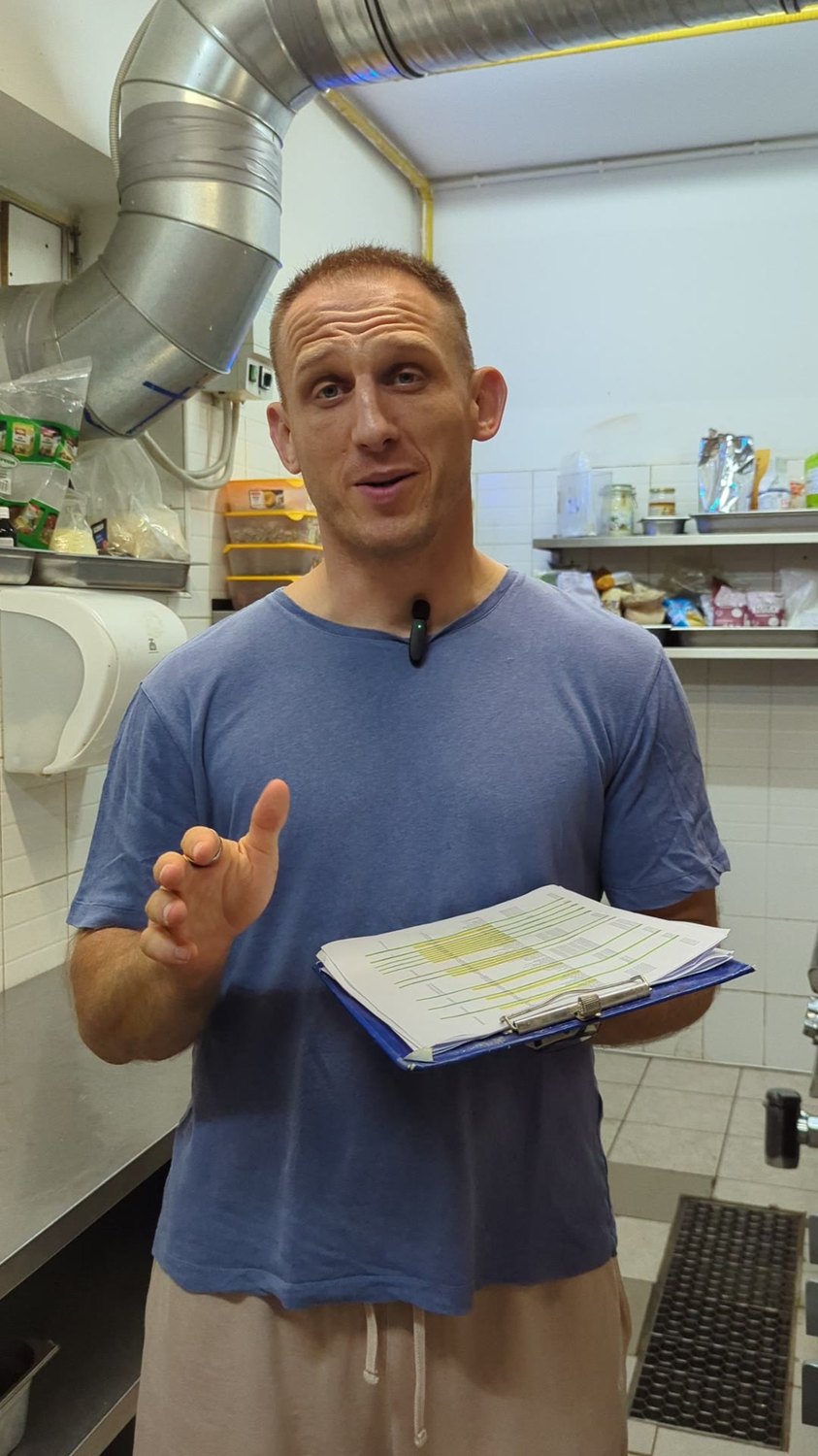
You’ve heard “I love this” a hundred times. You’ve kept almost none of them.
You cooked the event. People crowded the table. Someone leaned in and said the thing you live for — “this is incredible, where can I get this every week?”
And then they left. You never saw them again.
It never moved from a compliment to a habit. From a novelty to a Tuesday.
Here is what no one has told you: that compliment isn’t small talk. It’s a market signal. It’s demand for something that barely exists yet in your city — and the operator who builds it first is the one who gets to keep it.
If you run a real kitchen — event catering, contract work, a restaurant with dead weekday hours — you know this loop in your body. The phone rings, you scramble a quote, you cook, you clean, you wait for the next call that may or may not come. One caterer said it the way I think about it every week: “Events are the gravy. I want bread-and-butter accounts.” A floor you can plan on. Income you can count on weekly, instead of wishing and hoping every other day.
Instead you have a feast-or-famine calendar and a kitchen that sits dark four or five days out of seven, while the rent meter runs the whole time.
The grind is the old model doing exactly what it was built to do
Here is the part nobody says out loud at the food shows.
The thin margin. “My profit margin was only 3%,” one operator told me. Another: “Raw material tripled in a year, but I can’t charge that to the customer.” You work seventy-hour weeks to clear less than your line cook.
And every fix the old playbook offers makes it worse, not better.
You put the menu on the delivery apps. They take roughly 30% of every order, then keep the customer’s name, email and phone for themselves. You did the cooking. They own the relationship. You are paying to build someone else’s business on land you rent.
You thought about opening a second spot, or a proper restaurant. The numbers on that dream are brutal: roughly 60% of restaurants close within two years, 80% within five. The most romantic option in food has the worst odds of ever clearing a million dollars.
So you stay on the grind. Quote, cook, clean, wait. Good at the cooking, trapped in a model that punishes it.
The problem was never your food. It’s that the model you’re using pays you once and forgets you.
Why food is the next thing to change — and why it’s a new category, not a better restaurant
Let me step back, because there’s a pattern here that took me years, and one near-fatal detour, to see.
Think about what technology made cheap, personal and instant, one thing after another. Music — Spotify. Getting somewhere — Maps. Photos — the phone in your pocket. Television — Netflix. Translation — a free app. Each one went from a luxury, or a chore, to something ordinary people get effortlessly, every day, for not much money.
Food is the next wave. Accessible, personalised, convenient. And unlike almost everything else right now, it’s safe from automation for one stubborn reason: people will always have to eat.
I didn’t read this in a report. I learned it lying still.
In 2017 I was treated for cancer, through months of chemotherapy. A few years later, a gut condition called SIBO — small intestinal bacterial overgrowth, where ordinary meals leave you bloated and sick, so most of what’s on a normal menu is off the table. For long stretches there was almost nothing I could safely eat. I couldn’t eat anything but my own dish. So every day ran the same: work, shopping, deciding what was safe, cooking, cleaning, then doing it again tomorrow.
My case was extreme. The everyday version of it — no time, no idea what’s safe or even healthy to cook — sits in millions of ordinary households. That is the demand: real, large, and already in your city. People who want fresh, fitting meals and have neither the time nor the knowledge to make them. The market has already settled the only question that matters: not whether people want this, but who in their city will give it to them.
And the answer isn’t a restaurant doing a bit more, or a caterer adding a side line. It’s a different thing entirely.
The shift: not mass production — mass personalisation
What people need isn’t a factory cranking out one identical meal. It’s the opposite: many different needs, each one met, at a price an ordinary person can pay.
A private chef does that. Almost nobody can afford one.
But here is the quiet mechanical fact at the centre of all of it: it takes a cook the same time to put one chicken breast in the oven as it does to put in a tray of a hundred. Cook for one person at a time and you have a luxury service. Cook for a hundred pre-planned eaters from one kitchen and you have a private chef brought within reach of an ordinary person.
That’s the category. A prepaid meal plan: people pay you up front for a week of meals, eat them, and reorder. Not a restaurant. Not the apps. A plan they renew because they want to.
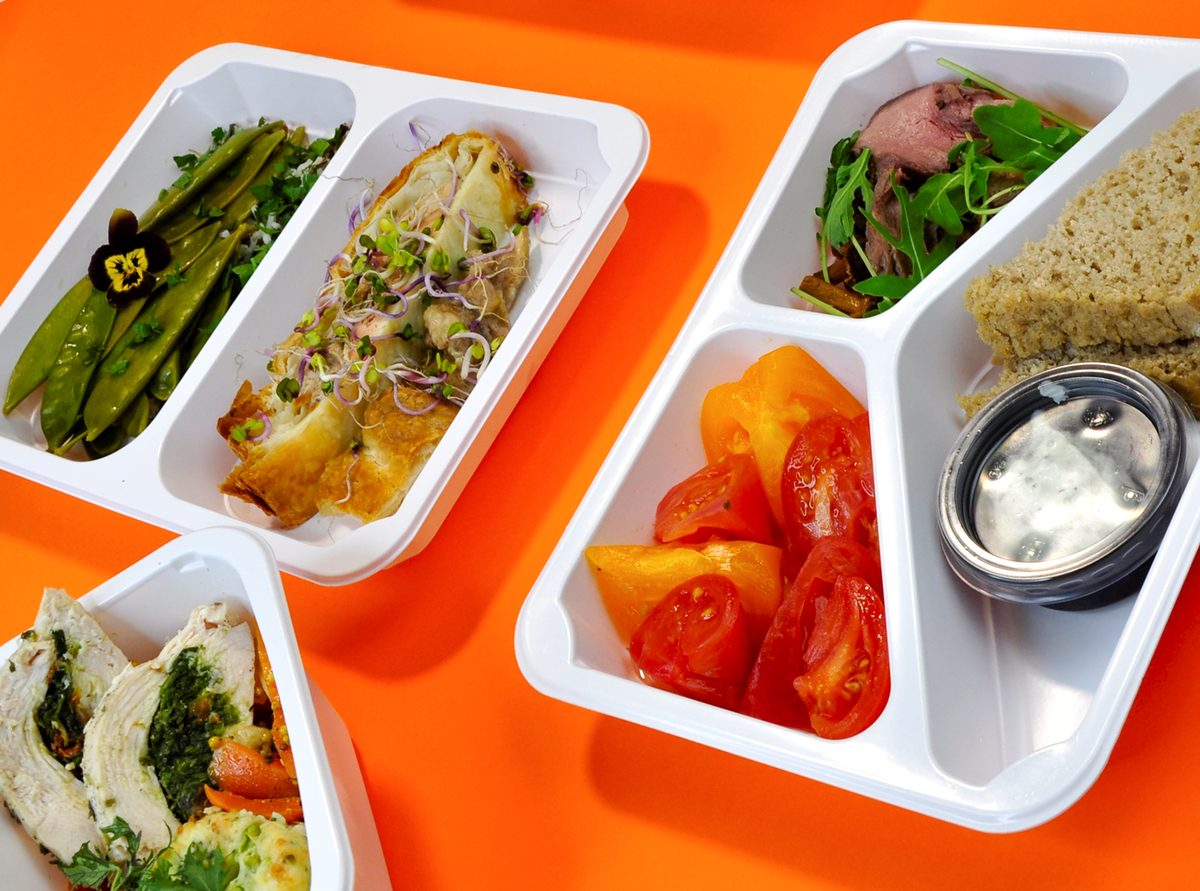
It is a new opportunity, not an upgrade to the thing that’s grinding you down. And almost nobody in your city is running it yet.
“But a daily meal line can’t be profitable.” Most operators have never once run the sum.
This is the math you were never shown, not a verdict you’ve reached. So let’s do it out loud, on paper, instead of in your head — because the math in your head is using broken inputs. Walk it with me, one number at a time.
Your rent is already spent. You pay for that kitchen whether it cooks four days a week or seven. A prepaid plan running in the idle hours only has to carry what it adds: the food and the hands. In a typical restaurant the premises eat 22–29% of every dollar before a single ingredient is bought; your idle hours carry none of that.
Food cost is lower than the myth says. “30% food cost” gets repeated like a law of physics. It isn’t. In one operator’s own test, simply buying each item from the cheapest supplier — no negotiating — moved food cost from about 40% to roughly 28%. Across the brands I built, blended food cost ran 24%. To a wholesaler’s rep, a meal-plan kitchen is worth ten restaurants, so you buy like one.
Delivery is the reframe. You’ll happily pay for one restaurant order driven across town by one courier, and hand over the 30% app fee. Then you’ll doubt batched catering delivery, which is far cheaper per meal. One off-peak route drops the day’s four or five dishes to each of about 150 customers in a single run.
One is a milk round. The other is a taxi for a sandwich.
Put it together and the difference isn’t small. On each dish, the margin left after its food cost runs 50–60% in this model — where a restaurant, once food, labour and rent are all paid, keeps a thin slice of every dollar. And because customers pay up front, that money is an interest-free loan: you’re paid before you’ve spent a cent on the food.
(restaurant / à-la-carte)
So don’t trust my margins. Trust yours. The point isn’t a number I produced — it’s that you run your rent, your food cost, your delivery and see where your own break-even sits.
So if it’s this good, why isn’t everyone already doing it?
Fair question. Ask it — it’s the right one.
The answer is the whole opportunity. This category sits at the crossing point of three skills that almost never live in the same person: the marketing of an online business, the science of nutrition, and the craft of cooking at scale.
A brilliant chef can build a menu people cry over and has no idea how to win a customer for less than it costs to feed them. A sharp marketer can fill a funnel and couldn’t cost a dish or plan a delivery route to save their life. A dietitian knows the macros and has never run a P&L. Each one holds a third of the puzzle. The handful who assembled all three built the category leaders — now nationwide operations doing tens of millions a year.
That rare overlap is exactly why the category is still wide open in most of the world. It was simply too hard to assemble.
What’s changing now is that the hard-won part — the marketing, the dish-costing, the route planning, the systems — can finally be codified and handed over instead of learned over fifteen years. That’s the work my team and I have spent years on: the experience of our chefs, our nutritionists and our marketers, turned into a system an operator can run without first becoming all three. AI is accelerating the same shift across the board. Which means the window — the years when being first is still possible — is open right now. It will not stay open.
Why now, and why it’s first-come
This category doesn’t crowd the way restaurants do. There won’t be one on every corner. In a given city there’s room for one serious operator to get out front, and the one who’s there first gets the customers, the supplier pricing, the routes and the reviews that make a latecomer’s life hard.
Move first and you’re the one everyone else has to catch.
You can be the first prepaid meal plan in your city. Or you can read about the one a competitor launched, eighteen months from now, in the same idle hours your kitchen is sitting empty this week.
Get on this wave while it’s forming, or be left in the middle of the ocean, drifting.
Who actually built this — and they started exactly where you are
I’m not a consultant who read about food. I cooked it.
I built three diet-catering brands from a single kitchen — Black Monkey Cooks, then Primate, then Cebulka Catering — and sold all three. Cebulka was the one that flew: a dead-simple offer — three dishes a day, ~1,000 calories, free delivery, about $10 — to roughly $200,000 a month inside four months, near 10,000 dishes a day off a 33-dish menu, a 4.7 Google rating, at a cost to win a customer far below my earlier brands.
Before any of that, fifteen years in marketing — Ogilvy, P&G, PHD Media, a Cannes Lions along the way. I’m the rare case that holds all three pieces — the marketing, the food, the numbers — because I had to learn them the slow and expensive way, including one early bankruptcy I paid back to the last grosz.
I’m not telling you this so you’ll be impressed. I’m telling you because the marketing and the model are exactly the parts a brilliant cook usually can’t do alone. The cooking, you already have.
 the first brand · sold
 scaled the model · sold
 $200K/mo by month 4 · sold
And the people running the biggest versions of this category started right where you’re sitting — a restaurant, an event-catering operation, no outside money. Maczfit, NTFY, Kuchnia Wikinga have grown into nationwide operations. The trophy number isn’t the point. The point is that ordinary operators built them from a single kitchen, because they were first.
Two steps, not one leap
I’m a guide here, not a magic button. I won’t promise to run your marketing or hand you customers. What I will do is hand you the codified version of the hard part — so you don’t have to assemble those three skills yourself — in the smallest, fastest first step.
And whichever step you take, you keep what’s yours. You keep your brand. You keep your recipes. You keep your customers. There’s nothing to subscribe to.
The simplest possible on-ramp — not the whole operation, the first proven slice of it: ready, tested dishes and menus, the schemes and tools, and the ordered path to your first paying customers, starting with the people who already trust you. Built so you can start without building the three-skill stack yourself. Includes the Equipment & Staff list and the Profitability Calculator that runs the math above on your real numbers.
If the first customers land and this turns out to be your thing, the full system is there — where we help with the whole operation, from sourcing and production to the marketing that brings customers in. No need to decide on it now. It’s only worth it once you’ve proven, on your own kitchen, that the model works.
But before any of that — before you spend a cent — settle the only question that matters.
See if a prepaid meal plan pays on your kitchen.
Run the free calculator on your own rent, food cost and delivery. No email required to see your number.
Run the free calculator → If the math works, the $197 First-Customer Kit is one click away. One-time. Not a subscription. 30-day money-back, any reason.The demand is already in your city. The model already works — I’ve built it three times. The only thing still undecided is who gets there first. It can be you, or it can be the operator who reads this after you.