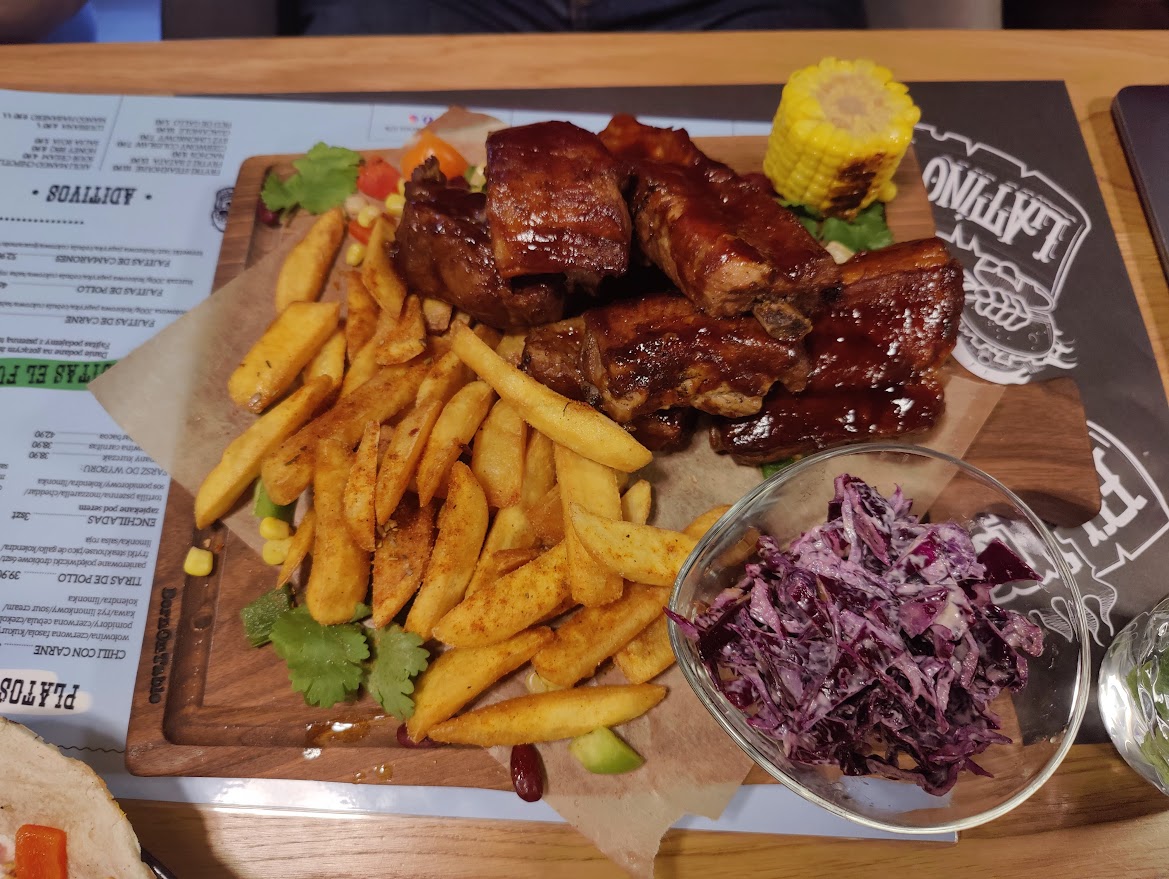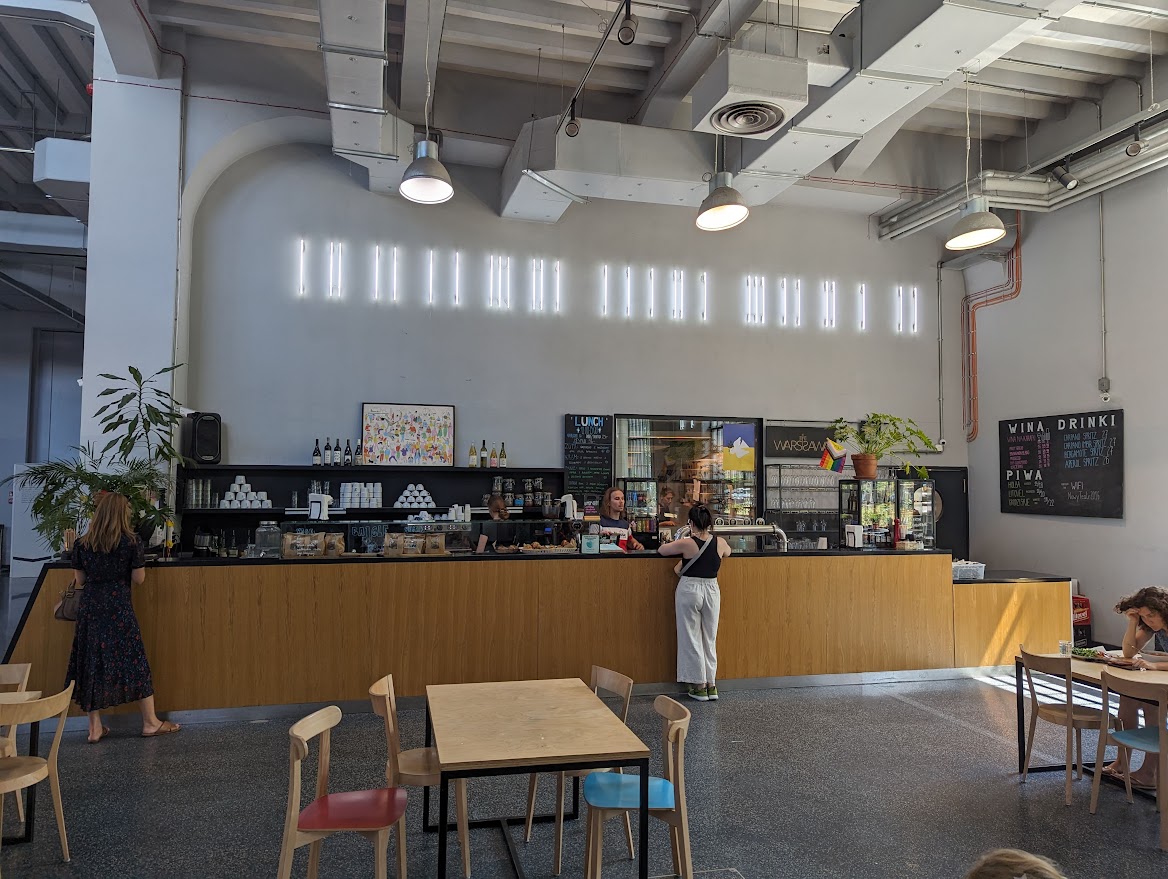
My name is Paweł and I have been a mythbuster for a number of years… in the hospitality industry. Today we are going to look at the most common myths in hotels, restaurants and catering.
It was late in the evening. The operations manager of my organisation, Luke Załęski, drove past the kitchen and noticed that the light was on. No one was supposed to be out at that time. Concerned about what was going on, he stopped to investigate.
It turned out that a shift supervisor was inside (at that time we had a night shift, because it was supposedly “impossible” to make it in one shift with 600 packages at that moment, ~3000 dishes). Asked what he was doing, he said he was testing cupcakes. Luke pointed to the bottle beside him:
– And what is that? – he asked.
– That? Vodka 0.5 l. You don’t mind if I pour it myself, do you? – He drank it in one gulp.
After he was fired, the next day, when the three of us discussed the situation with the then chef, I was told: “Well, that’s the way it is, if we fire everyone who drinks, no one will work because all the cooks will drink”. Later we had a similar conversation after other employees were fired for drugs, stealing or not showing up for work.
Since the beginning of 2022 we have a fantastic chef – Mariusz Bryzek. The above mentioned problems do not occur in the plant. Every boss attracts people like him. Mariusz, who himself has high standards of work, has attracted people who come to work and realise themselves in cooking.
It was really difficult for me when I disagreed with my (former) colleagues at almost every turn. They had years of experience, had worked in all sorts of famous places, and I even think they had the best of intentions. Then I arrived, like a bumblebee who, as the urban legend goes, flies because it doesn’t know that the laws of physics say it shouldn’t. I was solving problems because I didn’t know that you “couldn’t”. I admit – the fact that I am completely incapable of cooking did not help my position. What’s more, after a certain breakdown, when the whole team was packing crockery into sacks to make it in time for the courier, Luke forbade me to take part in the activities of Operations (as we call our factory team) because “I’m so slow and clumsy that I’m just a nuisance”.
Nevertheless, I have been debunking gastronomic myths one by one. If you stick a stick into an anthill and make people feel uncomfortable about having to change something, to do it differently from what they are used to, there is bound to be resistance. Sometimes change is not possible and the only option is replacement. It turned out to be the best I could do. Not only did I change the way the company worked, but I also changed the people – for the better.
I have dealt with most of the following list of myths about ‘monkey skin’ (Primate was called Black Monkey Cooks before the rebrand) and some of the problems I have heard about second hand. It doesn’t matter what the problems are, what matters is how we tackle them – more on that at the end.
Common Myths in The Catering & HoReCa Industry
1. Food costs in catering should be 30%.
The average food cost can be lower depending on the premises and the efficiency of cost management. In the article ” Optimising Food Costs: The Secrets of Effective Catering Management ” you can read more about how we have done it.
2. The cost of our food is much higher because we use the best ingredients.
This is a common excuse, especially from managers, production managers and order takers (sometimes two different people). High food costs do not always mean better quality; effective cost management can reduce food costs without sacrificing quality. Using Flambia Market, where we create the most optimal shopping baskets from 30 different suppliers, we are able to reduce food costs by up to 30% in the most extreme cases, an average of 15%, just by selecting products, without negotiating prices.
3. We have a low-margin product, we sell it cheaply, we can’t go lower in percentage terms.
Low margins can be offset by effective cost management and optimisation of the production process. Accurately counting costs, taking care of repetitive processes, measuring their improvement – this is laborious, but it will yield savings. There are 5 key variable costs on which product margins depend:
– Employees,
– Food,
– Packaging,
– Logistics,
– Customer acquisition.
The latter is a variable cost in the case of indirect sales platforms such as Glovo, Uber Eats, Wolt, Dietly. In the case of advertising, for example on Facebook or Google, it is more of an indirect cost, but I still control how much of a particular dish I have left to spend on customer acquisition. In the end, the company that can spend the most on advertising – customer acquisition – will always win. You can read more about the profitability equation in foodservice and the lifetime value of a customer in the article.
4. You need to hire in the black and pay daily rates.
Needless to say. In my organisation, all employees are contractors, including those from Ukraine.
5. You have to be on site all the time
No. With the exception of the cooks, helpers and packers, everyone works either hybrid (nutritionists) or quite remotely (marketing and administration).
6. I don’t have time to get involved
You don’t have time to make money? Why run your business at all? Time management and efficiency are crucial to the success of a catering business. At the same time, I understand that overseeing all aspects of running a restaurant or catering business is time-consuming and sometimes difficult. There are a growing number of specialised tools that make this job easier and show you where your money is going, such as cheff.it.
7. I have negotiated with the supplier. This is already the minimum, it will not go lower.
Splitting the basket among different suppliers usually gives better results. On the subject of negotiation, I refer you to “Negotiating prices in the catering industry: How to become a partner and not a hostage”, while if you want a quick and easy way to compare prices between many different suppliers, try Flambia Market.
8. high prices = high quality
It is more important to offer value for money than just high prices. This is one of the myths that I succumbed to for a long time. We only had Primate, where the product is high quality, the nutritionist makes sure everything is balanced, we give the option to exclude even individual ingredients. We were not able to increase sales as dynamically as we would have liked. In the case of onions, we achieved sales of PLN 1 million within 4 months of the launch. Here is a case study of the first half million: “From zero to 502,325 PLN ($118,334) in 9 weeks: Lessons from Growing a Meal Prep Catering Business in the HoReCa Sector”.
9. A fixed menu is a guarantee of success
Flexibility and regular menu changes can attract new customers and keep regulars coming back. We started with a menu that changed every three weeks. In our case, that was still a lot of dishes. We were cooking 50 different dishes a day, 6 days a week. 900 different dishes in 3 weeks.
Things have changed:
– We have reduced the variety in favour of quality. There are now 33 dishes in Primate and 14 in Onion, but each is highly refined.
– We have extended the length of time the dishes are on the menu to 6 weeks.
– We have introduced “Monkey Specials”, which are dishes with the highest average ratings at an acceptable food cost.
– We introduced “Novelties” – a special designation to alert customers to new dishes.
Effects:
– Dish ratings have gone up – we used to go no higher than 4.5/5. Now it is the norm.
– Solid dishes “Monkey Specialities” are rated less often – we have found that when customers taste something, they take it for granted. They only rate these dishes when there is a slip-up. However, they are still very willing to order them.
Conclusions:
I recommend a layout similar to what we see in e-commerce stores – the 3 most important sections:
– Bestsellers – in the case of Onion it will be pork chops, in the case of Monkey it will be pancakes.
– New products – diversify the menu with seasonal products or culinary trends, such as sushi burgers.
– Promotion – lunch menu, products with low food cost, leftovers from the warehouse. In our case, there are no leftovers after production. The Flambia system shows exactly how many dishes should be produced. I know from friends that overproduction can be up to 20% and is sold on Foodsi, Too Good To Go or in the worst case thrown away. If you don’t have a strong sales channel and no guarantee that the dishes will sell profitably, overproduction is an inefficiency and should be reduced to zero. It is another myth that it cannot be eliminated.
10. A location is everything
Location, or rather distribution, is very important, but it all depends on the idea and the nature of the business. Marketing, of which advertising is only one component and not, as is commonly thought, an interchangeable one, is made up of
– Product – the underground tunnel at the station would probably not work well for fine dining, but cafes and fast food seem to thrive there.
– Location – understood as distribution. This is how we differentiate:
– On-site, such as an office canteen.
– Takeaway, such as a bakery.
– Delivery:
– Instant, such as virtual brands.
– Planned, such as event or diet catering.
– Prices – probably very important if we are the sixth pizzeria in the area, but less important if we are the only meat-free option in a neighbourhood popular with vegetarians.
– Advertising – I deliberately created Black Monkey Cooks as a personification of the monkey. I knew from the start that there would be a lot of people who would say, “What kind of silly monkey is she, and why did they let her in the kitchen with all that fur”. At the same time, monkey lovers in the chat room (customer service is also a monkey) were describing her day and encouraging each post.
The conclusion is that the combination of these 4 elements creates an offer, and the line between its advantages and disadvantages is blurred. In general, “it depends”.
11. An advertising is a waste of money, the best is word of mouth
It’s hard to blame companies for thinking this way when the majority of advertising agencies promise to “upload posts”, “launch campaigns” or (my favourite) “work with influencers”. They don’t take responsibility for the results because, according to them, “they have no control over what happens in business”. The real point of this myth is two sentences:
– Ineffective advertising is a waste of money, and it’s hard to find the right partner who will show you the cost of customer acquisition and take responsibility for the effectiveness of their efforts.
– Direct mail can be an effective form of customer acquisition, especially if the product is good. However, it is usually not the fastest way and should not be the only way if you want to grow your business in a controlled way.
12. Only professional chefs can run a restaurant. To run a restaurant effectively, you need specialist training and years of experience.
A passion for food, management skills and an understanding of the market are just as important as experience in the kitchen. Luke (Head of Operations) started in our company in a purchasing role. He had no previous experience of foodservice, having worked in carpet sales. He took on his current role less than a year after joining. Under his leadership, the team regularly achieves average ratings of over 4.5/5, keeps food costs below 24% (at the time of writing, an average of PLN 14.5 per pack for primate and onion, understood as food costs divided by the number of packs for a given period) and has higher efficiency than other reference production facilities. Dieticians Kasia and Marysia are also responsible for food costs. They discuss recipes with the chef, recommend products and plan the menu. Any catering experience? None. Results on the job? 100%.
Myths in event, school, nursery and institutional catering
13. School and nursery catering cannot be tasty and healthy
As the owner of a diet catering service, I know that food can be tasty and healthy, even for children. My daughter Lilka, who is almost 4 years old, regularly brings me food cooked by Monkey. Kaj doesn’t take it, but that’s more because she’s only 6 months old. The vast majority of my friends who have children are willing to pay more for baby food because it is tasty and healthy. Tasty, because it’s hard to get toddlers to eat, and healthy, because as parents we are much more aware and careful about what our children eat.
14. It is impossible to please everyone in collective feeding
This is also what you usually hear people say: “And give the technology a break” and “No meat, no gluten, no sense – what’s the point of all this fancy stuff? A well-planned menu with options for different diets can greatly increase guest satisfaction. In the Flambia System, menus can be made available through the Flambia Food app. The user excludes unwanted product groups or ingredients and then selects dishes. The cooking is exactly the same as before, but the technology allows us to better match the existing dishes on offer to the customer. This can be used by dietary and event caterers, as well as by a parent planning a menu for a child in school catering.
15. Catering for large groups must be massive and tasteless
You can prepare tasty, healthy and varied meals even for large groups, especially if you allow the guests to choose their dishes in advance through Flambia Food or even in the form of “answering questions by e-mail”. If you want to avoid being a 138 caterer, you need to stand out with good planning and better customisation.
16. Event clients don’t care about the origin of the ingredients; no one will know we cooked it anyway
I have ordered and tried event catering on many occasions: weddings, birthdays, corporate events. I have always used a company on recommendation or one that I liked at an event I attended. Every event is an opportunity to reach dozens or hundreds of new customers who will be convinced by a great product. They will ask the organiser: “What was that company that made such good food?”
17. Standard menu is sufficient for any event
100% agree, if you do not want to become another company that disappeared from the market faster than it appeared. There are dozens of companies in every city, hundreds in the provinces. The only way is to find your niche. It can be quality, it can be an unusual menu, an interesting shape. An individual approach to creating a menu, taking into account the theme of the event, the preferences of the guests and the seasonality of the ingredients, can significantly increase the quality of the service.
18. Catering in kindergartens and schools need not be varied
From the child’s point of view, it would probably be best if there were sausages and chocolate every day, but the lunch is paid for by the parents. As I said, more and more of us know that variety in children’s diets is crucial for their health and development.
Nutrition myths for hospitals and government contract caterers
19. The cheapest bid always wins the contract
In addition to price, other aspects are taken into account, such as the quality of the food, the company’s experience, references and quality certificates.
20. Food in hospitals must be tasteless and bland
Hospital food can be tasty and meet dietary requirements. Slowly but surely, centres are emerging that pay attention to this. But I have no great illusions that this will change in the near future. I believe that a hospital is a business like any other, except that it is not paid for directly by the customer – the patient – but by the state. And if it is a business, it is subject to the laws of supply and demand – better drives out worse. I don’t deny that the quality and availability of treatment is the most important criterion, but I explain it to myself this way: if I have two hospitals with comparable food quality, and I’m planning a long stay, and the only difference is the quality of the meals, I’ll avoid the one with inferior food. I’ll go where I won’t starve for the duration of my treatment, and the money from the National Health Service will go with me.
21. Nutrition in hospitals does not interfere with the treatment process
This is amazing to me and it blows my mind how people in oncology, women in pregnancy pathology, in gastroenterology can be fed with garbage. A hospital is a place of treatment, food is the fuel that makes it work. Any of us who have been in hospital or had someone close to us know that the word “junk food” is at best a slight understatement. There’s even a group on the subject called “Food in Hospitals”. I experienced this first hand when I had cancer. I was unable to eat. Through trial and error, I managed to find a dish that did not make me vomit. If you want to know more about this story, I refer you to “I’m 30 years old, I don’t drink, I don’t smoke, I do jujitsu. I found out I have cancer. What has it done for me?”
22. There is no room for innovation in government contracts
Innovation is not just a Silicon Valley technology. If you can train a team to cook faster, cheaper and more efficiently, that’s innovation. Companies can innovate in logistics, food preparation technology and quality management systems. If YOU aren’t innovating, know that your competitors are, and they’re leaving you behind.
23. You have to cut back on the quality of ingredients to fit within the budget
Ingredients are an important component of production costs, but not the most important. The quality of raw materials is not directly proportional to their price, but even if it were, it should not be seen as the main source of savings. My observations show that you can save 30% of operating costs by implementing a lean management approach. Awareness of it is quite high in manufacturing, probably a little less in food service. It was popularised by Toyota. I know the results are incredible, and now you are shaking your head: “I think he has got something wrong, in our company everything is tip-top, well maybe 1-2% could be squeezed out”. Our mentor is Ireneusz Poznanski – his website is terrible, but the trainer is great. We had a workshop where we worked with stopwatches using different methods. The 30% mentioned was an average, not a maximum. Companies can find a balance between cost and quality by looking for local suppliers and optimising logistics processes. There are 4 groups of variable costs. I deliberately do not mention “utilities” because we consider them to be fixed costs. We have found that whether there are 3,000 or 30,000 dishes, the cost of utilities is similar. Ovens use the same amount of electricity full or empty, burners use the same amount of gas, whether 10 litres or 100 litres of soup. The other 3 groups are:
- Labour costs.
- The cost of raw materials, with the greatest influence in the hierarchy from the most important:
– Basket optimisation with suppliers.
– Price negotiation.
– Menu design.
3. Logistics.
These collected myths reveal a wide range of challenges and misconceptions in the foodservice, catering and foodservice industries. Debunking these myths can help entrepreneurs better manage their businesses and adapt to customer needs. Why debunk and challenge them? The first reason is that it simply pays for you. The competitive advantage lies in doing things that others find too difficult, unprofitable or unavailable. Every myth debunked = one point of advantage over the competition who think it can’t be done. Secondly, because you don’t have much of a choice. You’re either a passenger or a driver. If you wait passively, stuck in the belief that you don’t need to improve, it’s only a matter of time before your business disappears. For every business that doesn’t ask for a customer, there are 3 others that jump up and scream “Take me! Every customer can be lost, and do you have anything to gain new ones with?
Life is what we focus on. If we focus on problems, we will discover more of them than we can handle. But if we focus on solutions, we will find them. Not immediately, not in one go, maybe not even quickly, but I tell myself that I am always, always able to do even one tiny thing to move at least a little bit forward. And then, once I’ve taken that step, I look for opportunities for the next one – that way I don’t even look back, and they go a long way from “it’s impossible” to “I’ve done more than I thought I could”. The myths in question are nothing more than problems that have been socially recognised as “difficult or inconvenient to solve, so everyone accepts this state of affairs so they can feel good about themselves”. When asked what thought made them feel better: “Everyone said it couldn’t be done, it’s a waste of time” or “I tried until my business was profitable”, answer yourself.
If you are the owner of a catering business or HoReCa in the broadest sense, sign up for the newsletter. You will receive all the knowledge I have gained from running Onion Catering, Black Monkey Cooks, Primate, Flambia System, Flambia Market, Flambia Food.
If you would like to receive such notifications, leave an email by clicking the button above! Also follow me on my social media for more interesting content!
Where to go next
This is one piece of a bigger move: adding a prepaid meal-plan line to the kitchen you already run, and turn idle capacity into recurring revenue. When you are ready to land your first paying subscribers, the First-Customer Kit is the step-by-step playbook.