Yes, a meal-prep business is profitable — but only when four things are true at once: you take the money up front (prepaid, not pay-as-you-go), you hold food cost near 30% instead of letting it drift to 45%, customers stay long enough to pay back what you spent to get them, and your delivery runs on a dense planned route instead of one-off drop-offs. Miss any one of those and the math collapses, because the headline number — $10 to $14 a meal — is a margin trap. The good news for you specifically: you already run a kitchen. Your rent, your head chef, your hood, your licences are already paid. A prepaid meal-plan line only has to cover its extra costs, not a whole new business. That is why an established operator breaks even on roughly 18 subscribers, not 200.
This page is the honest version. Real numbers, a worked profit table, the trap explained, and a calculator so you can plug in your own kitchen’s figures before you commit a cent.
The short answer, with the conditions spelled out
“Is meal prep profitable?” is the wrong question. The right one is: profitable for whom, run which way? A beginner renting a commissary kitchen to sell 30 meals a week is running a different business than you. For an operator with idle weekday capacity, the four conditions below decide whether the line prints contribution profit or quietly bleeds.
- Prepaid cash flow. The customer pays for a week or a month before you buy a single onion. You cook against money you already hold. This is the structural gift of the subscription model — it funds your own purchasing and kills the working-capital squeeze that sinks à la carte food businesses.
- Food-cost discipline. The difference between a 30% plate and a 45% plate is the difference between a business and a hobby. Most operators do not know their real number. We will get to that.
- Retention. You spend money once to acquire a subscriber, then earn it back week after week. If they quit in two weeks, you lose. If they stay two months, you win. Retention is not a soft metric here — it is the whole unit economics.
- Route density. Batched delivery on a planned route costs a fraction of one-off restaurant drop-offs. Operators who doubt meal-prep profitability are usually picturing UberEats-style single-order delivery, which genuinely does kill margin. That is not the model.
Get those four right and the question stops being “is it profitable” and becomes “how many subscribers until I cover the line.” For you, that answer is small.
The margin trap: why $12 a meal looks better than it is
A meal-prep meal sells for roughly $10 to $14. New operators see that price next to a $3.50 food cost and assume a fat 70% margin. Then reality arrives. Packaging, the cold-chain box, the label, the packer’s wage, the delivery van, the card processing fee, the customer who churns after week one — each takes a bite. The gross margin that looked like 70% lands closer to 25-35% of revenue as contribution profit, and that is before you’ve earned back what you paid to acquire the customer.
This is where most thin competitor blogs stop — they quote “food cost 30%” and call it a day. The two costs that actually decide your fate are the two operators ignore: true food cost and delivery structure.
True food cost is almost never 30% when you first measure it
On real operator sales calls, the pattern is brutally consistent. A restaurant doing $600K a year was running food cost near 50% and had no tool to control it — “I just try to put it in control.” Another operator had a single dish landing at 47%, driven by pre-peeled boiled eggs nobody had ever costed. The target a disciplined meal-prep line should hit is 24% on the plate. The gap between 47% and 24% on a $600K business is roughly $140K a year — that is not a rounding error, that is the entire profit of the line. If you have never built a line-by-line plate cost, read how to count food cost and beverage cost before you price a single plan.
The lever most operators miss is purchasing, not portioning. In one supplier test, pure price comparison across vendors — ordering each item from the cheapest source, no negotiation, no haggling — cut input cost about 30% and pulled food cost from ~40% down to ~28%. That single discipline can be the difference between a line that loses money and one that prints it. There is more buried profit hiding in your supply chain than you think; see the 14 places your catering money is getting away.
Delivery is a route problem, not a per-order problem
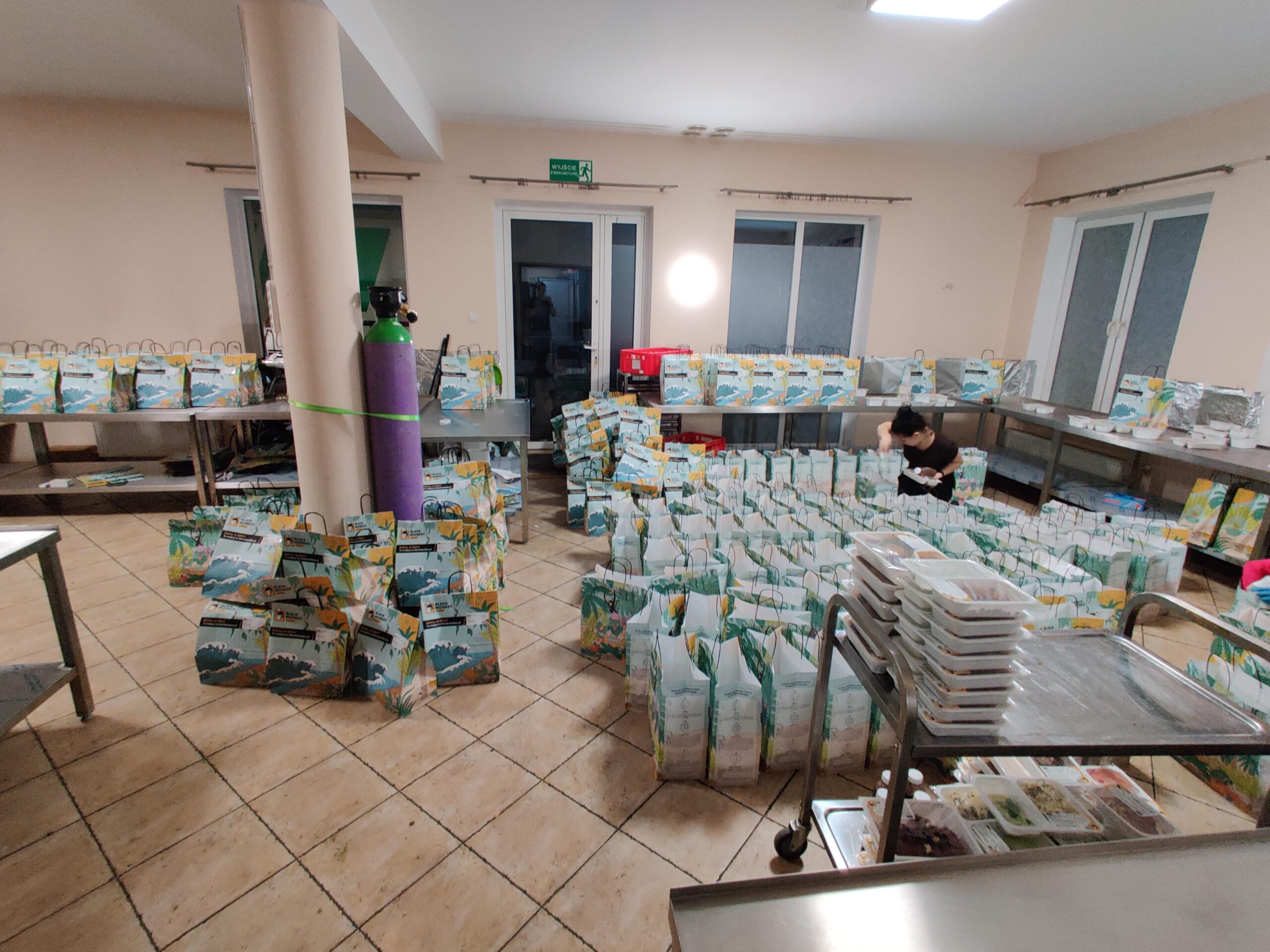
Here is the reframe that turns the biggest objection on its head. Operators tolerate paying $6-8 for a single restaurant order on UberEats, then declare daily meal delivery “impossible to make profitable.” They are comparing the wrong models. Meal prep delivers a planned, batched, off-peak route — twenty boxes down one street at 6am, milkman-style — at a per-meal delivery cost a fraction of a one-off drop. The density is the whole game. A line with route density delivers for under a dollar a meal; the same line delivering scattered one-offs pays five times that and dies. Plan the route and the delivery objection dissolves.
The real margin math: a worked example
Let’s run a concrete monthly subscriber, then build to the full line. Assume a daily meal plan at $13/day — about $400/month for 30 days of food. This is a representative price band; your market may sit higher or lower, which is exactly why you should run your own numbers, not mine.
| Per subscriber, per month | Amount | % of revenue |
|---|---|---|
| Subscription revenue ($13/day × 30) | $400 | 100% |
| Food cost (disciplined, ~30%) | −$120 | 30% |
| Packaging & cold-chain consumables | −$36 | 9% |
| Marginal labour (prep, packing — incremental only) | −$36 | 9% |
| Delivery (dense planned route, ~$0.80/meal) | −$24 | 6% |
| Card processing & platform fees | −$12 | 3% |
| Variable contribution per subscriber | $172 | 43% |
That $172 is the money each subscriber throws off every month before the line’s own fixed costs and before acquisition cost. Now the part that thin blogs never show you, because they assume you’re starting from zero: because your kitchen already exists, the line only carries its incremental fixed costs.
| Incremental monthly fixed cost of the line | Amount |
|---|---|
| One added packer/prep role | $2,500 |
| Starter equipment amortisation (~$10k over 24 mo) | $420 |
| Incremental overhead (utilities, consumables) | $580 |
| Total incremental fixed cost | $3,500/mo |
Break-even = $3,500 ÷ $172 ≈ 21 prepaid subscribers. Tighten contribution to $200 with leaner ops and disciplined purchasing and you’re at ~18. Every subscriber past that line is close to pure contribution profit, because the kitchen, the rent, and the head chef are already paid for. That is the operator’s structural edge over a beginner, and it is why the scary “you need 150-300 customers” figure is simply wrong for someone in your position — that number assumes a kitchen built from scratch.
Where the math breaks: retention and CAC
The contribution number is only half the story. The other half is how long they stay and what they cost to acquire. Subscriber lifetime in this category is bimodal and uncomfortable: a big chunk churn inside the first two weeks, another chunk stay three to six months. A realistic base case is a customer life around two months of ordering. At $172/month contribution, that’s roughly $340 of gross lifetime value per subscriber.
That number sets a hard ceiling on what you can spend to win a customer. To keep the standard 3:1 health ratio, your acquisition cost must stay near or under $100-115. Blow past it and you lose money on every signup no matter how good your food cost is. This is why retention work — nailing the first four weeks so fewer customers churn early — is worth more than almost any other lever; lifting the early-churn cohort even 30% can push lifetime value up by half. For the deeper treatment, see the key to profitability through optimising customer acquisition costs and the broader ways to make money in catering.
Run your own numbers — don’t trust mine
Every figure above is a representative band. Your food cost, your market’s price, your packer’s wage, your churn — they will differ, and the answer changes fast when they do. Before you commit a cent to a meal-plan line, plug your real numbers into the Operator Profit Calculator. It takes your subscription price, your true food cost, your fixed costs, and your churn, and shows you the one number that matters: how many prepaid subscribers until this line covers itself and starts printing contribution profit.
It is free, it takes three minutes, and it will tell you in plain terms whether the line is a yes or a no for your kitchen. Run your own numbers here.
What separates the operators who make it work
The ones who profit aren’t the ones with the fanciest menu. They’re the ones who treat the line like a margin machine: they cost every plate, they buy at the cheapest verified price, they plan a dense route, they obsess over week-one retention, and they never spend more to acquire a customer than that customer is worth. The food is table stakes. The discipline is the moat. If you want the broader reality check on the whole space first, read the ugly truth about starting a food business in 2025 and how to run effective marketing for catering.
If you’ve run the calculator and the numbers say go, the next bottleneck isn’t the food — it’s getting your first ten paying subscribers without lighting cash on fire on ads. That’s the exact playbook inside the First-Customer Kit: the operator’s step-by-step for filling a prepaid meal-plan line from a kitchen you already own. Build the line on numbers, not hope.
Frequently asked questions
Is a meal-prep business actually profitable, or just busy?
It’s profitable under four conditions: prepaid cash flow, food cost held near 30%, customers who stay long enough to pay back acquisition cost, and dense route delivery. For an operator who already runs a kitchen, break-even sits around 18-21 prepaid subscribers because rent, head chef and licences are already paid. Miss any of the four conditions and the $10-14 per meal price becomes a margin trap rather than profit.
What is a realistic meal-prep profit margin?
After food cost, packaging, marginal labour, delivery and fees, a disciplined line throws off roughly 35-43% of revenue as contribution profit per subscriber — before fixed costs and acquisition cost. That’s contribution, not net profit. The number only holds if true food cost stays near 30%; many operators discover theirs is actually 45-50% when they first measure it, which erases the margin entirely.
How many subscribers do I need to break even?
For an established kitchen, roughly 18-21 prepaid subscribers cover the line’s incremental fixed cost (about $3,500/month for an added packer, equipment amortisation and overhead). That’s an order of magnitude below the 150-300 figure quoted for from-scratch operations, because your base fixed costs are already sunk into the existing business. Every subscriber past break-even is close to pure contribution profit.
What is the unit economics of a meal subscription?
At ~$400/month revenue and ~$172 contribution per subscriber, with a realistic two-month customer life, lifetime value is around $340 gross. To keep a healthy 3:1 ratio, acquisition cost must stay near or under $100-115. Subscriber lifetime is bimodal — many churn in the first two weeks — so first-month retention is the single highest-leverage thing you can fix.
Doesn’t delivery destroy the margins?
Single-order, on-demand delivery (UberEats-style) does destroy margins at $6-8 per drop. Batched meal-prep delivery on a planned off-peak route is a different cost structure entirely — under a dollar per meal when the route is dense. Operators who doubt meal-prep profitability are usually picturing the wrong delivery model. Route density is the whole game.
How do I know if it works for my specific kitchen?
Run your real figures — subscription price, true food cost, fixed costs and churn — through the Operator Profit Calculator at flambia-operator-calculator.vercel.app. The representative numbers in any article are bands; your answer changes fast when your inputs differ. The calculator shows your specific break-even subscriber count in about three minutes, so you decide on math rather than on a generic blog’s averages.