PREVIEW / DRAFT, not live. Real Flambia System screens. The platform runs in any language; this demo brand happens to be Polish, so some on-screen demo data is still Polish (production reports are being re-captured in English). Owned brand marks (Black Monkey Cooks / Primate / Cebulka) appear deliberately in the founder-proof band; scrub them from the neutral product screens and ads, and redact customer names, emails, phones and balances before publish.
Meal prep software, built by the operator who ran it
Grow a meal-prep business to a record month, on the system that already did it.
Flambia System is the complete software behind a daily meal-prep business: the menu maths, the dawn production, subscriptions, food cost, winning customers and keeping them. One founder used it to scale a brand to $203,956 by its fourth month. You don't build the machine. You run it.
The demo is 30 minutes, with the founder, on your own numbers. No pitch, no obligation.
$203,956 best month, one kitchen
Your world
A daily meal-prep business is really six businesses in one
You did not start a kitchen to also run a marketing team, a software desk, a delivery fleet and a finance department. The cooking was never the hard part. Everything around it is, and miss one piece and the day breaks. Here they are, in the order that decides whether you grow, hardest first.
HardestCustomersWin them, then keep them from drifting away after three weeks. This is the one that decides whether you grow.
Menus & nutritionHit everyone's calories and macros, dodge their allergies, never repeat inside a week, and still hold food cost.
Cooking & packingTurn the menu into cooking sheets, packing, sorting and labels, correctly, before dawn, every day.
Buying & stockOrder the right amount so nothing rots and nothing runs out, and always know what is on the shelf.
DeliveryEvery bag to the right door, in the right window, every morning.
MoneyRecurring payments, invoices, VAT, and the failed cards you chase.
Most operators try to be all six people, held together with spreadsheets and willpower. That is the ceiling. One tired owner can only watch so much, and you should not have to do it alone.
The reframe
None of that is yours to build anymore. It is already built, by someone who needed it to survive.
Not a prototype, not a roadmap. The real platform that served a real book of paying subscribers, day after day, to a record month. Your job changes from invent the machine to run the machine, with us beside you. Here is the proof.
Proof: it is real, and it paid
Most meal-prep software is sketched in a boardroom. Flambia was written on the stove.
The desk
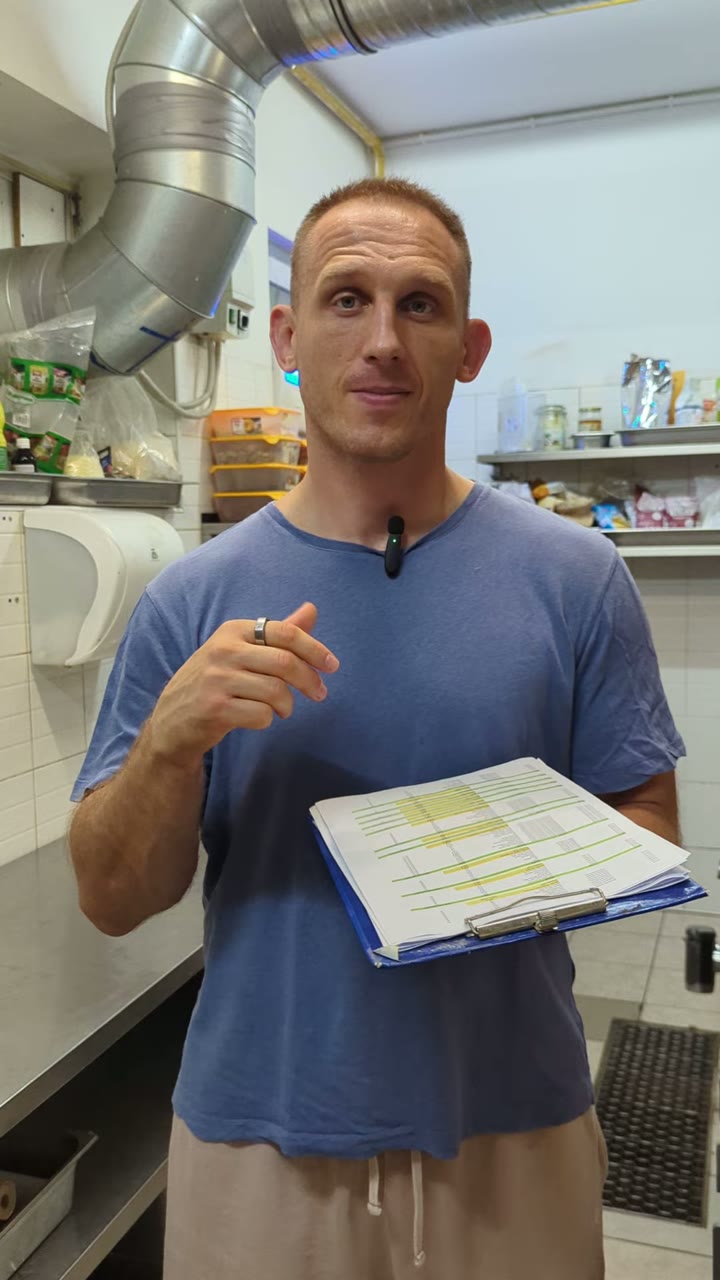
The operator, holding the day's real production numbers.
The stove
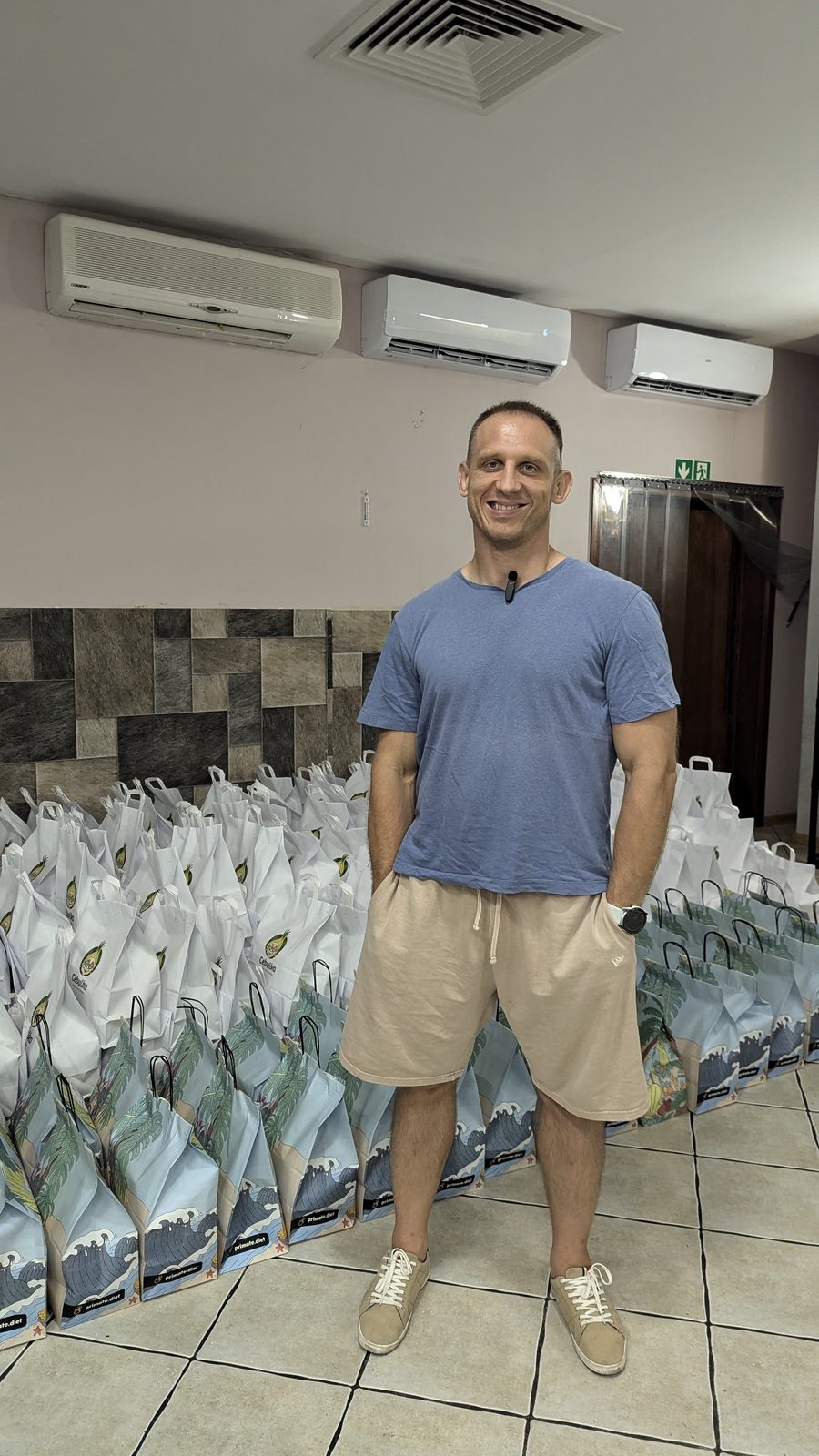
The kitchen that cleared $203,956 in a month.
Paweł Kaczyński built three food brands from nothing and sold all three. Cebulka hit $203,956 in one month, cooking hundreds of prepaid meals a day from a single kitchen. The model is daily prepaid diet catering: customers pay ahead for a personalised plan, delivered every morning. Each part of the platform was built because a real shift demanded it that morning, the food-cost target baked into production, the menu that never repeats inside a week, the courier paperwork, the recovery flow for buyers who had gone quiet.
Built, run and sold, all three.Cebulka reached a $203,956 month
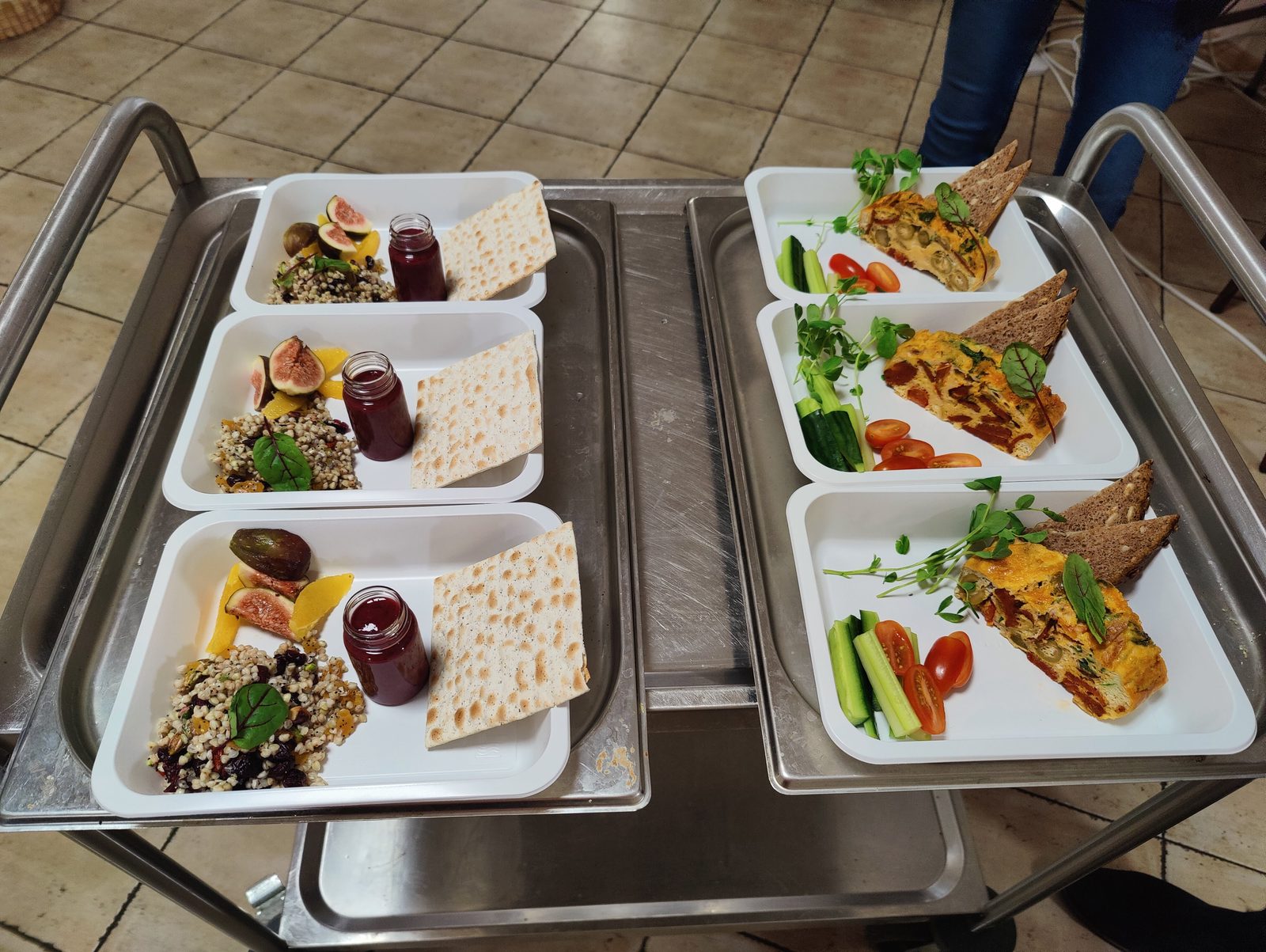
The real packing line: the same printed pack, weighed, sealed, sorted and bagged.
One customer, one full lap. Watch the system do every job.
Instead of a feature list, follow one customer all the way round the loop. At each stop you see the part of the system that does the work, with a real screen from the live platform. Stops 1–5 are how a stranger becomes a paying, returning subscriber; stops 6–11 are how their order becomes food at the door; stop 12 closes the loop. Tap any screen to read it full size.
1/12Order in four taps
1
They find you and order, in four taps on mobile
Customer
A branded storefront on your own domain, with calorie-personalised ordering, so the customer belongs to you, not a marketplace. Ordering is four simple steps on mobile: check the delivery area, pick a diet and calories, choose the delivery days, create an account and pay. Server-side tracking is built in from the start (Meta CAPI, TikTok, GA4, a Klaviyo feed and UTM capture), so the ads you run to win them finally see what actually converts.
Storefront — Daily menu
A personalised daily menu: every dish with a photo, its macros, allergen tags and price, and any meal is swappable.
Storefront — Per-meal ratings
A rating on every meal: customers score each dish, so your menu improves on data, not guesswork.
Ordering takes four simple steps, on mobile
1Check delivery area
2Pick diet & calories
3Choose delivery days
4Create account & pay
Prices on these demo screens are in US dollars, converted from the brand's złoty at that month's rate (~4:1). The premium 5,000-kcal tier is shown, so the per-day figure sits at the high end.
2
A plate they cannot eat never reaches them
Customer
At the diet step the customer ticks what they cannot eat (no meat, fish, dairy, lactose or gluten, or single ingredients they want gone). That becomes a hard pre-filter, so a dish that breaks their rule is never even offered, for this order or any future one.
The relief: no binned meals, no "this had mushrooms in it" refund, no trust lost.
Storefront — Choose exclusions
Choose exclusions: the customer's own restrictions become a hard rule the menu engine obeys for every future plan.
3
They subscribe, prepay, and bring a friend
Customer
A prepaid balance and recurring card billing mean the customer never has to remember to top up; they simply keep ordering. From one account they can order for a partner or the whole household, each person on their own plan, and add extras like juices and shots, so the basket grows. A happy customer shares a referral code, and the loyalty engine tracks who they bring in.
The payoff: a bigger order today, and a warm new customer tomorrow, both on autopilot.
ARecurring card top-up
BReferral code & rewards
4
They run the whole subscription from the app
Customer
Customers manage the subscription from a real native app, the Flambia Food app, with two-way Apple Health and Google Fit sync. They rate every dish they eat, so you learn which recipes to keep, fix or drop, on data rather than a guess.
The payoff: customers run their own accounts from their phone, and your phone goes quiet.
Dish detail
Daily menu
Home
5
You keep them, and win back the ones who drift
Customer
Recent payers stay on their price through price cohorts; the rest drop to a default cohort. The same engine spots customers who have gone quiet, sorts them by how recently they ordered, and runs a bonus-driven return sequence, tracking who comes back. A leaky bucket caps you no matter how good the food is, so this stop is the one that decides whether you grow.
The payoff: you keep the customers you already paid to win, and revive the ones who slipped away.
Flambia System — Price cohorts
Price cohorts hold the full customer book of 11,399 accounts; recent payers keep their price, and the same engine feeds the win-back sequence.
6
Menu planning that hits everyone's macros, automatically
You
An optimiser composes the rotating menu under hard macro bounds, a price cap and a no-repeat-within-7-days rule. Calorie personalisation runs per person, several people to one account, each with their own taste profile. Open any dish and the maths is already done: every ingredient portioned and scaled across all meal sizes, with calories, macros and food cost on toggles, and the system flags any dish that breaks your cost target, so margin is built into the recipe, not checked after.
The result: variety and margin hold themselves, far past what a human planner could juggle.
40+ ready diet plans, out of the box
Weight-lossOfficeFamilyDiabeticVeganVegetarianGluten-freeDairy-freeEgg-freeFish-freeMeat-freeOrganicPregnancyHashimotoTourist+ 25 more
Flambia System — Inside a dish: food cost, macros, scaling
Open any dish and the maths is already done: every ingredient portioned and scaled across all meal sizes, with calories, macros and food cost on toggles. Set a target and the system flags any dish that breaks it.
Flambia System — The menu planner
The menu planner: every production day planned and locked (33 dishes a day), with per-day food-cost and rating columns.
Flambia System — Building a dish
Building a dish: name, customer description, portion sizes, diets, tags, allergen exclusions and price group, all in one form.
7
Lock the day's orders, and every production sheet prints itself
You
Lock the day and the system generates the whole production pack from confirmed orders: shopping, cooking, sorting, packing, bag and label sheets, 26 report types in all. A 7-day demand forecast lets you cook to expected volume rather than instinct. Labels print with macros, allergens and a scannable code, and a rack-to-order scanner verifies each bag.
What you keep: the team follows a printed plan instead of guessing, errors drop, margin holds.
Flambia System — Production batches
1,677 production runs on record, each opening into its shopping, cooking, packing and transport reports.
The paperwork it prints for you, every morning
Lock the day's orders and the system builds the whole production pack automatically. Each report opens on a tablet, on mobile, or as a print-out for the line. Real reports from the live system.
Report — Shopping list
Shopping list: built from the day's confirmed orders, down to ingredient, quantity and supplier.
Report — Cooking sheet
Cooking sheet: what to cook and how much, per dish, for the whole day.
Report — Packing
Packing report: exactly what goes into each customer's order.
Report — Sorting
Sorting report: meals grouped into boxes for the sort station, so nothing is misrouted.
Report — Labels
Meal & bag labels: macros, allergens and a scannable code printed on every box.
Report — Demand forecast
Aggregated purchasing: a 7-day forecast rolls the coming orders into one buy.
8
Buy exactly what you need — nothing rots, nothing runs out
You
The shopping list builds itself from the day's recipes, down to edible portions. A full warehouse tracks stock in and out with batch tracking, a food-waste log and corrections, so an order counts exactly what you already hold, and a supplier directory ties every purchase to a known source.
Net effect: waste leaves the bin and returns to margin, and ordering stops being a gamble.
Flambia System — Purchasing register
2,040 shopping lists on record, each with its total purchase cost, built straight from confirmed orders.
9
Every bag reaches the right door
You
Addresses are validated and geocoded, with delivery zones and address blocking that catch a bad drop before the van leaves. Once the day is locked, a per-address delivery report (name, address, intercom, window, phone, zone, courier) is built and emailed to each courier company. It hands the locked day's deliveries to your courier as a ready sheet; the route order stays with the people who know the streets.
The relief: no hand-built address sheet, ever again.
Report — Transport manifest
Transport manifest: every address, window and intercom, emailed to each courier once the day is locked. hand-off only, not route optimisation
10
You get paid before you cook
You
Subscriptions run on a prepaid balance and recurring card billing, with per-brand payment methods, VAT invoices and receipts in one or several currencies, a fiscal report, and admin refunds. You cook to a confirmed, prepaid book rather than hoping the card clears.
The payoff: you see each customer's lifetime value, finance and bookkeeping in a single export.
11
Run several brands from one kitchen
You
Every brand is a separate tenant with its own domain, branding, language, currency, payments and invoices, fully walled off, yet able to share one dish library and one production run. Drop in your logo and two brand colours and the system checks they are legible before a customer ever sees them.
One kitchen carries many brands, sharing cost while keeping separate identities.
Flambia System — Per-brand branding
Per-brand identity: drop in your logo and two brand colours (here on a neutral "Demo Kitchen" tenant), and the system checks they are legible before customers ever see them.
12
The loop pays for itself
Round again
Back to the top. With retention holding, referrals coming in, and clean tracking making each acquisition cheaper, the next customer costs less to win than the last. That is the loop: a stranger becomes a subscriber, a subscriber becomes a delivered breakfast, and a delivered breakfast funds the next stranger.
You came for the system. You also join a community of operators, with us beside you.
You don't get a login and a goodbye. The software is the easy half. Turning it into paying customers is the hard half, and it is the half we keep helping with after you are live: what to price, how to fill the idle weekday hours of a kitchen you already pay for, how to win your first customers and hold them.
We share what worked across three brands, we advise on your numbers, we help with the marketing, and you are around other operators doing exactly this, so nobody is solving it from scratch alone.
🚀
Deployed with youSet up and launched beside you by the operator who ran it.
📊
Advice on your numbersPricing, food cost and the maths of a profitable book.
📢
Help with marketingHow to win your first customers and keep them.
🤝
A community of operatorsPeople building the same business, sharing what works.
Already running a real kitchen with real customers? Start on the left, that is the main path. Just an idea and a few open kitchen days? The right-hand path is your first step, and we walk it with you.
I have scale, and I want to grow faster
Deploy the system with us
A real kitchen, a real book, and the ceiling of what spreadsheets and one owner can hold. You want the machine, and someone who has driven it. See it on your own numbers and plan deploying it beside you.
30 minutes, with the founder, on your own numbers. No pitch, no obligation.
You will see the real system, running on your own numbers, before you commit to anything. Built and run by an operator who did the job, with no lock-in: you keep your data and your brand.